
The Pinnacle of Performance: A Decade of McLaren’s Most Extraordinary Road Cars
In the esteemed hall of automotive legends, where Ferrari embodies fervent passion and Lamborghini roars with theatrical flair, McLaren carves its distinct identity through an unwavering dedication to engineering excellence and a relentless pursuit of the absolute limit. For over a decade, I’ve had the privilege of witnessing firsthand the evolution of this iconic marque, a journey marked by an obsession with precision, lightweight construction, and aerodynamic mastery. Born from the crucible of Formula 1, McLaren Automotive, operating from its hyper-modern headquarters in Woking, England, eschews emotional design in favor of the cold, hard logic of aerospace engineering when crafting their road-going marvels. Their philosophy is a testament to the scientific method applied to speed: minimize mass, sculpt airflow, and push the boundaries of physics. Since their re-emergence as a dedicated manufacturer in 2011 with the groundbreaking MP4-12C, McLaren has consistently redefined the supercar landscape, introducing revolutionary technologies like carbon fiber monocoques and sophisticated hydraulic suspension systems to the automotive mainstream. From the analog purity of the 1990s to the electrifying hybrid hypercars of 2025, this is an in-depth look at the ten McLaren models that have not only defined but irrevocably transformed our understanding of automotive performance.
The McLaren F1 (1992-1998): The Unrivaled Apex Predator
Engine: 6.1L Naturally Aspirated BMW S70/2 V12
Horsepower: 618 hp
Maximum Velocity: 240.1 mph (386 km/h)
Limited Production: 106 units (64 road-legal variants)
To embark on any discussion of McLaren’s greatest road cars, or indeed, any superlative list of automotive achievements, the McLaren F1 is not merely an entry point; it is the undisputed king, the benchmark against which all others are measured. Conceived by the visionary engineer Gordon Murray, the F1 was more than a car; it was a profound declaration of automotive perfection.
The engineering brief for the F1 was audacious yet elegantly simple: to construct the finest driver’s car ever conceived. Murray’s relentless pursuit of this goal led him to incorporate exotic materials previously unseen in production vehicles. The chassis, a pioneering feat, utilized the world’s first carbon-fiber monocoque in a road car, offering unparalleled rigidity and lightness. In a stroke of pure genius that highlights the F1’s attention to detail, the engine bay was meticulously lined with 16 grams of pure gold foil – not for ostentation, but for its superior thermal reflective properties, managing the extreme heat of the V12. The driver’s seat, positioned centrally for optimal weight distribution and an unobstructed view, was flanked by two passenger seats positioned slightly aft, a configuration that eliminated pedal intrusion from the wheel arches and perfectly aligned the driver with the car’s center of gravity.
The heart of this masterpiece was a bespoke V12 engine commissioned from BMW, the S70/2. This powerplant is widely acclaimed as arguably the greatest internal combustion engine ever produced. Its instantaneous throttle response and aural symphony that commanded attention propelled the F1 to a staggering 240.1 mph – a naturally aspirated speed record that remains unbroken over three decades later. The F1’s legacy extends far beyond its road-going prowess; it achieved a historic victory at the 24 Hours of Le Mans on its debut, outperforming purpose-built prototypes. It stands as the foundational pillar of McLaren’s identity and its unwavering commitment to extreme performance.
The McLaren P1 (2013-2015): The Hybrid Emperor of Intensity
Engine: 3.8L Twin-Turbocharged V8 coupled with an Electric Motor
Horsepower: 903 hp
Acceleration: 0-60 mph in 2.8 seconds
Exclusive Production: 375 units
If the F1 reigned as the analog monarch, the P1 emerged as the digital emperor, ushering in a new era of hypercar performance. As a pivotal member of the legendary “Holy Trinity” of hypercars, alongside the Ferrari LaFerrari and Porsche 918 Spyder, the P1 distinguished itself with its aggressive demeanor, demanding driving experience, and electrifying thrill.
McLaren’s implementation of hybrid technology in the P1 was not driven by environmental aspirations but by an engineering imperative: to eliminate turbo lag and bolster acceleration. The P1 harnessed the power of its Instant Power Assist System (IPAS), a technology derived directly from Formula 1, delivering instantaneous electric torque. The P1’s most dramatic feature was its “Race Mode.” Activating this setting dramatically lowered the car by 50mm, retracting the wheels further into the arches, while the rear wing extended to an imposing height, creating an aggressive stance. In this mode, the suspension transformed into an almost solid state, offering minimal travel but generating an astonishing 600kg of downforce.
The P1 earned its notorious moniker, “The Widowmaker,” through its ferocious, rear-wheel-drive torque delivery and its unyielding demand for driver concentration. Unlike the all-wheel-drive Porsche 918, the P1’s character was raw and visceral, instilling a healthy respect – and perhaps a touch of fear – that was an integral part of its irresistible allure.
The McLaren W1 (2025): The Next Chapter in the “1” Legacy
Engine: 4.0L Twin-Turbocharged V8 integrated with an E-Module
Horsepower: 1,258 hp
Acceleration: 0-60 mph in 2.7 seconds
Significance: The rightful successor to the F1 and P1 lineage.
Representing the zenith of the “1” series for 2025, the McLaren W1 shoulders the immense responsibility of following in the tire tracks of the P1. This hypercar deliberately departs from the heavier battery systems of conventional hybrids, opting instead for a lightweight “E-Module” engineered with a singular focus on explosive acceleration.
The W1’s most captivating innovation is its “Active Longtail” aerodynamic system. At the driver’s command or automatically at higher speeds, the rear bodywork gracefully extends rearward by an impressive 300mm. This dynamic transformation effectively reconfigures the car’s profile, shifting it from a high-downforce, corner-carving machine to a low-drag, aerodynamically optimized streamliner, a direct homage to the legendary F1 GTR Longtail.
This engineering marvel generates over 1,000kg of downforce, surpassing even the track-focused P1 GTR, yet it retains the creature comforts expected of a road-legal McLaren. The W1 stands as the ultimate distillation of fifty years of racing expertise into a singular, road-devouring package. It powerfully demonstrates that even amidst the industry’s broader pivot towards electrification, McLaren continues to innovate, finding novel ways to leverage the internal combustion engine for breathtaking speed and an electrifying driving experience.
 The McLaren F1 GTR “Longtail” (1997): The Racing Icon That Defined “LT”
Engine: 6.0L V12
Horsepower: 600 hp (Race-restricted)
Distinction: The progenitor of McLaren’s revered “LT” designation.
While the standard F1 is the revered icon, the F1 GTR “Longtail” represents the ultimate rarity and exclusivity. Developed to challenge the formidable Porsche 911 GT1 and Mercedes CLK GTR in the FIA GT Championship, McLaren undertook radical modifications to the F1’s already aerodynamic bodywork.
The “Longtail” design was born from the necessity to enhance downforce without increasing aerodynamic drag. Engineers ingeniously extended the rear bodywork and front splitter. This elongated silhouette granted the car exceptional stability at extreme velocities, particularly on the notoriously fast Mulsanne Straight at Le Mans. With only 10 Longtail variants produced (including a handful of road-legal conversions), these are unequivocally the rarest and most valuable McLarens in existence.
The “LT” Philosophy: This exceptional race car gave rise to McLaren’s esteemed “LT” (Longtail) sub-brand. Today, when a McLaren 765LT or 675LT graces the road, it carries the DNA and pays homage to this specific racing machine. The underlying philosophy remains remarkably consistent: amplify aerodynamic efficiency, minimize weight, extract more power, and extend the physical form for enhanced performance.
The McLaren 765LT (2020-2023): The Modern Track Dominator
Engine: 4.0L Twin-Turbocharged V8 (M840T)
Horsepower: 755 hp
Acceleration: 0-60 mph in 2.7 seconds
Weight: 1,229 kg (Dry)
Many seasoned automotive journalists and enthusiasts laud the 765LT as the definitive modern supercar, a statement of profound automotive achievement. Building upon the exceptional foundation of the 720S, the 765LT amplified its capabilities to an almost supernatural level.
The engineering behind the 765LT is a masterclass in weight reduction and performance enhancement. McLaren meticulously removed 80kg from the already svelte 720S, employing thinner glass, stripping out carpets, integrating a titanium exhaust system, and utilizing carbon fiber for numerous body panels. Gear ratios were significantly shortened to deliver explosive acceleration. Famously, McLaren tends to underrate the 765LT’s power output; independent dyno tests have consistently revealed figures closer to 850 hp at the crankshaft. On the drag strip, its performance is so staggering that it can embarrass hypercars costing multiples of its price.
What truly sets the 765LT apart is its visceral driving sensation. Unlike many contemporary vehicles that cocoon occupants in a detached experience, the 765LT vibrates with the raw energy of its V8. Solid engine mounts transmit every nuance of the engine’s symphony directly to the driver, creating an unparalleled tactile connection. The titanium exhaust system, glowing blue with extreme heat, erupts in spectacular flame shows on downshifts, a testament to McLaren’s ability to imbue their creations with the emotional drama often associated with their Italian counterparts.
The McLaren Senna (2018): Aerodynamics as Art, Performance as Purpose
Engine: 4.0L Twin-Turbocharged V8
Horsepower: 789 hp
Downforce: 800 kg at 155 mph
Significance: The ultimate track-focused road car, engineered without compromise.
Named in honor of the legendary three-time Formula 1 World Champion, Ayrton Senna, this McLaren faced immense expectations. Upon its unveiling, the Senna ignited controversy, with some critics deeming its design unconventional. However, McLaren’s unwavering focus on performance meant aesthetics took a backseat to function.
The Senna’s aerodynamic design is a pure manifestation of function over form. Every curve, vent, and intake serves a singular purpose: to optimize lap times. It is not designed for conventional beauty but for the sophisticated manipulation of airflow. The colossal rear wing is an active component, constantly adjusting to function as an airbrake or deploy its Drag Reduction System (DRS). One of the most striking and innovative features is the optional glass panel integrated into the lower doors, offering the driver an exhilarating, ground-level view of the apex as it rushes past.
The driving experience of the Senna is akin to piloting a GT3 race car with the added convenience of license plates. It is unyieldingly stiff, audibly dramatic, and unapologetically focused. On a circuit, the sheer level of grip it generates is so immense that it exerts a physical toll on the driver, testing the limits of neck strength. In its relentless pursuit of track dominance, the Senna profoundly honors Ayrton Senna’s legacy by providing the absolute fastest route around a racetrack.
The McLaren 675LT (2015-2017): The Enthusiast’s Choice
Engine: 3.8L Twin-Turbocharged V8
Horsepower: 666 hp
Significance: The car that rekindled McLaren’s enthusiast appeal.
Following the competent but somewhat clinical MP4-12C and its successor, the 650S, McLaren introduced the 675LT. This model marked a significant shift, injecting a renewed sense of soul and engagement into their road car offerings. It was the first road car since the F1 GTR to proudly wear the “Longtail” moniker.
The 675LT is widely regarded by driving enthusiasts as the “sweet spot” in McLaren’s modern lineup. Its performance is ferociously fast but remains accessible enough for drivers to fully exploit its capabilities on public roads, unlike its more extreme siblings. It was the McLaren that truly mastered the art of “Steering Feel.” Eschewing the industry-wide trend towards Electric Power Assist Steering (EPAS), McLaren remained steadfast in its commitment to electro-hydraulic assistance. The 675LT’s steering is exceptionally communicative, transmitting even the subtlest changes in road surface and tire grip directly to the driver’s hands. This telepathic connection is a hallmark of the McLaren driving experience.
Production was deliberately limited, with only 500 Coupe and 500 Spider variants manufactured. These machines retain their value exceptionally well, a testament to the discerning eye of driving enthusiasts who recognize the 675LT as a benchmark for driver engagement and dynamic feedback in the modern supercar era.
The McLaren Speedtail (2020): The Hyper-GT Redefining Grand Touring
The McLaren F1 GTR “Longtail” (1997): The Racing Icon That Defined “LT”
Engine: 6.0L V12
Horsepower: 600 hp (Race-restricted)
Distinction: The progenitor of McLaren’s revered “LT” designation.
While the standard F1 is the revered icon, the F1 GTR “Longtail” represents the ultimate rarity and exclusivity. Developed to challenge the formidable Porsche 911 GT1 and Mercedes CLK GTR in the FIA GT Championship, McLaren undertook radical modifications to the F1’s already aerodynamic bodywork.
The “Longtail” design was born from the necessity to enhance downforce without increasing aerodynamic drag. Engineers ingeniously extended the rear bodywork and front splitter. This elongated silhouette granted the car exceptional stability at extreme velocities, particularly on the notoriously fast Mulsanne Straight at Le Mans. With only 10 Longtail variants produced (including a handful of road-legal conversions), these are unequivocally the rarest and most valuable McLarens in existence.
The “LT” Philosophy: This exceptional race car gave rise to McLaren’s esteemed “LT” (Longtail) sub-brand. Today, when a McLaren 765LT or 675LT graces the road, it carries the DNA and pays homage to this specific racing machine. The underlying philosophy remains remarkably consistent: amplify aerodynamic efficiency, minimize weight, extract more power, and extend the physical form for enhanced performance.
The McLaren 765LT (2020-2023): The Modern Track Dominator
Engine: 4.0L Twin-Turbocharged V8 (M840T)
Horsepower: 755 hp
Acceleration: 0-60 mph in 2.7 seconds
Weight: 1,229 kg (Dry)
Many seasoned automotive journalists and enthusiasts laud the 765LT as the definitive modern supercar, a statement of profound automotive achievement. Building upon the exceptional foundation of the 720S, the 765LT amplified its capabilities to an almost supernatural level.
The engineering behind the 765LT is a masterclass in weight reduction and performance enhancement. McLaren meticulously removed 80kg from the already svelte 720S, employing thinner glass, stripping out carpets, integrating a titanium exhaust system, and utilizing carbon fiber for numerous body panels. Gear ratios were significantly shortened to deliver explosive acceleration. Famously, McLaren tends to underrate the 765LT’s power output; independent dyno tests have consistently revealed figures closer to 850 hp at the crankshaft. On the drag strip, its performance is so staggering that it can embarrass hypercars costing multiples of its price.
What truly sets the 765LT apart is its visceral driving sensation. Unlike many contemporary vehicles that cocoon occupants in a detached experience, the 765LT vibrates with the raw energy of its V8. Solid engine mounts transmit every nuance of the engine’s symphony directly to the driver, creating an unparalleled tactile connection. The titanium exhaust system, glowing blue with extreme heat, erupts in spectacular flame shows on downshifts, a testament to McLaren’s ability to imbue their creations with the emotional drama often associated with their Italian counterparts.
The McLaren Senna (2018): Aerodynamics as Art, Performance as Purpose
Engine: 4.0L Twin-Turbocharged V8
Horsepower: 789 hp
Downforce: 800 kg at 155 mph
Significance: The ultimate track-focused road car, engineered without compromise.
Named in honor of the legendary three-time Formula 1 World Champion, Ayrton Senna, this McLaren faced immense expectations. Upon its unveiling, the Senna ignited controversy, with some critics deeming its design unconventional. However, McLaren’s unwavering focus on performance meant aesthetics took a backseat to function.
The Senna’s aerodynamic design is a pure manifestation of function over form. Every curve, vent, and intake serves a singular purpose: to optimize lap times. It is not designed for conventional beauty but for the sophisticated manipulation of airflow. The colossal rear wing is an active component, constantly adjusting to function as an airbrake or deploy its Drag Reduction System (DRS). One of the most striking and innovative features is the optional glass panel integrated into the lower doors, offering the driver an exhilarating, ground-level view of the apex as it rushes past.
The driving experience of the Senna is akin to piloting a GT3 race car with the added convenience of license plates. It is unyieldingly stiff, audibly dramatic, and unapologetically focused. On a circuit, the sheer level of grip it generates is so immense that it exerts a physical toll on the driver, testing the limits of neck strength. In its relentless pursuit of track dominance, the Senna profoundly honors Ayrton Senna’s legacy by providing the absolute fastest route around a racetrack.
The McLaren 675LT (2015-2017): The Enthusiast’s Choice
Engine: 3.8L Twin-Turbocharged V8
Horsepower: 666 hp
Significance: The car that rekindled McLaren’s enthusiast appeal.
Following the competent but somewhat clinical MP4-12C and its successor, the 650S, McLaren introduced the 675LT. This model marked a significant shift, injecting a renewed sense of soul and engagement into their road car offerings. It was the first road car since the F1 GTR to proudly wear the “Longtail” moniker.
The 675LT is widely regarded by driving enthusiasts as the “sweet spot” in McLaren’s modern lineup. Its performance is ferociously fast but remains accessible enough for drivers to fully exploit its capabilities on public roads, unlike its more extreme siblings. It was the McLaren that truly mastered the art of “Steering Feel.” Eschewing the industry-wide trend towards Electric Power Assist Steering (EPAS), McLaren remained steadfast in its commitment to electro-hydraulic assistance. The 675LT’s steering is exceptionally communicative, transmitting even the subtlest changes in road surface and tire grip directly to the driver’s hands. This telepathic connection is a hallmark of the McLaren driving experience.
Production was deliberately limited, with only 500 Coupe and 500 Spider variants manufactured. These machines retain their value exceptionally well, a testament to the discerning eye of driving enthusiasts who recognize the 675LT as a benchmark for driver engagement and dynamic feedback in the modern supercar era.
The McLaren Speedtail (2020): The Hyper-GT Redefining Grand Touring
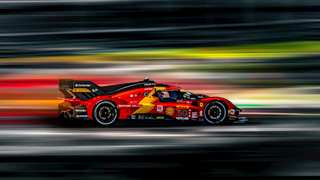 Engine: 4.0L V8 Hybrid Powertrain
Horsepower: 1,035 hp
Maximum Velocity: 250 mph (403 km/h)
Configuration: Unique 3-Seat Layout with Central Driving Position
The McLaren Speedtail stands as the spiritual successor to the iconic F1, not in terms of track-focused performance, but in its revolutionary seating arrangement and its extraordinary top speed capabilities. This vehicle is precisely what McLaren defines as a “Hyper-GT,” engineered to traverse continents at blistering speeds of up to 250 mph.
Its silhouette is a breathtaking marvel of aerodynamic efficiency, a perfect teardrop shape – the most aerodynamically fluid form found in nature. The Speedtail stretches over five meters in length, its design meticulously honed to minimize drag. It foregoes traditional side mirrors, employing discreet camera systems instead, and features fixed front wheel covers to further smooth airflow. The most astonishing innovation lies in its flexible carbon fiber ailerons. Instead of a conventional hinged rear wing, the carbon fiber rear bodywork dynamically bends and flexes to subtly alter the car’s aerodynamic profile, a feat of material science and engineering artistry.
Mirroring the F1, the driving position is centrally located, offering a commanding and unique perspective. In its electric mode, the Speedtail glides in near silence, and at higher velocities, its effortless performance is captivating. It represents the most elegant and refined McLaren ever created, a fusion of extreme speed and sublime luxury.
The McLaren MP4-12C (2011-2014): The Genesis of a Modern Era
Engine: 3.8L Twin-Turbocharged V8 (M838T)
Horsepower: 592 hp
Significance: The inaugural production car of McLaren Automotive’s modern era, setting new benchmarks.
While the legendary F1 preceded it, the MP4-12C, later simplified to the 12C, was the pivotal vehicle that launched McLaren Automotive as a formidable and direct competitor to established giants like Ferrari and Lamborghini.
The 12C was a showcase of technological innovation. It introduced the groundbreaking MonoCell, a carbon fiber chassis weighing a mere 75kg. At a time when carbon fiber tubs were exclusive to multi-million dollar hypercars, McLaren democratized this technology, making it accessible at a $230,000 price point. It also pioneered the Proactive Chassis Control system. The 12C uniquely lacks conventional anti-roll bars. Instead, its dampers are hydraulically interconnected. This revolutionary design allows the car to offer Rolls-Royce-like comfort in a straight line, as the wheels can articulate independently, while providing F1-levels of stiffness and responsiveness in corners, as the hydraulic fluid dynamically adjusts the damping forces.
Despite a somewhat uninspired name (often likened to a fax machine) and early teething issues with its electrical systems, the 12C laid the crucial technological groundwork for every subsequent McLaren model, proving the viability and superiority of their advanced engineering principles.
The McLaren Solus GT (2023): The Ultimate Track Day Fantasy Realized
Engine: 5.2L Naturally Aspirated V10
Horsepower: 829 hp
Redline: Exceeding 10,000 RPM
Seating Configuration: Single-Seater Cockpit
The Solus GT represents the most extreme and uninhibited expression of McLaren’s road-car capabilities ever offered. Its genesis lies in the virtual world, originating as the “McLaren Ultimate Vision Gran Turismo” concept for the PlayStation game Gran Turismo. However, McLaren’s ambitious Special Operations (MSO) division then made the audacious decision to construct 25 real-world examples of this extraordinary machine.
What sets the Solus GT apart is its radical departure from McLaren’s typical V8 or V6 turbo powertrains. It is propelled by a spine-tingling Judd V10 racing engine, capable of revving past an astonishing 10,000 RPM. Entry into the cockpit is achieved by sliding the canopy forward, reminiscent of a fighter jet, and there are no conventional doors. The driver is seated in a custom-molded position with legs raised high. The aerodynamic package is so extreme that the car generates 1,200kg of downforce, exceeding its own curb weight of 1,000kg. This remarkable ratio implies the theoretical capability of driving upside down within a tunnel.
The Solus GT embodies the “No Limits” ethos of McLaren’s MSO division, effectively bridging the gap between the boundless imagination of video games and the tangible reality of automotive engineering. It is a pure distillation of track performance, a one-off masterpiece built for the ultimate driving enthusiast.
The Pillars of Woking’s Engineering Prowess: What Defines a McLaren
To truly appreciate the exceptional nature of these ten vehicles, it’s essential to understand the core engineering principles that unite them, the three pillars upon which McLaren’s performance philosophy is built.
The Carbon Heart: MonoCell & Monocage Technology
Every modern McLaren, from the entry-level Artura to the hyper-exclusive P1, is constructed around a carbon fiber monocoque, known as the MonoCell or Monocage. This forms the car’s safety cell and structural backbone. It is exceptionally lightweight yet possesses immense torsional rigidity. While competitors for years relied on aluminum chassis for their mid-tier offerings, McLaren’s commitment to carbon fiber from the outset provided a fundamental advantage in structural integrity, directly translating into more precise handling and superior driver feedback.
Hydraulic Steering: The Tactile Connection
In the 2010s, a significant trend across the automotive industry was the widespread adoption of Electric Power Assist Steering (EPAS) systems, primarily for fuel efficiency gains and the enablement of advanced driver-assistance features. McLaren, however, resolutely resisted this shift, maintaining their preference for electro-hydraulic steering systems. The reason is profound: hydraulic fluid possesses a unique ability to transmit subtle “road texture” and information directly to the driver’s fingertips. In a McLaren, you can discern the texture of the asphalt, feel the nuances of changing grip levels, and understand precisely when the front tires are approaching their limit. This almost telepathic connection between car and driver is a defining characteristic of the McLaren dynamic.
Brake Steer: The Surgical Advantage
McLaren’s innovative “Brake Steer” system, which was famously banned from Formula 1 in the late 1990s due to its effectiveness as an unfair advantage, was ingeniously integrated into their road cars. This sophisticated system subtly applies the brakes to the inside rear wheel during corner entry. This action effectively pivots the car’s nose towards the apex, significantly reducing understeer – the tendency for the car to push wide. The result is a more agile and responsive turn-in, enabling even novice drivers to achieve heroic cornering speeds and making seasoned drivers feel like absolute masters of the machine.
Conclusion: The Clinical Architects of Speed
McLaren’s journey has been anything but linear, marked by periods of financial turbulence, criticism for a rapid product cycle, and constant comparisons to the more emotionally driven Italian manufacturers. Yet, the exceptional lineage of vehicles presented here serves as irrefutable validation of their engineering-centric approach. From the foundational F1 to the track-devouring Senna and the exhilarating 765LT, the common thread is a relentless, almost fanatical pursuit of ultimate performance. McLaren does not build cars as mere fashion statements; they engineer machines designed to dissect a racetrack with the precision of a surgeon’s scalpel, transforming raw physics into an unparalleled driving experience.
Engine: 4.0L V8 Hybrid Powertrain
Horsepower: 1,035 hp
Maximum Velocity: 250 mph (403 km/h)
Configuration: Unique 3-Seat Layout with Central Driving Position
The McLaren Speedtail stands as the spiritual successor to the iconic F1, not in terms of track-focused performance, but in its revolutionary seating arrangement and its extraordinary top speed capabilities. This vehicle is precisely what McLaren defines as a “Hyper-GT,” engineered to traverse continents at blistering speeds of up to 250 mph.
Its silhouette is a breathtaking marvel of aerodynamic efficiency, a perfect teardrop shape – the most aerodynamically fluid form found in nature. The Speedtail stretches over five meters in length, its design meticulously honed to minimize drag. It foregoes traditional side mirrors, employing discreet camera systems instead, and features fixed front wheel covers to further smooth airflow. The most astonishing innovation lies in its flexible carbon fiber ailerons. Instead of a conventional hinged rear wing, the carbon fiber rear bodywork dynamically bends and flexes to subtly alter the car’s aerodynamic profile, a feat of material science and engineering artistry.
Mirroring the F1, the driving position is centrally located, offering a commanding and unique perspective. In its electric mode, the Speedtail glides in near silence, and at higher velocities, its effortless performance is captivating. It represents the most elegant and refined McLaren ever created, a fusion of extreme speed and sublime luxury.
The McLaren MP4-12C (2011-2014): The Genesis of a Modern Era
Engine: 3.8L Twin-Turbocharged V8 (M838T)
Horsepower: 592 hp
Significance: The inaugural production car of McLaren Automotive’s modern era, setting new benchmarks.
While the legendary F1 preceded it, the MP4-12C, later simplified to the 12C, was the pivotal vehicle that launched McLaren Automotive as a formidable and direct competitor to established giants like Ferrari and Lamborghini.
The 12C was a showcase of technological innovation. It introduced the groundbreaking MonoCell, a carbon fiber chassis weighing a mere 75kg. At a time when carbon fiber tubs were exclusive to multi-million dollar hypercars, McLaren democratized this technology, making it accessible at a $230,000 price point. It also pioneered the Proactive Chassis Control system. The 12C uniquely lacks conventional anti-roll bars. Instead, its dampers are hydraulically interconnected. This revolutionary design allows the car to offer Rolls-Royce-like comfort in a straight line, as the wheels can articulate independently, while providing F1-levels of stiffness and responsiveness in corners, as the hydraulic fluid dynamically adjusts the damping forces.
Despite a somewhat uninspired name (often likened to a fax machine) and early teething issues with its electrical systems, the 12C laid the crucial technological groundwork for every subsequent McLaren model, proving the viability and superiority of their advanced engineering principles.
The McLaren Solus GT (2023): The Ultimate Track Day Fantasy Realized
Engine: 5.2L Naturally Aspirated V10
Horsepower: 829 hp
Redline: Exceeding 10,000 RPM
Seating Configuration: Single-Seater Cockpit
The Solus GT represents the most extreme and uninhibited expression of McLaren’s road-car capabilities ever offered. Its genesis lies in the virtual world, originating as the “McLaren Ultimate Vision Gran Turismo” concept for the PlayStation game Gran Turismo. However, McLaren’s ambitious Special Operations (MSO) division then made the audacious decision to construct 25 real-world examples of this extraordinary machine.
What sets the Solus GT apart is its radical departure from McLaren’s typical V8 or V6 turbo powertrains. It is propelled by a spine-tingling Judd V10 racing engine, capable of revving past an astonishing 10,000 RPM. Entry into the cockpit is achieved by sliding the canopy forward, reminiscent of a fighter jet, and there are no conventional doors. The driver is seated in a custom-molded position with legs raised high. The aerodynamic package is so extreme that the car generates 1,200kg of downforce, exceeding its own curb weight of 1,000kg. This remarkable ratio implies the theoretical capability of driving upside down within a tunnel.
The Solus GT embodies the “No Limits” ethos of McLaren’s MSO division, effectively bridging the gap between the boundless imagination of video games and the tangible reality of automotive engineering. It is a pure distillation of track performance, a one-off masterpiece built for the ultimate driving enthusiast.
The Pillars of Woking’s Engineering Prowess: What Defines a McLaren
To truly appreciate the exceptional nature of these ten vehicles, it’s essential to understand the core engineering principles that unite them, the three pillars upon which McLaren’s performance philosophy is built.
The Carbon Heart: MonoCell & Monocage Technology
Every modern McLaren, from the entry-level Artura to the hyper-exclusive P1, is constructed around a carbon fiber monocoque, known as the MonoCell or Monocage. This forms the car’s safety cell and structural backbone. It is exceptionally lightweight yet possesses immense torsional rigidity. While competitors for years relied on aluminum chassis for their mid-tier offerings, McLaren’s commitment to carbon fiber from the outset provided a fundamental advantage in structural integrity, directly translating into more precise handling and superior driver feedback.
Hydraulic Steering: The Tactile Connection
In the 2010s, a significant trend across the automotive industry was the widespread adoption of Electric Power Assist Steering (EPAS) systems, primarily for fuel efficiency gains and the enablement of advanced driver-assistance features. McLaren, however, resolutely resisted this shift, maintaining their preference for electro-hydraulic steering systems. The reason is profound: hydraulic fluid possesses a unique ability to transmit subtle “road texture” and information directly to the driver’s fingertips. In a McLaren, you can discern the texture of the asphalt, feel the nuances of changing grip levels, and understand precisely when the front tires are approaching their limit. This almost telepathic connection between car and driver is a defining characteristic of the McLaren dynamic.
Brake Steer: The Surgical Advantage
McLaren’s innovative “Brake Steer” system, which was famously banned from Formula 1 in the late 1990s due to its effectiveness as an unfair advantage, was ingeniously integrated into their road cars. This sophisticated system subtly applies the brakes to the inside rear wheel during corner entry. This action effectively pivots the car’s nose towards the apex, significantly reducing understeer – the tendency for the car to push wide. The result is a more agile and responsive turn-in, enabling even novice drivers to achieve heroic cornering speeds and making seasoned drivers feel like absolute masters of the machine.
Conclusion: The Clinical Architects of Speed
McLaren’s journey has been anything but linear, marked by periods of financial turbulence, criticism for a rapid product cycle, and constant comparisons to the more emotionally driven Italian manufacturers. Yet, the exceptional lineage of vehicles presented here serves as irrefutable validation of their engineering-centric approach. From the foundational F1 to the track-devouring Senna and the exhilarating 765LT, the common thread is a relentless, almost fanatical pursuit of ultimate performance. McLaren does not build cars as mere fashion statements; they engineer machines designed to dissect a racetrack with the precision of a surgeon’s scalpel, transforming raw physics into an unparalleled driving experience.
 If you’re captivated by the artistry of automotive engineering and the pursuit of peak performance, understanding McLaren’s unwavering commitment to these principles is key. Explore further, research specific models that ignite your passion, and discover how McLaren continues to redefine what’s possible on four wheels.