
The Megawatt Monsters: A Deep Dive into the Apex of Hypercar Horsepower in 2024-2025
The automotive landscape has undergone a seismic shift. A decade ago, a car breaking the 1,000 horsepower barrier was headline news, a feat reserved for the likes of the Bugatti Veyron in 2005 – a number that seemed almost alien for a road-going machine. Fast forward to 2024-2025, and that very figure is now the mere ante to enter the hypercar elite. We are no longer discussing mere horsepower figures; we’ve officially entered the realm of the “Megacar,” a term coined by the visionary Christian von Koenigsegg for vehicles exceeding one megawatt, roughly 1,341 horsepower. This is the era of ultimate automotive engineering, where production cars are essentially land-based rockets, born from an intense, exhilarating battle between the roaring heart of the internal combustion engine (ICE) and the silent, immediate surge of electric propulsion. The following chronicle details the ten most potent production vehicles gracing our planet today, meticulously analyzed and ranked.
Rimac Nevera R (Croatia): The Electric Sovereign
Powertrain: Quad-Motor Electric
Horsepower: 2,107 hp
Torque: 1,740 lb-ft
0-60 mph: 1.74 seconds
If the standard Rimac Nevera was a lightning strike, the Nevera R is a solar flare. This track-focused evolution of the world’s quickest electric car is pushing the very boundaries of tire adhesion and fundamental physics. The engineering is revolutionary: four independent, surface-mounted permanent magnet motors, one dedicated to each wheel. This facilitates what can only be described as the holy grail of automotive dynamics: Rimac All-Wheel Torque Vectoring (R-AWTV). The system meticulously analyzes the grip level of each tire 100 times every second, instantaneously optimizing power delivery. It can literally steer the car not just through the steering wheel input, but by ferociously hucking immense power to the outside wheels while simultaneously applying regenerative braking to the inside, creating an almost supernatural agility. Bolstered by a new 108 kWh battery pack engineered for extreme discharge rates, the ‘R’ variant unleashes an additional 193 horsepower over its predecessor, culminating in a staggering 2,107 hp.
Experiencing the Nevera R is akin to being instantly teleported. There are no gear changes, no hint of turbo lag, no gradual build-up. You depress the accelerator, and the horizon simply rushes to meet you. It has shattered records, including the blistering 0-300 km/h (0-186 mph) sprint in a mere 8.66 seconds – a time that would leave a legendary McLaren F1 still finding its rhythm in third gear. This Croatian marvel represents the absolute zenith of electric hypercar performance.
Lotus Evija (United Kingdom): The Aerodynamic Emissary
Powertrain: Quad-Motor Electric
Horsepower: 2,011 hp
Torque: 1,257 lb-ft
Weight: Approximately 1,680 kg (Target)
Lotus, a brand built on Colin Chapman’s timeless mantra of “Simplify, then add lightness,” has taken a daring pivot with the Evija (pronounced E-vi-ya). While seemingly adding immense power, the core philosophy of lightness is remarkably preserved, making it the most featherweight EV hypercar in its class. The genius lies not solely in its 2,000+ horsepower powertrain, meticulously crafted by Williams Advanced Engineering, but in its “porosity.” The Evija’s design is literally sculpted by airflow. Two colossal Venturi tunnels blast through the car’s rear flanks, channeling air from the sides and expelling it at the back. This ingenious design drastically reduces drag while generating colossal downforce without resorting to ostentatious, oversized wings. The battery pack, a critical component, is ingeniously housed centrally behind the occupants, mimicking the mid-engine layout of traditional sports cars, thereby preserving the low-slung driving posture and dynamic purity that Lotus is renowned for.
With five distinct driving modes – Range, City, Tour, Sport, and Track – the Evija can adapt from docile to ferocious. Engage Track mode, and it unleashes its full 2,011 hp. Lotus proudly claims this as the most powerful production car ever to bear a British badge, serving as a potent symbol of the brand’s decisive transition away from fossil fuels and towards an all-electric future.
Aspark Owl (Japan): The Ground-Hugging Predator
Powertrain: Quad-Motor Electric
Horsepower: 1,984 hp
Torque: 1,475 lb-ft
Height: 99 cm (39 inches)
Hailing from Osaka, Japan, the Aspark Owl is a true automotive anomaly. Standing barely a meter tall, it is arguably the lowest road-legal car on the planet, appearing more like a Le Mans prototype that has breached the circuit barriers. Its engineering is singularly focused on explosive acceleration. For a significant period, it held the undisputed title of the world’s fastest accelerating car, with a verified 0-60 mph time of 1.69 seconds (including rollout). The chassis is an incredibly light (120kg) single-piece carbon fiber monocoque. A unique characteristic is its ability to achieve extreme motor RPMs, addressing a common EV limitation by ensuring formidable top-end speed. The Owl can reach an astonishing 248 mph (400 km/h), proving its capability extends far beyond its initial blistering sprint.
The interior experience is intentionally Spartan, utilitarian, and laser-focused on performance. Luxury takes a backseat to raw speed. The driving position is so reclined that your feet are virtually level with your heart, a testament to the Japanese dedication to achieving a singular, extreme objective: utter domination of the stopwatch.
Pininfarina Battista (Italy): The Artful Bruiser
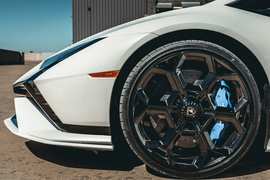 Powertrain: Quad-Motor Electric
Horsepower: 1,900 hp
Torque: 1,726 lb-ft
0-60 mph: 1.79 seconds
Automobili Pininfarina, the legendary design house responsible for some of Ferrari’s most iconic creations like the 458 Italia and the F40, has embarked on its inaugural solo manufacturing venture with the Battista. While it shares its fundamental powertrain architecture with the Rimac Nevera, the tuning, character, and soul are unequivocally Italian. Pininfarina classifies the Battista as a “Hyper GT” (Grand Tourer), prioritizing visceral emotion and luxurious refinement over outright lap times. The suspension is meticulously calibrated for enhanced on-road compliance. Even the soundscape is an engineering marvel, employing a synthesized frequency tuned to 54 Hz – the resonant frequency of the human body – designed to evoke a sense of profound well-being. However, this embrace of luxury should not obscure its raw power; with 1,900 hp, it stands as the most potent road-legal car ever produced in Italy, eclipsing anything to emerge from Maranello or Sant’Agata.
Driving a Battista is an exercise in sublime contradiction. You are enveloped in a cabin crafted from sustainable leather, surrounded by exquisite, jewelry-like aluminum switchgear, yet beneath your right foot lies a force capable of challenging planetary rotation. It is a perfect paradox of unbridled violence wrapped in the softest velvet.
Zenvo Aurora (Denmark): The Nordic Fury
Powertrain: 6.6L Quad-Turbo V12 + Electric Motors
Horsepower: 1,850 hp
Torque: 1,254 lb-ft
Redline: 9,800 RPM
While the global automotive industry trends toward downsizing, the audacious engineers at Zenvo in Denmark have defiantly engineered a Quad-Turbo V12. The Aurora, a name evoking celestial power, is offered in two distinct guises: “Agil” (Agile – for the track) and “Tur” (Touring – optimized for top speed). The heart of this Danish beast is a bespoke V12 engine, a masterpiece developed by MAHLE Powertrain. It features four diminutive turbochargers, engineered for instantaneous spool-up, effectively eliminating any semblance of lag. This monstrous ICE powerplant alone churns out an astonishing 1,250 hp. The remaining 600 hp are seamlessly integrated via a sophisticated hybrid system. In the “Tur” configuration, electric motors propel the front wheels, working in concert with the V12 driving the rears for an all-wheel-drive experience. The “Agil” variant is exclusively rear-wheel drive, prioritizing aerodynamic prowess. The chassis itself is a marvel – a “ZMR” modular carbon monocoque where the exposed engine acts as a crucial structural element, reminiscent of Formula 1 car design.
The Aurora delivers an unadulterated assault on the senses. The primal scream of a V12 redlining at an ear-splitting 9,800 RPM, punctuated by the piercing whistle of four turbochargers, creates a mechanical symphony that purely electric hypercars simply cannot replicate. It stands as the ultimate testament to the pinnacle of hybrid ICE technology.
Hennessey Venom F5 (USA): The American Brawler
Powertrain: 6.6L Twin-Turbo “Fury” V8
Horsepower: 1,817 hp
Torque: 1,193 lb-ft
Top Speed: Targeting 300+ mph (482+ km/h)
John Hennessey’s philosophy is simple, yet profound: Brute Force. The Venom F5, named after the most destructive category of tornado, represents a no-holds-barred, all-American crusade to shatter the 300 mph barrier. Unlike many of its hybrid counterparts on this list, the F5 champions a purist, “old-school” approach. There are no electric motors, no heavy battery packs. Just a meticulously crafted carbon fiber tub and a terrifyingly potent engine christened “Fury.” While conceptually rooted in the venerable LS architecture, the Fury V8 is extensively re-engineered, featuring a billet aluminum block, titanium intake valves, and two precision ball-bearing turbochargers equipped with 3D-printed titanium compressor wheels. The car’s remarkably low weight of only 1,360 kg grants it a power-to-weight ratio that is nothing short of alarming. Power is exclusively routed to the rear wheels via a CIMA 7-speed single-clutch automated manual transmission.
Piloting the Venom F5 demands profound respect and a judicious right foot. Without the safety net of all-wheel drive or the instantaneous torque vectoring of electric systems, ultimate traction is dictated solely by the driver’s skill. It is a raw, visceral, vibrating, and undeniably dangerous machine – a testament to a car built for the truly courageous.
Bugatti Tourbillon (France): The Horological Hypercar
Powertrain: 8.3L Naturally Aspirated V16 + 3 Electric Motors
Horsepower: 1,775 hp
Torque: TBD (Immense)
Redline: 9,000 RPM
The eagerly awaited successor to the legendary Chiron has arrived, and it has delivered a thunderous shock to the automotive world. Eschewing both the W16 engine and a purely electric powertrain, Bugatti has unveiled an entirely new, naturally aspirated V16 engine. This extraordinary V16 powerplant stretches nearly a meter in length. Its naturally aspirated configuration allows it to scream to a breathtaking 9,000 RPM, delivering a linear, exhilarating crescendo of sound. The combustion engine itself produces an impressive 986 hp. The remaining 789 hp are delivered by a 25 kWh battery powering three electric motors – two situated on the front axle and one at the rear. This sophisticated hybrid setup masterfully bridges the gap, providing immediate torque fill at lower engine speeds while the V16 unleashes its full sonic fury at the upper reaches of its rev range. The interior is a masterpiece of “Analogue Luxury.” The instrument cluster, designed and painstakingly constructed by Swiss watchmakers, utilizes titanium, sapphire, and ruby components. Uniquely, it is fixed to the steering column hub, meaning the steering wheel rotates around this exquisite timepiece.
The Tourbillon embodies the concept of “Timelessness.” While its performance is undeniable – 0-60 mph achieved in a mere 2.0 seconds – its true essence lies in the profound emotional connection with its mechanical soul. It harmoniously blends the instant response of electric power with the soul-stirring symphony of one of the greatest combustion engines ever conceived.
SSC Tuatara (USA): The Speed Record Chaser
Powertrain: 5.9L Twin-Turbo V8
Horsepower: 1,750 hp (on E85 Fuel)
Torque: 1,280 lb-ft
Drag Coefficient: 0.279
Powertrain: Quad-Motor Electric
Horsepower: 1,900 hp
Torque: 1,726 lb-ft
0-60 mph: 1.79 seconds
Automobili Pininfarina, the legendary design house responsible for some of Ferrari’s most iconic creations like the 458 Italia and the F40, has embarked on its inaugural solo manufacturing venture with the Battista. While it shares its fundamental powertrain architecture with the Rimac Nevera, the tuning, character, and soul are unequivocally Italian. Pininfarina classifies the Battista as a “Hyper GT” (Grand Tourer), prioritizing visceral emotion and luxurious refinement over outright lap times. The suspension is meticulously calibrated for enhanced on-road compliance. Even the soundscape is an engineering marvel, employing a synthesized frequency tuned to 54 Hz – the resonant frequency of the human body – designed to evoke a sense of profound well-being. However, this embrace of luxury should not obscure its raw power; with 1,900 hp, it stands as the most potent road-legal car ever produced in Italy, eclipsing anything to emerge from Maranello or Sant’Agata.
Driving a Battista is an exercise in sublime contradiction. You are enveloped in a cabin crafted from sustainable leather, surrounded by exquisite, jewelry-like aluminum switchgear, yet beneath your right foot lies a force capable of challenging planetary rotation. It is a perfect paradox of unbridled violence wrapped in the softest velvet.
Zenvo Aurora (Denmark): The Nordic Fury
Powertrain: 6.6L Quad-Turbo V12 + Electric Motors
Horsepower: 1,850 hp
Torque: 1,254 lb-ft
Redline: 9,800 RPM
While the global automotive industry trends toward downsizing, the audacious engineers at Zenvo in Denmark have defiantly engineered a Quad-Turbo V12. The Aurora, a name evoking celestial power, is offered in two distinct guises: “Agil” (Agile – for the track) and “Tur” (Touring – optimized for top speed). The heart of this Danish beast is a bespoke V12 engine, a masterpiece developed by MAHLE Powertrain. It features four diminutive turbochargers, engineered for instantaneous spool-up, effectively eliminating any semblance of lag. This monstrous ICE powerplant alone churns out an astonishing 1,250 hp. The remaining 600 hp are seamlessly integrated via a sophisticated hybrid system. In the “Tur” configuration, electric motors propel the front wheels, working in concert with the V12 driving the rears for an all-wheel-drive experience. The “Agil” variant is exclusively rear-wheel drive, prioritizing aerodynamic prowess. The chassis itself is a marvel – a “ZMR” modular carbon monocoque where the exposed engine acts as a crucial structural element, reminiscent of Formula 1 car design.
The Aurora delivers an unadulterated assault on the senses. The primal scream of a V12 redlining at an ear-splitting 9,800 RPM, punctuated by the piercing whistle of four turbochargers, creates a mechanical symphony that purely electric hypercars simply cannot replicate. It stands as the ultimate testament to the pinnacle of hybrid ICE technology.
Hennessey Venom F5 (USA): The American Brawler
Powertrain: 6.6L Twin-Turbo “Fury” V8
Horsepower: 1,817 hp
Torque: 1,193 lb-ft
Top Speed: Targeting 300+ mph (482+ km/h)
John Hennessey’s philosophy is simple, yet profound: Brute Force. The Venom F5, named after the most destructive category of tornado, represents a no-holds-barred, all-American crusade to shatter the 300 mph barrier. Unlike many of its hybrid counterparts on this list, the F5 champions a purist, “old-school” approach. There are no electric motors, no heavy battery packs. Just a meticulously crafted carbon fiber tub and a terrifyingly potent engine christened “Fury.” While conceptually rooted in the venerable LS architecture, the Fury V8 is extensively re-engineered, featuring a billet aluminum block, titanium intake valves, and two precision ball-bearing turbochargers equipped with 3D-printed titanium compressor wheels. The car’s remarkably low weight of only 1,360 kg grants it a power-to-weight ratio that is nothing short of alarming. Power is exclusively routed to the rear wheels via a CIMA 7-speed single-clutch automated manual transmission.
Piloting the Venom F5 demands profound respect and a judicious right foot. Without the safety net of all-wheel drive or the instantaneous torque vectoring of electric systems, ultimate traction is dictated solely by the driver’s skill. It is a raw, visceral, vibrating, and undeniably dangerous machine – a testament to a car built for the truly courageous.
Bugatti Tourbillon (France): The Horological Hypercar
Powertrain: 8.3L Naturally Aspirated V16 + 3 Electric Motors
Horsepower: 1,775 hp
Torque: TBD (Immense)
Redline: 9,000 RPM
The eagerly awaited successor to the legendary Chiron has arrived, and it has delivered a thunderous shock to the automotive world. Eschewing both the W16 engine and a purely electric powertrain, Bugatti has unveiled an entirely new, naturally aspirated V16 engine. This extraordinary V16 powerplant stretches nearly a meter in length. Its naturally aspirated configuration allows it to scream to a breathtaking 9,000 RPM, delivering a linear, exhilarating crescendo of sound. The combustion engine itself produces an impressive 986 hp. The remaining 789 hp are delivered by a 25 kWh battery powering three electric motors – two situated on the front axle and one at the rear. This sophisticated hybrid setup masterfully bridges the gap, providing immediate torque fill at lower engine speeds while the V16 unleashes its full sonic fury at the upper reaches of its rev range. The interior is a masterpiece of “Analogue Luxury.” The instrument cluster, designed and painstakingly constructed by Swiss watchmakers, utilizes titanium, sapphire, and ruby components. Uniquely, it is fixed to the steering column hub, meaning the steering wheel rotates around this exquisite timepiece.
The Tourbillon embodies the concept of “Timelessness.” While its performance is undeniable – 0-60 mph achieved in a mere 2.0 seconds – its true essence lies in the profound emotional connection with its mechanical soul. It harmoniously blends the instant response of electric power with the soul-stirring symphony of one of the greatest combustion engines ever conceived.
SSC Tuatara (USA): The Speed Record Chaser
Powertrain: 5.9L Twin-Turbo V8
Horsepower: 1,750 hp (on E85 Fuel)
Torque: 1,280 lb-ft
Drag Coefficient: 0.279
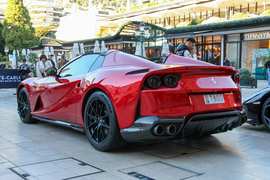 SSC North America, formerly Shelby SuperCars, has dedicated decades to the relentless pursuit of outright speed records. The Tuatara represents their magnum opus, a car penned by Jason Castriota, a designer with an illustrious pedigree from Ferrari and Maserati. The engine is the product of Nelson Racing Engines, renowned for their expertise in building colossal horsepower drag racing motors. It features a flat-plane crankshaft design, enabling higher revs and producing a distinctive, piercing scream, a stark contrast to the guttural rumble of a typical American V8. To unlock the full 1,750 hp output, the Tuatara necessitates the use of E85 ethanol fuel. Running on standard 91 octane pump gas, its output is capped at a still-impressive 1,350 hp. However, the Tuatara’s most significant asset is its aerodynamic efficiency. Boasting a drag coefficient of a mere 0.279, it slices through the air with unparalleled efficiency, a critical factor when attempting to exceed speeds of 280 mph.
The Tuatara is unequivocally a specialized straight-line missile, its capabilities proven by a verified top speed of 295 mph during testing. It stands as a formidable testament to the ingenuity and dedication of independent American automotive manufacturing.
Koenigsegg Jesko Absolut (Sweden): The Speed King
Powertrain: 5.0L Twin-Turbo V8
Horsepower: 1,600 hp (on E85 Fuel)
Torque: 1,106 lb-ft
Transmission: 9-Speed LST (Light Speed Transmission)
Christian von Koenigsegg is the undisputed modern-day Da Vinci of the automotive world. The Jesko, named in honor of his father, and specifically its “Absolut” variant, represents Koenigsegg’s ambition to forge the fastest car the company will ever produce. The engineering is a tour de force: the Jesko features the world’s lightest V8 crankshaft, weighing a mere 12.5 kg, allowing the engine to instantaneously transition from idle to 8,500 RPM in just 0.2 seconds. However, the true game-changer is the Light Speed Transmission (LST). Unlike conventional dual-clutch systems that must pre-select the subsequent gear, the LST utilizes seven clutches, enabling it to instantaneously jump from seventh gear directly to fourth, bypassing intermediate cogs entirely. This is termed “Ultimate Power on Demand” (UPOD). The Absolut variant meticulously omits the substantial rear wing found on the standard Jesko (Attack version) to minimize aerodynamic drag, theoretically enabling it to surpass the monumental 310 mph (500 km/h) mark.
Experiencing a Koenigsegg is akin to piloting a fighter jet. The “SmartCluster” display seamlessly rotates with the steering wheel, and the relentless surge of power is breathtaking. Every bolt, every washer, feels over-engineered to an astonishing degree.
Koenigsegg Gemera (Sweden): The Family Megacar
Powertrain: “Dark Matter” E-Motor + 5.0L Twin-Turbo V8 (HV8 Option)
Horsepower: 2,300 hp (Combined HV8 version)
Torque: 2,028 lb-ft
Seats: 4
Astonishingly, the final contender on this list is a four-seater. The Koenigsegg Gemera defies conventional categorization. Originally unveiled with a more modest three-cylinder engine, Koenigsegg recently stunned its clientele by offering the Jesko’s formidable V8 as an option, thus creating the Gemera HV8 (Hot V8). By integrating the 1,500 hp V8 engine alongside the new “Dark Matter” electric motor, which independently produces an astounding 800 hp, into a four-seat Grand Tourer, Koenigsegg has engineered, on paper, the most powerful production car in history. The compact dimensions of the “Dark Matter” 6-phase electric motor allowed for the V8 to be strategically placed behind the rear seats while still preserving valuable trunk space. The Gemera employs Koenigsegg Direct Drive (KDD) technology, which eliminates the need for a traditional multi-gear gearbox, offering a seamless, single-gear sensation at lower speeds, which then blends effortlessly with the V8’s immense power at higher velocities.
Picture this: accelerating from 0 to 250 mph with your family – spouse and two children – comfortably seated in the rear, enjoying rear-seat entertainment screens, while your luggage resides securely in the trunk. The Gemera HV8 is arguably the ultimate declaration of automotive prowess – a 2,300 horsepower family hauler.
Technical Crossroads: ICE vs. Electric vs. Hybrid
A thorough examination of this elite roster reveals three distinct methodologies for achieving extreme power outputs:
The Pure Electric Approach (Rimac, Lotus, Pininfarina, Aspark):
Advantages: Unrivaled instant torque delivery, simplified packaging facilitated by skateboard-style chassis architecture, relatively straightforward achievement of 2,000+ hp figures via multiple electric motors.
Disadvantages: Significant weight penalties associated with battery packs (the Rimac, for instance, weighs around 2,300 kg), absence of an evocative auditory experience, and critical challenges in managing heat during sustained high-performance track sessions.
The Pure Combustion Approach (Hennessey, SSC):
Advantages: Inherently lighter construction, visceral auditory feedback and tactile vibration, optimized for high-speed efficiency without battery drain concerns.
Disadvantages: Approaching the inherent limitations of what internal combustion and fuel can deliver, reliance on specific fuels like E85 for maximum output, the lingering presence of turbo lag (albeit minimized), and inherent traction limitations with rear-wheel-drive configurations.
The Hybrid Approach (Bugatti, Koenigsegg, Zenvo):
Advantages: The celebrated “best of both worlds” – leveraging electric torque for explosive acceleration and ICE power for exhilarating top speeds and aural drama.
Disadvantages: Unprecedented complexity in design and engineering, significantly higher development and maintenance costs, and increased overall weight due to the simultaneous inclusion of both an engine and battery systems.
Conclusion: Has the Apex Been Reached?
As we witness the Koenigsegg Gemera HV8 achieving an astonishing 2,300 horsepower and the Rimac Nevera R defying the laws of physics with its sophisticated torque vectoring, a critical question arises: Have we truly reached the zenith of automotive power? From an engineering standpoint, the limiting factor is no longer the engine itself, but rather the tires. Manufacturers like Michelin and Pirelli are now the ultimate arbiters of speed. A car could theoretically possess 5,000 horsepower, but if the tires cannot effectively transmit that colossal energy to the asphalt, it would merely result in wasted smoke.
The vehicles gracing this list represent the absolute pinnacle of the 2024-2025 automotive era. They are mobile sculptures, engineering marvels, and perhaps the final, most potent, and most sonically spectacular celebration of the automobile as we know it, before the industry embarks on its next transformative chapter.
SSC North America, formerly Shelby SuperCars, has dedicated decades to the relentless pursuit of outright speed records. The Tuatara represents their magnum opus, a car penned by Jason Castriota, a designer with an illustrious pedigree from Ferrari and Maserati. The engine is the product of Nelson Racing Engines, renowned for their expertise in building colossal horsepower drag racing motors. It features a flat-plane crankshaft design, enabling higher revs and producing a distinctive, piercing scream, a stark contrast to the guttural rumble of a typical American V8. To unlock the full 1,750 hp output, the Tuatara necessitates the use of E85 ethanol fuel. Running on standard 91 octane pump gas, its output is capped at a still-impressive 1,350 hp. However, the Tuatara’s most significant asset is its aerodynamic efficiency. Boasting a drag coefficient of a mere 0.279, it slices through the air with unparalleled efficiency, a critical factor when attempting to exceed speeds of 280 mph.
The Tuatara is unequivocally a specialized straight-line missile, its capabilities proven by a verified top speed of 295 mph during testing. It stands as a formidable testament to the ingenuity and dedication of independent American automotive manufacturing.
Koenigsegg Jesko Absolut (Sweden): The Speed King
Powertrain: 5.0L Twin-Turbo V8
Horsepower: 1,600 hp (on E85 Fuel)
Torque: 1,106 lb-ft
Transmission: 9-Speed LST (Light Speed Transmission)
Christian von Koenigsegg is the undisputed modern-day Da Vinci of the automotive world. The Jesko, named in honor of his father, and specifically its “Absolut” variant, represents Koenigsegg’s ambition to forge the fastest car the company will ever produce. The engineering is a tour de force: the Jesko features the world’s lightest V8 crankshaft, weighing a mere 12.5 kg, allowing the engine to instantaneously transition from idle to 8,500 RPM in just 0.2 seconds. However, the true game-changer is the Light Speed Transmission (LST). Unlike conventional dual-clutch systems that must pre-select the subsequent gear, the LST utilizes seven clutches, enabling it to instantaneously jump from seventh gear directly to fourth, bypassing intermediate cogs entirely. This is termed “Ultimate Power on Demand” (UPOD). The Absolut variant meticulously omits the substantial rear wing found on the standard Jesko (Attack version) to minimize aerodynamic drag, theoretically enabling it to surpass the monumental 310 mph (500 km/h) mark.
Experiencing a Koenigsegg is akin to piloting a fighter jet. The “SmartCluster” display seamlessly rotates with the steering wheel, and the relentless surge of power is breathtaking. Every bolt, every washer, feels over-engineered to an astonishing degree.
Koenigsegg Gemera (Sweden): The Family Megacar
Powertrain: “Dark Matter” E-Motor + 5.0L Twin-Turbo V8 (HV8 Option)
Horsepower: 2,300 hp (Combined HV8 version)
Torque: 2,028 lb-ft
Seats: 4
Astonishingly, the final contender on this list is a four-seater. The Koenigsegg Gemera defies conventional categorization. Originally unveiled with a more modest three-cylinder engine, Koenigsegg recently stunned its clientele by offering the Jesko’s formidable V8 as an option, thus creating the Gemera HV8 (Hot V8). By integrating the 1,500 hp V8 engine alongside the new “Dark Matter” electric motor, which independently produces an astounding 800 hp, into a four-seat Grand Tourer, Koenigsegg has engineered, on paper, the most powerful production car in history. The compact dimensions of the “Dark Matter” 6-phase electric motor allowed for the V8 to be strategically placed behind the rear seats while still preserving valuable trunk space. The Gemera employs Koenigsegg Direct Drive (KDD) technology, which eliminates the need for a traditional multi-gear gearbox, offering a seamless, single-gear sensation at lower speeds, which then blends effortlessly with the V8’s immense power at higher velocities.
Picture this: accelerating from 0 to 250 mph with your family – spouse and two children – comfortably seated in the rear, enjoying rear-seat entertainment screens, while your luggage resides securely in the trunk. The Gemera HV8 is arguably the ultimate declaration of automotive prowess – a 2,300 horsepower family hauler.
Technical Crossroads: ICE vs. Electric vs. Hybrid
A thorough examination of this elite roster reveals three distinct methodologies for achieving extreme power outputs:
The Pure Electric Approach (Rimac, Lotus, Pininfarina, Aspark):
Advantages: Unrivaled instant torque delivery, simplified packaging facilitated by skateboard-style chassis architecture, relatively straightforward achievement of 2,000+ hp figures via multiple electric motors.
Disadvantages: Significant weight penalties associated with battery packs (the Rimac, for instance, weighs around 2,300 kg), absence of an evocative auditory experience, and critical challenges in managing heat during sustained high-performance track sessions.
The Pure Combustion Approach (Hennessey, SSC):
Advantages: Inherently lighter construction, visceral auditory feedback and tactile vibration, optimized for high-speed efficiency without battery drain concerns.
Disadvantages: Approaching the inherent limitations of what internal combustion and fuel can deliver, reliance on specific fuels like E85 for maximum output, the lingering presence of turbo lag (albeit minimized), and inherent traction limitations with rear-wheel-drive configurations.
The Hybrid Approach (Bugatti, Koenigsegg, Zenvo):
Advantages: The celebrated “best of both worlds” – leveraging electric torque for explosive acceleration and ICE power for exhilarating top speeds and aural drama.
Disadvantages: Unprecedented complexity in design and engineering, significantly higher development and maintenance costs, and increased overall weight due to the simultaneous inclusion of both an engine and battery systems.
Conclusion: Has the Apex Been Reached?
As we witness the Koenigsegg Gemera HV8 achieving an astonishing 2,300 horsepower and the Rimac Nevera R defying the laws of physics with its sophisticated torque vectoring, a critical question arises: Have we truly reached the zenith of automotive power? From an engineering standpoint, the limiting factor is no longer the engine itself, but rather the tires. Manufacturers like Michelin and Pirelli are now the ultimate arbiters of speed. A car could theoretically possess 5,000 horsepower, but if the tires cannot effectively transmit that colossal energy to the asphalt, it would merely result in wasted smoke.
The vehicles gracing this list represent the absolute pinnacle of the 2024-2025 automotive era. They are mobile sculptures, engineering marvels, and perhaps the final, most potent, and most sonically spectacular celebration of the automobile as we know it, before the industry embarks on its next transformative chapter.
 Are you ready to explore the possibilities of owning a piece of this automotive history? Contact us today to discuss how you can experience the extraordinary.