
The Unplugged Soul: Top 10 Legendary Supercars That Forged Automotive History
In 2025, the pursuit of automotive velocity often feels like a downloaded app. We can acquire family haulers that slingshot to sixty in under four seconds, all while enveloped in climate-controlled serenity, the engine’s roar a distant, digitized whisper. Speed, in this era, is a readily available commodity, democratized and refined to a point where its raw essence is almost an artifact.
But rewind the clock, and speed was a potent, untamed currency. It demanded respect, a certain daring, and an intimate dialogue between driver and machine. These were the halcyon days when the supercar wasn’t just a symbol of aspiration, but a visceral experience.
Classic supercars are far more than just vintage automobiles; they are tangible conduits to a bygone era. They hail from a time predating the ubiquitous electronic sentinels of traction control, the seamless convenience of paddle shifters, and the stifling breath of emissions regulations that muted the glorious symphony of the internal combustion engine. These are machines that require a firm hand on the wheel, a patient soul for their warm-up ritual, and a honed skill set to truly command. They carry the olfactory signatures of unburnt hydrocarbons, the supple embrace of Connolly leather, and the metallic tang of hot oil.
To pilot a modern hypercar is akin to navigating a sophisticated video game. To command a classic supercar, however, is to engage in a passionate, often perilous, dance with a mechanical partner that harbors the potential for breathtaking beauty and equally breathtaking consequences.
From the rolling Tuscan hills to the boundless German Autobahns, these are the ten seminal classic supercars that laid the foundation for the performance machines of today, setting benchmarks in design, engineering, and the very spirit of driving.
Lamborghini Miura P400 (1966-1973): The Genesis of the Modern Supercar
Engine: 3.9L V12
Horsepower: 345 – 380 hp
Top Speed: 171 mph (275 km/h)
Origin: Italy
Before 1966, the pinnacle of automotive performance typically resided in front-engined grand tourers, cars like the Ferrari 275 GTB. Drivers would perch behind a commanding, elongated hood, their sensation of speed primarily achieved in a straight line. The Lamborghini Miura arrived like a bolt from the blue, fundamentally rewriting the supercar playbook. It pioneered the transverse mid-engine layout for a production car, a configuration previously exclusive to the hallowed grounds of Formula 1 racing. By transplanting this race-bred architecture onto the street, Lamborghini didn’t just create a car; it birthed the very archetype of the modern supercar.
The design, conceived by a remarkably young Marcello Gandini at Bertone, is widely lauded as one of automotive history’s most exquisite creations. It possesses an alluring, almost predatory silhouette, often described as a reclining figure. Details like the distinctive “eyelashes” framing the headlights, the intricate louvers gracing the rear engine cover, and the dramatic clam-shell opening mechanisms contribute to its theatrical presence.
The driving experience of a Miura is a captivating blend of terror and exhilaration. The V12 engine, a mere inches from the occupants, separated by glass and carpet, broadcasts its presence with an operatic intensity. At higher velocities, a characteristic aerodynamic lift at the front end, a byproduct of nascent downforce understanding, demanded constant vigilance. Driving a Miura wasn’t about delicate inputs; it was an assertion of courage. It embodied the untamed spirit and flamboyant charisma of the 1960s rock star.
Ferrari F40 (1987-1992): The Last Testament of Enzo
Engine: 2.9L Twin-Turbo V8
Horsepower: 471 hp
Top Speed: 201 mph (324 km/h)
Origin: Italy
The Ferrari F40 stands as a monumental achievement, the final automotive vision personally sanctioned by Enzo Ferrari himself. His directive was unambiguous: “Build the best car in the world.” The engineers at Maranello responded with a machine that was essentially a road-legal race car, shattering the 200 mph barrier and setting a new standard for production car performance.
Luxury was anathema to the F40’s ethos. Every gram was scrutinized for weight reduction. The body panels were constructed from Kevlar and carbon fiber, so thinly applied that the weave pattern remained visible. Amenities were stripped away: no radio, no carpets, no air conditioning, no interior door handles (replaced by a simple pull cord), and plastic slider windows. The result was a machine of stark, brutal, and uncompromised focus.
The F40 is legendary for its dramatic turbo lag. Below 4,000 RPM, it behaves with surprising civility. Then, the twin IHI turbochargers awaken with a seismic surge, unleashing an explosive torrent of power that relentlessly assaults the rear tires. Without any electronic driver aids—no ABS, no traction control, no power steering—the experience is a raw, unadulterated connection between driver and tarmac. It remains a benchmark for pure driver engagement, a testament to the enduring appeal of mechanical interaction.
Mercedes-Benz 300 SL “Gullwing” (1954-1957): The Vanguard of Velocity
Engine: 3.0L Inline-6
Horsepower: 215 hp
Top Speed: 160 mph (260 km/h)
Origin: Germany
 While the Miura defined the layout of the supercar, the Mercedes-Benz 300 SL “Gullwing” established the very concept. In an era where 70 mph was a respectable cruising speed, the Gullwing was capable of an astonishing 160 mph. It was a direct descendant of the victorious W194 Le Mans racer, meticulously adapted for road use.
The iconic upward-opening “Gullwing” doors were not a stylistic flourish but an engineering imperative. The car’s incredibly rigid tubular spaceframe chassis necessitated high side sills, making conventional doors impractical. The solution was ingenious: hinge the doors from the roof. Furthermore, the 300 SL pioneered direct fuel injection in a production car, a technology that wouldn’t become commonplace in mainstream vehicles for half a century.
The 300 SL demands respect and skill. Its swing-axle rear suspension, while advanced for its time, could induce a precarious snap oversteer if the throttle was lifted abruptly mid-corner. However, on a straight road, its power delivery was immense and relentless. The interior, a symphony of plaid fabrics and utilitarian metal toggle switches, exuded a refined, functional elegance. It stands as the venerable patriarch of every modern supercar.
McLaren F1 (1992-1998): The Pinnacle of Automotive Engineering
Engine: 6.1L BMW V12 (Naturally Aspirated)
Horsepower: 618 hp
Top Speed: 240 mph (386 km/h)
Origin: United Kingdom
Is the McLaren F1 a classic? Undoubtedly, having surpassed its third decade. Arguably the most accomplished car ever constructed, its creator, Gordon Murray, harbored an obsessive quest for lightness. This pursuit manifested in a unique central driving position (accommodating two passengers to the sides), a gold-foil-lined engine bay for superior heat dissipation, and a revolutionary carbon fiber monocoque chassis. For over a decade, it held the production car speed record and remains the fastest naturally aspirated road car ever produced.
By contemporary standards, the F1 appears remarkably svelte. It eschews ostentatious wings and aggressive splitters, achieving its staggering velocity through sheer aerodynamic efficiency and an absence of drag. Its design possesses an enduring, timeless quality.
The BMW V12 engine is the heart and soul of the F1, delivering instantaneous throttle response. The central seating position grants unparalleled forward visibility, fostering a profound connection with the road. With no power steering or brake assistance, the feedback is telepathic, a true fusion of man and machine. Experiencing the McLaren F1 is often described as the automotive equivalent of scaling Everest—a singular, profoundly rewarding journey that may never be replicated due to evolving safety mandates.
Porsche 959 (1986-1993): The Future Arrives Early
Engine: 2.8L Twin-Turbo Flat-Six
Horsepower: 444 hp
Top Speed: 197 mph (317 km/h)
Origin: Germany
While the Ferrari F40 looked to the raw, elemental past, the Porsche 959 gazed resolutely towards the future. It represented the zenith of 1980s automotive technology, introducing innovations we now consider commonplace. Its suite of advancements included electronically adjustable suspension, tire pressure monitoring systems, and, most significantly, a sophisticated computer-controlled all-wheel-drive system.
Its aesthetic, a widened and aerodynamically refined evolution of the iconic 911 silhouette, was born from its Group B rally homologation requirements. Integrated spoilers, purposeful air intakes, and broad flanks defined its form, prioritizing function over conventional beauty. It was a visual testament to its technological prowess.
The 959 offered a surprisingly accessible supercar experience. Where the F40 challenged its driver, the 959 actively assisted. Its intelligent AWD system could dynamically apportion torque to individual wheels, maximizing grip in any condition. This capability made it a car that could conquer snow, perform on track, and then return home in quiet, air-conditioned comfort. It served as a crucial technological bridge to later hypercars like the Bugatti Veyron and the Porsche 918 Spyder.
Lamborghini Countach LP400 (1974-1990): The Poster Child of Automotive Dreams
Engine: 3.9L – 5.2L V12
Horsepower: 370 – 455 hp
Top Speed: 179 mph (288 km/h)
Origin: Italy
The Lamborghini Countach is inextricably linked to the bedroom walls of a generation, the quintessential automotive fantasy of the 1980s. It didn’t just introduce sharp angles; it invented the “wedge” shape in automotive design, transforming the fluid lines of its predecessors into a polygon-based manifesto. The name “Countach” itself, a Piedmontese exclamation of astonishment, perfectly encapsulated its earth-shattering impact.
Another masterpiece from Marcello Gandini, the early “Periscopio” models exuded a pure, unadulterated form. Later iterations, like the “5000 QV,” became more aggressive, adorned with flamboyant wings and flared arches, the very embodiment of the “Wolf of Wall Street” aesthetic. Its impracticality was legendary: an impossibly wide stance, abysmal outward visibility, and the necessity of climbing onto the sill to even glimpse the rear for parking maneuvers.
The Countach demanded a physical commitment from its driver. The steering, clutch, and gearshift were substantial, requiring significant effort. The cabin could become a furnace. Yet, the intoxicating roar of its carbureted V12 and the sheer spectacle it commanded were unparalleled. Even decades later, a Countach continues to draw crowds with the magnetic force of a celestial event.
Ferrari 250 GTO (1962-1964): The Ultimate Automotive Artifact
Engine: 3.0L V12
Horsepower: 300 hp
Top Speed: 174 mph (280 km/h)
Origin: Italy
The Ferrari 250 GTO is not merely a car; it is the most valuable automobile in the world, consistently commanding auction prices that exceed tens of millions of dollars. Its stratospheric value is a confluence of breathtaking beauty, extreme rarity (only 36 were ever produced), and an unparalleled racing pedigree. It represented the final front-engined V12 racer for Ferrari before their decisive shift to mid-engine configurations.
While the Miura defined the layout of the supercar, the Mercedes-Benz 300 SL “Gullwing” established the very concept. In an era where 70 mph was a respectable cruising speed, the Gullwing was capable of an astonishing 160 mph. It was a direct descendant of the victorious W194 Le Mans racer, meticulously adapted for road use.
The iconic upward-opening “Gullwing” doors were not a stylistic flourish but an engineering imperative. The car’s incredibly rigid tubular spaceframe chassis necessitated high side sills, making conventional doors impractical. The solution was ingenious: hinge the doors from the roof. Furthermore, the 300 SL pioneered direct fuel injection in a production car, a technology that wouldn’t become commonplace in mainstream vehicles for half a century.
The 300 SL demands respect and skill. Its swing-axle rear suspension, while advanced for its time, could induce a precarious snap oversteer if the throttle was lifted abruptly mid-corner. However, on a straight road, its power delivery was immense and relentless. The interior, a symphony of plaid fabrics and utilitarian metal toggle switches, exuded a refined, functional elegance. It stands as the venerable patriarch of every modern supercar.
McLaren F1 (1992-1998): The Pinnacle of Automotive Engineering
Engine: 6.1L BMW V12 (Naturally Aspirated)
Horsepower: 618 hp
Top Speed: 240 mph (386 km/h)
Origin: United Kingdom
Is the McLaren F1 a classic? Undoubtedly, having surpassed its third decade. Arguably the most accomplished car ever constructed, its creator, Gordon Murray, harbored an obsessive quest for lightness. This pursuit manifested in a unique central driving position (accommodating two passengers to the sides), a gold-foil-lined engine bay for superior heat dissipation, and a revolutionary carbon fiber monocoque chassis. For over a decade, it held the production car speed record and remains the fastest naturally aspirated road car ever produced.
By contemporary standards, the F1 appears remarkably svelte. It eschews ostentatious wings and aggressive splitters, achieving its staggering velocity through sheer aerodynamic efficiency and an absence of drag. Its design possesses an enduring, timeless quality.
The BMW V12 engine is the heart and soul of the F1, delivering instantaneous throttle response. The central seating position grants unparalleled forward visibility, fostering a profound connection with the road. With no power steering or brake assistance, the feedback is telepathic, a true fusion of man and machine. Experiencing the McLaren F1 is often described as the automotive equivalent of scaling Everest—a singular, profoundly rewarding journey that may never be replicated due to evolving safety mandates.
Porsche 959 (1986-1993): The Future Arrives Early
Engine: 2.8L Twin-Turbo Flat-Six
Horsepower: 444 hp
Top Speed: 197 mph (317 km/h)
Origin: Germany
While the Ferrari F40 looked to the raw, elemental past, the Porsche 959 gazed resolutely towards the future. It represented the zenith of 1980s automotive technology, introducing innovations we now consider commonplace. Its suite of advancements included electronically adjustable suspension, tire pressure monitoring systems, and, most significantly, a sophisticated computer-controlled all-wheel-drive system.
Its aesthetic, a widened and aerodynamically refined evolution of the iconic 911 silhouette, was born from its Group B rally homologation requirements. Integrated spoilers, purposeful air intakes, and broad flanks defined its form, prioritizing function over conventional beauty. It was a visual testament to its technological prowess.
The 959 offered a surprisingly accessible supercar experience. Where the F40 challenged its driver, the 959 actively assisted. Its intelligent AWD system could dynamically apportion torque to individual wheels, maximizing grip in any condition. This capability made it a car that could conquer snow, perform on track, and then return home in quiet, air-conditioned comfort. It served as a crucial technological bridge to later hypercars like the Bugatti Veyron and the Porsche 918 Spyder.
Lamborghini Countach LP400 (1974-1990): The Poster Child of Automotive Dreams
Engine: 3.9L – 5.2L V12
Horsepower: 370 – 455 hp
Top Speed: 179 mph (288 km/h)
Origin: Italy
The Lamborghini Countach is inextricably linked to the bedroom walls of a generation, the quintessential automotive fantasy of the 1980s. It didn’t just introduce sharp angles; it invented the “wedge” shape in automotive design, transforming the fluid lines of its predecessors into a polygon-based manifesto. The name “Countach” itself, a Piedmontese exclamation of astonishment, perfectly encapsulated its earth-shattering impact.
Another masterpiece from Marcello Gandini, the early “Periscopio” models exuded a pure, unadulterated form. Later iterations, like the “5000 QV,” became more aggressive, adorned with flamboyant wings and flared arches, the very embodiment of the “Wolf of Wall Street” aesthetic. Its impracticality was legendary: an impossibly wide stance, abysmal outward visibility, and the necessity of climbing onto the sill to even glimpse the rear for parking maneuvers.
The Countach demanded a physical commitment from its driver. The steering, clutch, and gearshift were substantial, requiring significant effort. The cabin could become a furnace. Yet, the intoxicating roar of its carbureted V12 and the sheer spectacle it commanded were unparalleled. Even decades later, a Countach continues to draw crowds with the magnetic force of a celestial event.
Ferrari 250 GTO (1962-1964): The Ultimate Automotive Artifact
Engine: 3.0L V12
Horsepower: 300 hp
Top Speed: 174 mph (280 km/h)
Origin: Italy
The Ferrari 250 GTO is not merely a car; it is the most valuable automobile in the world, consistently commanding auction prices that exceed tens of millions of dollars. Its stratospheric value is a confluence of breathtaking beauty, extreme rarity (only 36 were ever produced), and an unparalleled racing pedigree. It represented the final front-engined V12 racer for Ferrari before their decisive shift to mid-engine configurations.
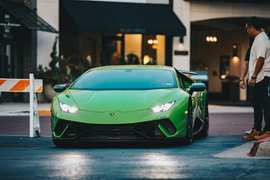 Designed by Scaglietti, its aerodynamic form transcended mere engineering, achieving a level of pure artistry. The elongated hood, the truncated Kamm-tail rear, and the distinctive triple “D-shaped” vents on the nose have become enduring icons of automotive design.
Despite its astronomical value and museum-worthy status, the 250 GTO is a phenomenal driver’s car. Its feather-light construction (under 1,000 kg), exquisite balance, and communicative chassis provide an intimate connection to the road. The 3.0-liter Colombo V12 sings a glorious crescendo as it spins to 8,000 RPM. Built to endure 24-hour races at Le Mans, its robust engineering is evident. Its owners, often participating in prestigious vintage events like the Goodwood Revival, routinely risk immense financial value for the sheer ecstasy of its driving experience.
Jaguar E-Type Series 1 (1961-1968): The British Epitome of Elegance
Engine: 3.8L / 4.2L Inline-6
Horsepower: 265 hp
Top Speed: 150 mph (241 km/h)
Origin: United Kingdom
Upon its unveiling at the 1961 Geneva Motor Show, Enzo Ferrari famously declared the Jaguar E-Type “the most beautiful car ever made.” But its appeal extended far beyond its stunning aesthetics. It boasted advanced independent rear suspension, disc brakes on all four wheels, and a top speed of 150 mph, performance that rivaled established titans like Ferrari and Aston Martin at a fraction of the cost. It was the definitive automotive rock star of the 1960s.
The E-Type’s proportions are legendary: an impossibly long bonnet that sweeps towards a sensuous, curvaceous body, accented by elegant wire wheels and gleaming chrome bumpers, defining a classic British elegance. The Series 1, distinguished by its covered headlights, is often regarded as the purest and most desirable iteration.
The E-Type is a sublime grand tourer. Its smooth and torquey inline-six engine, combined with a remarkably compliant ride thanks to its sophisticated suspension, makes it exceptionally comfortable for long-distance journeys. While not as razor-sharp as a dedicated track weapon, it offers a rapid and joyous cross-continental touring experience, a smile-inducing companion for any adventure.
Shelby Cobra 427 S/C (1965-1967): The Transatlantic Beast Unleashed
Engine: 7.0L Ford V8
Horsepower: 425 – 485 hp
Top Speed: 165 mph (265 km/h)
Origin: UK / USA
The Shelby Cobra’s genesis was a simple yet audacious formula: merge a lightweight British roadster (the AC Ace) with the most potent American V8 engine available. The result was the legendary Shelby Cobra, with the 427 “S/C” (Semi-Competition) version representing its ultimate street-legal iteration. This was a race car barely tamed for public roads, instilling a primal sense of fear and exhilaration in all who dared to command it.
Its appearance is that of a muscle car amplified to monstrous proportions. Massively flared fenders accommodate its aggressive stance and wide tires. Exposed side pipes pose a burning hazard to unwary legs. With no roof or side windows, just a rudimentary roll bar and a steering wheel, it was an elemental machine.
The Cobra 427 S/C is pure, unadulterated violence. A colossal 7.0-liter V8 shoehorned into a chassis weighing less than a subcompact car results in an astronomical power-to-weight ratio. Its short wheelbase makes it notoriously twitchy and responsive. Treat it with respect, and it offers an unparalleled thrill ride. Disrespect it, and it will enthusiastically pirouette you into the nearest landscape. It defines automotive “rawness.”
Bugatti EB110 SS (1991-1995): The Lost King of the Hypercar Realm
Engine: 3.5L Quad-Turbo V12
Horsepower: 603 hp
Top Speed: 218 mph (351 km/h)
Origin: Italy (during Bugatti’s Italian ownership)
Before the Veyron and the Chiron, there was the Bugatti EB110. During its brief period of Italian ownership under entrepreneur Romano Artioli, the EB110 emerged as a machine light-years ahead of its contemporaries. It featured an advanced carbon fiber chassis, meticulously engineered by an aerospace company, sophisticated all-wheel drive, and a compact yet ferocious 3.5-liter V12 engine augmented by four turbochargers.
The design, a collaboration between Marcello Gandini (the visionary behind the Miura and Countach) and Giampaolo Benedini, presented a unique, smaller horseshoe grille than its modern successors. The dramatic scissor doors and the captivating glass engine cover lent it a futuristic allure, perfectly embodying the early 1990s avant-garde.
The EB110 SS (Super Sport) variant amplified the performance, shedding weight and increasing power. Its quad-turbocharged V12 produced a unique sonic signature—a thrilling blend of high-pitched turbo whistle and raw mechanical aggression. Its exceptional handling, courtesy of the AWD system, was sublime. Tragically, the company’s bankruptcy in 1995 rendered these cars exceedingly rare, solidifying their status as the pivotal bridge between Bugatti’s storied past and its formidable modern incarnation.
The Echoes of an Analog Age: What These Legends Teach Us
These magnificent machines command astronomical values and inspire fervent collector interest for a profound reason: they represent an irretrievable chapter in automotive history. The driving experience they offer is fundamentally distinct from anything produced today, harkening back to a more elemental connection between human and machine.
The Unfiltered Feedback Loop: In a modern supercar, your inputs are often mediated by sophisticated computers. You press the brake, and a system calculates the optimal pressure. You turn the wheel, and an electric motor provides assistance. In these classic supercars, the connection is direct, mechanical. A physical cable links your foot to the engine’s throttle. A metal linkage transmits your gear selections. You feel the engine’s vibrations, the resistance of the controls, and the heat radiating from the mechanical heart. You are not merely an operator; you are an integral part of the machine.
The Beauty of Imperfection: Modern vehicles are paragons of perfection; they rarely falter, overheat, or stall. They are designed for effortless operation. Classic supercars, conversely, possess their own unique character, often defined by their perceived “flaws.” The Herculean clutch of a Countach, the exhilarating jolt of an F40’s turbo lag, the startling lift-off behavior of a Miura—these are not defects, but defining characteristics. To master these idiosyncrasies is a genuine achievement, transforming the act of driving from a passive experience into a rewarding challenge.
The Freedom of Form: Before the stringent mandates of pedestrian safety regulations dictated higher hoods and bulkier bumpers, automotive designers possessed a greater degree of stylistic freedom. This allowed for impossibly low-slung profiles, as seen in the Ford GT40 or the Miura. It enabled the elegant integration of pop-up headlights and delicate chrome pillars. The exquisite shapes of these classic supercars are, in many instances, physically impossible to replicate within the legal frameworks of today’s automotive production.
These machines are more than just historical artifacts; they are a potent reminder of an era when the thrill of driving was a more raw, demanding, and ultimately, more rewarding pursuit. They invite us to reconnect with the analog soul of the automobile.
Designed by Scaglietti, its aerodynamic form transcended mere engineering, achieving a level of pure artistry. The elongated hood, the truncated Kamm-tail rear, and the distinctive triple “D-shaped” vents on the nose have become enduring icons of automotive design.
Despite its astronomical value and museum-worthy status, the 250 GTO is a phenomenal driver’s car. Its feather-light construction (under 1,000 kg), exquisite balance, and communicative chassis provide an intimate connection to the road. The 3.0-liter Colombo V12 sings a glorious crescendo as it spins to 8,000 RPM. Built to endure 24-hour races at Le Mans, its robust engineering is evident. Its owners, often participating in prestigious vintage events like the Goodwood Revival, routinely risk immense financial value for the sheer ecstasy of its driving experience.
Jaguar E-Type Series 1 (1961-1968): The British Epitome of Elegance
Engine: 3.8L / 4.2L Inline-6
Horsepower: 265 hp
Top Speed: 150 mph (241 km/h)
Origin: United Kingdom
Upon its unveiling at the 1961 Geneva Motor Show, Enzo Ferrari famously declared the Jaguar E-Type “the most beautiful car ever made.” But its appeal extended far beyond its stunning aesthetics. It boasted advanced independent rear suspension, disc brakes on all four wheels, and a top speed of 150 mph, performance that rivaled established titans like Ferrari and Aston Martin at a fraction of the cost. It was the definitive automotive rock star of the 1960s.
The E-Type’s proportions are legendary: an impossibly long bonnet that sweeps towards a sensuous, curvaceous body, accented by elegant wire wheels and gleaming chrome bumpers, defining a classic British elegance. The Series 1, distinguished by its covered headlights, is often regarded as the purest and most desirable iteration.
The E-Type is a sublime grand tourer. Its smooth and torquey inline-six engine, combined with a remarkably compliant ride thanks to its sophisticated suspension, makes it exceptionally comfortable for long-distance journeys. While not as razor-sharp as a dedicated track weapon, it offers a rapid and joyous cross-continental touring experience, a smile-inducing companion for any adventure.
Shelby Cobra 427 S/C (1965-1967): The Transatlantic Beast Unleashed
Engine: 7.0L Ford V8
Horsepower: 425 – 485 hp
Top Speed: 165 mph (265 km/h)
Origin: UK / USA
The Shelby Cobra’s genesis was a simple yet audacious formula: merge a lightweight British roadster (the AC Ace) with the most potent American V8 engine available. The result was the legendary Shelby Cobra, with the 427 “S/C” (Semi-Competition) version representing its ultimate street-legal iteration. This was a race car barely tamed for public roads, instilling a primal sense of fear and exhilaration in all who dared to command it.
Its appearance is that of a muscle car amplified to monstrous proportions. Massively flared fenders accommodate its aggressive stance and wide tires. Exposed side pipes pose a burning hazard to unwary legs. With no roof or side windows, just a rudimentary roll bar and a steering wheel, it was an elemental machine.
The Cobra 427 S/C is pure, unadulterated violence. A colossal 7.0-liter V8 shoehorned into a chassis weighing less than a subcompact car results in an astronomical power-to-weight ratio. Its short wheelbase makes it notoriously twitchy and responsive. Treat it with respect, and it offers an unparalleled thrill ride. Disrespect it, and it will enthusiastically pirouette you into the nearest landscape. It defines automotive “rawness.”
Bugatti EB110 SS (1991-1995): The Lost King of the Hypercar Realm
Engine: 3.5L Quad-Turbo V12
Horsepower: 603 hp
Top Speed: 218 mph (351 km/h)
Origin: Italy (during Bugatti’s Italian ownership)
Before the Veyron and the Chiron, there was the Bugatti EB110. During its brief period of Italian ownership under entrepreneur Romano Artioli, the EB110 emerged as a machine light-years ahead of its contemporaries. It featured an advanced carbon fiber chassis, meticulously engineered by an aerospace company, sophisticated all-wheel drive, and a compact yet ferocious 3.5-liter V12 engine augmented by four turbochargers.
The design, a collaboration between Marcello Gandini (the visionary behind the Miura and Countach) and Giampaolo Benedini, presented a unique, smaller horseshoe grille than its modern successors. The dramatic scissor doors and the captivating glass engine cover lent it a futuristic allure, perfectly embodying the early 1990s avant-garde.
The EB110 SS (Super Sport) variant amplified the performance, shedding weight and increasing power. Its quad-turbocharged V12 produced a unique sonic signature—a thrilling blend of high-pitched turbo whistle and raw mechanical aggression. Its exceptional handling, courtesy of the AWD system, was sublime. Tragically, the company’s bankruptcy in 1995 rendered these cars exceedingly rare, solidifying their status as the pivotal bridge between Bugatti’s storied past and its formidable modern incarnation.
The Echoes of an Analog Age: What These Legends Teach Us
These magnificent machines command astronomical values and inspire fervent collector interest for a profound reason: they represent an irretrievable chapter in automotive history. The driving experience they offer is fundamentally distinct from anything produced today, harkening back to a more elemental connection between human and machine.
The Unfiltered Feedback Loop: In a modern supercar, your inputs are often mediated by sophisticated computers. You press the brake, and a system calculates the optimal pressure. You turn the wheel, and an electric motor provides assistance. In these classic supercars, the connection is direct, mechanical. A physical cable links your foot to the engine’s throttle. A metal linkage transmits your gear selections. You feel the engine’s vibrations, the resistance of the controls, and the heat radiating from the mechanical heart. You are not merely an operator; you are an integral part of the machine.
The Beauty of Imperfection: Modern vehicles are paragons of perfection; they rarely falter, overheat, or stall. They are designed for effortless operation. Classic supercars, conversely, possess their own unique character, often defined by their perceived “flaws.” The Herculean clutch of a Countach, the exhilarating jolt of an F40’s turbo lag, the startling lift-off behavior of a Miura—these are not defects, but defining characteristics. To master these idiosyncrasies is a genuine achievement, transforming the act of driving from a passive experience into a rewarding challenge.
The Freedom of Form: Before the stringent mandates of pedestrian safety regulations dictated higher hoods and bulkier bumpers, automotive designers possessed a greater degree of stylistic freedom. This allowed for impossibly low-slung profiles, as seen in the Ford GT40 or the Miura. It enabled the elegant integration of pop-up headlights and delicate chrome pillars. The exquisite shapes of these classic supercars are, in many instances, physically impossible to replicate within the legal frameworks of today’s automotive production.
These machines are more than just historical artifacts; they are a potent reminder of an era when the thrill of driving was a more raw, demanding, and ultimately, more rewarding pursuit. They invite us to reconnect with the analog soul of the automobile.
 Are you ready to experience the raw emotion and untamed performance that defined automotive excellence? Explore our curated collection of classic supercar ownership opportunities or schedule a consultation with one of our automotive heritage specialists to begin your journey into the legend.