
Woking’s Masterpieces: A Decade of Driving Innovation – The 10 Most Iconic McLaren Road Cars
The automotive landscape is a vast tapestry woven with threads of heritage, passion, and relentless engineering prowess. While brands like Ferrari ignite the soul with their tempestuous Italian flair, and Lamborghini commands attention with their audacious, dramatic designs, McLaren carves its unique niche through an unwavering obsession with perfection. For over a decade, operating from the clinically precise, almost aerospace-like McLaren Technology Centre in Woking, England, McLaren Automotive has eschewed pure emotion for the unyielding logic of physics, transforming the supercar and hypercar segments with a dedication to lightweight construction, advanced aerodynamics, and groundbreaking performance.
This isn’t about aesthetics alone, though many of their creations possess a stark, functional beauty. This is about the relentless pursuit of maximizing speed, handling, and driver engagement through an engineering ethos deeply rooted in their Formula 1 heritage. Since their strategic re-emergence as a standalone road car manufacturer in 2011 with the groundbreaking MP4-12C, McLaren has consistently pushed boundaries, introducing technologies like carbon fiber monocoques and sophisticated hydraulic suspension systems to a broader audience.
From the raw, analog purity of the 1990s legends to the electrifying, hybrid-powered marvels of the 2020s, McLaren has consistently redefined what’s possible. Here, drawing on a decade of intimate industry experience, we dissect the ten most significant McLaren road cars that have not only defined but fundamentally redefined the very concept of automotive velocity and driver connection. These aren’t just cars; they are statements of intent, meticulously crafted machines designed to deliver an unparalleled driving experience.
McLaren F1 (1992-1998): The Unassailable Benchmark
Engine: 6.1L Naturally Aspirated BMW S70/2 V12
Horsepower: 618 hp
Top Speed: 240.1 mph (386 km/h)
Production: 106 units (64 road variants)
It is impossible to discuss the zenith of McLaren’s road-going achievements without placing the F1 squarely at the apex. This is not merely a car; it’s a philosophical treatise on automotive engineering, a testament to the vision of Gordon Murray. His directive was audacious: create the finest driver’s car ever conceived. To achieve this, Murray embraced exotic materials previously unheard of in series production. The F1 was the world’s first production car to feature a carbon fiber monocoque chassis, a decision that offered unparalleled rigidity and a dramatically low weight.
The ingenuity extended to the engine bay, lined with 16 grams of pure gold foil – not for ostentation, but for its exceptional heat-reflective properties. Perhaps the most iconic feature was the central driving position. This revolutionary layout, with the driver seated centrally and flanked by two passengers slightly aft, perfectly aligned the driver with the car’s center of gravity and eliminated intrusive wheel arches around the pedals.
The beating heart of the F1 was the bespoke BMW S70/2 V12. This naturally aspirated masterpiece is still widely lauded as one of the greatest internal combustion engines ever produced, delivering instantaneous throttle response and a symphony of sound that could rival any orchestra. Its 618 horsepower was sufficient to propel the F1 to an astonishing 240.1 mph, a naturally aspirated top-speed record that stood for over three decades, a testament to its aerodynamic brilliance and sheer mechanical potency. The F1’s legacy extends beyond mere speed; it achieved a class victory at the 24 Hours of Le Mans on its debut, a feat that underscored its true racing pedigree and laid the foundational principles for every McLaren that followed. This is the genesis of the McLaren DNA.
McLaren P1 (2013-2015): The Hybrid Apex Predator
Engine: 3.8L Twin-Turbo V8 + E-Motor
Horsepower: 903 hp
0-60 mph: 2.8 seconds
Production: 375 units
If the F1 was the analog king, the P1 emerged as its digital, hybrid successor, a hypercar that redefined performance boundaries. As part of the legendary “Holy Trinity” alongside the Ferrari LaFerrari and Porsche 918 Spyder, the P1 was characterized by its aggressive stance, its demanding nature, and an electrifying driving experience.
McLaren’s approach to hybridization was singular: not for fuel efficiency, but for outright performance. The electric motor was integrated to fill the turbocharger’s “torque holes,” providing immediate, relentless acceleration. The P1’s signature feature was its “Race Mode.” Engaging this setting dramatically lowered the car by 50mm, tucking the wheels within the arches, and extended the rear wing to a formidable height. In this configuration, the suspension became incredibly stiff, allowing the P1 to generate an awe-inspiring 600kg of downforce.
The P1 earned its formidable reputation, with many dubbing it the “Widowmaker.” Its rear-wheel-drive layout, coupled with the brutal, instantaneous torque delivery from its hybrid powertrain, demanded immense respect and skill. It was a car that instilled a healthy dose of fear, and that palpable sense of danger was a significant part of its intoxicating allure. For those seeking the pinnacle of hybrid hypercar performance, the McLaren P1 represented a significant step forward.
McLaren W1 (2025): The Future of Performance, Engineered Today
Engine: 4.0L Twin-Turbo V8 + E-Module
Horsepower: 1,258 hp
0-60 mph: 2.7 seconds
Significance: The next evolution of McLaren’s hypercar lineage.
Representing the cutting edge of the “1” series lineage in 2025, the McLaren W1 stands as the formidable successor to the legendary P1. Eschewing the heavier battery systems associated with conventional hybrids, the W1 embraces a lighter, more potent “E-Module” engineered with a singular focus on immediate, explosive acceleration.
 The W1’s most striking innovation is its “Active Longtail” aerodynamic system. At the touch of a button or automatically at higher speeds, the rear bodywork extends rearward by an astonishing 300mm. This transformation reconfigures the car’s aerodynamic profile, shifting it from a high-downforce cornering specialist to a low-drag streamliner, powerfully echoing the iconic McLaren F1 GTR “Longtail.”
This engineering marvel generates over 1,000kg of downforce – exceeding even the track-focused P1 GTR – yet the W1 retains a surprising level of road-going comfort. It stands as the ultimate distillation of fifty years of racing expertise, a potent affirmation that even amidst the industry-wide shift towards electrification, McLaren continues to find innovative ways to harness the raw, terrifying power of the internal combustion engine, seamlessly integrated with advanced electric propulsion. This is the future of the hypercar, available now.
McLaren F1 GTR “Longtail” (1997): The Racing Unicorn
Engine: 6.0L V12
Horsepower: 600 hp (Restricted for racing)
Significance: The genesis of the revered “LT” designation.
While the standard McLaren F1 is an undisputed icon, the F1 GTR “Longtail” represents an even rarer and more coveted breed. Developed to challenge formidable rivals like the Porsche 911 GT1 and Mercedes CLK GTR in the FIA GT Championship, McLaren undertook radical modifications to the F1’s already brilliant design.
The “Longtail” nomenclature wasn’t merely cosmetic. To dramatically increase downforce and enhance stability at extreme speeds, particularly on the notoriously fast Mulsanne Straight at Le Mans, engineers extended the car’s rear bodywork and front end. This elongated silhouette became its defining characteristic, offering unparalleled high-speed composure. Only ten of these ultra-exclusive Longtails were ever produced, including a handful of road-legal conversions, making them among the most valuable and sought-after McLarens in existence.
This legendary racer gave birth to McLaren’s highly regarded “LT” (Longtail) sub-brand. Today, when you encounter models like the 765LT or 675LT, they are direct descendants, embodying the same philosophy: a relentless pursuit of enhanced aerodynamics, reduced weight, increased power, and a visually distinctive, extended form.
McLaren 765LT (2020-2023): The Modern Track Dominator
Engine: 4.0L Twin-Turbo V8 (M840T)
Horsepower: 755 hp
0-60 mph: 2.7 seconds
Weight: 1,229 kg (Dry)
Many seasoned automotive journalists unequivocally hail the 765LT as the finest modern supercar ever produced, period. Building upon the already sensational foundation of the 720S, the 765LT amplified every aspect of its performance to an almost intoxicating level.
The engineering behind the 765LT is a masterclass in weight reduction and power enhancement. McLaren meticulously stripped away 80kg from the already feather-light 720S, employing thinner glass, removing carpeting, integrating a titanium exhaust system, and extensively utilizing carbon fiber for body panels. The gear ratios were recalibrated for savage, immediate acceleration. The 765LT is famously known for its conservative power figures; independent dyno tests have frequently revealed outputs closer to 850 horsepower at the crankshaft. On a drag strip, its performance embarrasses hypercars costing significantly more, a testament to its focused engineering.
What truly sets the 765LT apart is its raw, visceral “feel.” In stark contrast to many contemporary vehicles that offer a detached, insulated experience, the 765LT vibrates with energy. Its solid engine mounts transmit the V8’s characterful thrum directly through the chassis, and the titanium exhaust system glows with heat, spitting dramatic flames on downshifts. It’s a complete sensory overload, a powerful statement that McLaren can deliver the raw emotion and passion often associated with its Italian counterparts, but with its own unique, scientifically honed edge.
McLaren Senna (2018): Pure Aerodynamic Functionality
Engine: 4.0L Twin-Turbo V8
Horsepower: 789 hp
Downforce: 800 kg at 155 mph
Significance: The ultimate track-focused road car.
Named in honor of the legendary three-time Formula 1 World Champion Ayrton Senna, this machine carried an immense weight of expectation. Upon its unveiling, the Senna proved to be a polarizing design, with some critics deeming it aesthetically unconventional. However, McLaren’s unwavering focus was on performance, and any perceived aesthetic compromises were secondary to its track-conquering purpose.
The Senna’s design is a brutal, unapologetic manifestation of aerodynamic efficiency. Every line, vent, and scoop serves a singular purpose: maximizing lap times. Its beauty lies in its functional intent, its ability to manipulate airflow with surgical precision. The colossal rear wing is an active element, constantly adjusting to function as an airbrake or a drag-reduction system (DRS). A particularly captivating feature is the optional transparent panel in the lower doors, offering the driver a breathtaking, knee-level view of the track apex as it rushes by.
On the road, the Senna is essentially a GT3 race car homologated for street use. Its ride is exceptionally stiff, its acoustics are commanding, and its performance is uncompromising. But on a circuit, it generates such prodigious levels of grip that the physical forces exerted on the driver can be immense, a true testament to its aerodynamic prowess and an unparalleled tribute to Senna’s relentless pursuit of speed.
McLaren 675LT (2015-2017): The Beloved Enthusiast’s Choice
Engine: 3.8L Twin-Turbo V8
Horsepower: 666 hp
Significance: The car that rekindled McLaren’s emotional connection with enthusiasts.
Following the competent yet somewhat clinical MP4-12C and its successor, the 650S, McLaren delivered a revelation with the 675LT. This was the car that decisively shifted the narrative, marking the first time the venerated “Longtail” badge graced a production road car since the iconic F1 GTR.
The enduring affection for the 675LT stems from its position as arguably the “sweet spot” in McLaren’s modern lineup. While not possessing the outright ferocity of the 765LT, it offers a level of accessible performance that allows drivers to truly exploit its capabilities on public roads. Crucially, the 675LT was the first McLaren to master “Steering Feel” in a way that resonated deeply with driving purists. McLaren’s staunch commitment to retaining hydraulic steering assistance, rejecting the industry’s widespread adoption of Electric Power Assist Steering (EPAS), proved prescient. The 675LT’s steering is exquisitely communicative, relaying subtle changes in road surface and tire adhesion directly to the driver’s hands, providing an intimate connection to the asphalt.
Production was limited to 500 Coupes and 500 Spiders, and their market value remains exceptionally strong. Enthusiasts recognize the 675LT as a definitive high-water mark for driver engagement and dynamic feedback in a modern McLaren.
The W1’s most striking innovation is its “Active Longtail” aerodynamic system. At the touch of a button or automatically at higher speeds, the rear bodywork extends rearward by an astonishing 300mm. This transformation reconfigures the car’s aerodynamic profile, shifting it from a high-downforce cornering specialist to a low-drag streamliner, powerfully echoing the iconic McLaren F1 GTR “Longtail.”
This engineering marvel generates over 1,000kg of downforce – exceeding even the track-focused P1 GTR – yet the W1 retains a surprising level of road-going comfort. It stands as the ultimate distillation of fifty years of racing expertise, a potent affirmation that even amidst the industry-wide shift towards electrification, McLaren continues to find innovative ways to harness the raw, terrifying power of the internal combustion engine, seamlessly integrated with advanced electric propulsion. This is the future of the hypercar, available now.
McLaren F1 GTR “Longtail” (1997): The Racing Unicorn
Engine: 6.0L V12
Horsepower: 600 hp (Restricted for racing)
Significance: The genesis of the revered “LT” designation.
While the standard McLaren F1 is an undisputed icon, the F1 GTR “Longtail” represents an even rarer and more coveted breed. Developed to challenge formidable rivals like the Porsche 911 GT1 and Mercedes CLK GTR in the FIA GT Championship, McLaren undertook radical modifications to the F1’s already brilliant design.
The “Longtail” nomenclature wasn’t merely cosmetic. To dramatically increase downforce and enhance stability at extreme speeds, particularly on the notoriously fast Mulsanne Straight at Le Mans, engineers extended the car’s rear bodywork and front end. This elongated silhouette became its defining characteristic, offering unparalleled high-speed composure. Only ten of these ultra-exclusive Longtails were ever produced, including a handful of road-legal conversions, making them among the most valuable and sought-after McLarens in existence.
This legendary racer gave birth to McLaren’s highly regarded “LT” (Longtail) sub-brand. Today, when you encounter models like the 765LT or 675LT, they are direct descendants, embodying the same philosophy: a relentless pursuit of enhanced aerodynamics, reduced weight, increased power, and a visually distinctive, extended form.
McLaren 765LT (2020-2023): The Modern Track Dominator
Engine: 4.0L Twin-Turbo V8 (M840T)
Horsepower: 755 hp
0-60 mph: 2.7 seconds
Weight: 1,229 kg (Dry)
Many seasoned automotive journalists unequivocally hail the 765LT as the finest modern supercar ever produced, period. Building upon the already sensational foundation of the 720S, the 765LT amplified every aspect of its performance to an almost intoxicating level.
The engineering behind the 765LT is a masterclass in weight reduction and power enhancement. McLaren meticulously stripped away 80kg from the already feather-light 720S, employing thinner glass, removing carpeting, integrating a titanium exhaust system, and extensively utilizing carbon fiber for body panels. The gear ratios were recalibrated for savage, immediate acceleration. The 765LT is famously known for its conservative power figures; independent dyno tests have frequently revealed outputs closer to 850 horsepower at the crankshaft. On a drag strip, its performance embarrasses hypercars costing significantly more, a testament to its focused engineering.
What truly sets the 765LT apart is its raw, visceral “feel.” In stark contrast to many contemporary vehicles that offer a detached, insulated experience, the 765LT vibrates with energy. Its solid engine mounts transmit the V8’s characterful thrum directly through the chassis, and the titanium exhaust system glows with heat, spitting dramatic flames on downshifts. It’s a complete sensory overload, a powerful statement that McLaren can deliver the raw emotion and passion often associated with its Italian counterparts, but with its own unique, scientifically honed edge.
McLaren Senna (2018): Pure Aerodynamic Functionality
Engine: 4.0L Twin-Turbo V8
Horsepower: 789 hp
Downforce: 800 kg at 155 mph
Significance: The ultimate track-focused road car.
Named in honor of the legendary three-time Formula 1 World Champion Ayrton Senna, this machine carried an immense weight of expectation. Upon its unveiling, the Senna proved to be a polarizing design, with some critics deeming it aesthetically unconventional. However, McLaren’s unwavering focus was on performance, and any perceived aesthetic compromises were secondary to its track-conquering purpose.
The Senna’s design is a brutal, unapologetic manifestation of aerodynamic efficiency. Every line, vent, and scoop serves a singular purpose: maximizing lap times. Its beauty lies in its functional intent, its ability to manipulate airflow with surgical precision. The colossal rear wing is an active element, constantly adjusting to function as an airbrake or a drag-reduction system (DRS). A particularly captivating feature is the optional transparent panel in the lower doors, offering the driver a breathtaking, knee-level view of the track apex as it rushes by.
On the road, the Senna is essentially a GT3 race car homologated for street use. Its ride is exceptionally stiff, its acoustics are commanding, and its performance is uncompromising. But on a circuit, it generates such prodigious levels of grip that the physical forces exerted on the driver can be immense, a true testament to its aerodynamic prowess and an unparalleled tribute to Senna’s relentless pursuit of speed.
McLaren 675LT (2015-2017): The Beloved Enthusiast’s Choice
Engine: 3.8L Twin-Turbo V8
Horsepower: 666 hp
Significance: The car that rekindled McLaren’s emotional connection with enthusiasts.
Following the competent yet somewhat clinical MP4-12C and its successor, the 650S, McLaren delivered a revelation with the 675LT. This was the car that decisively shifted the narrative, marking the first time the venerated “Longtail” badge graced a production road car since the iconic F1 GTR.
The enduring affection for the 675LT stems from its position as arguably the “sweet spot” in McLaren’s modern lineup. While not possessing the outright ferocity of the 765LT, it offers a level of accessible performance that allows drivers to truly exploit its capabilities on public roads. Crucially, the 675LT was the first McLaren to master “Steering Feel” in a way that resonated deeply with driving purists. McLaren’s staunch commitment to retaining hydraulic steering assistance, rejecting the industry’s widespread adoption of Electric Power Assist Steering (EPAS), proved prescient. The 675LT’s steering is exquisitely communicative, relaying subtle changes in road surface and tire adhesion directly to the driver’s hands, providing an intimate connection to the asphalt.
Production was limited to 500 Coupes and 500 Spiders, and their market value remains exceptionally strong. Enthusiasts recognize the 675LT as a definitive high-water mark for driver engagement and dynamic feedback in a modern McLaren.
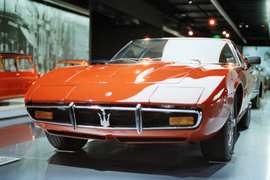 McLaren Speedtail (2020): The Ultimate Grand Tourer
Engine: 4.0L V8 Hybrid
Horsepower: 1,035 hp
Top Speed: 250 mph (403 km/h)
Layout: 3-Seat (Central Driving Position)
The Speedtail stands as the spiritual successor to the F1, not in its track-focused aggression, but in its pioneering seating layout and its pursuit of ultimate top speed. Conceived as a “Hyper-GT,” the Speedtail is engineered to traverse continents at blistering velocities in supreme comfort.
Its design is an exquisite exercise in aerodynamic artistry. Stretching over five meters in length, its body adopts a perfect teardrop shape, the most aerodynamically efficient form found in nature. Conventional side mirrors are replaced by integrated cameras, and the front wheels are shrouded by fixed covers to minimize aerodynamic disturbance. The Speedtail’s most breathtaking innovation lies in its Flexible Carbon Fiber Ailerons. Instead of a traditional hinged rear wing, the carbon fiber bodywork at the rear actively bends and flexes, dynamically altering the car’s aerodynamic profile. This is material science elevated to an art form.
Emulating the F1, the driver sits centrally, a commanding and unique sensation. In its electric mode, the Speedtail is remarkably silent, offering a serene experience. At speed, it is effortlessly composed. It is, without question, the most elegant and refined McLaren ever conceived, blending extreme performance with unparalleled luxury.
McLaren MP4-12C (2011-2014): The Modern Era’s Architect
Engine: 3.8L Twin-Turbo V8 (M838T)
Horsepower: 592 hp
Significance: The foundational production car of McLaren’s revitalized road car division.
While the F1 is the historical touchstone, the MP4-12C (later simplified to 12C) was the car that truly launched McLaren Automotive as a formidable contender against established giants like Ferrari and Lamborghini.
The 12C was a technological tour de force, most notably introducing the MonoCell – a revolutionary carbon fiber tub weighing a mere 75kg. At a time when carbon chassis were typically reserved for million-dollar hypercars, McLaren democratized this advanced material, bringing it to the $230,000 price point. Equally significant was its Proactive Chassis Control system. Eschewing traditional anti-roll bars, the 12C utilized hydraulically linked dampers. This innovative setup allowed for a supple, Rolls-Royce-like ride quality on straights (as wheels could move independently) while delivering Formula 1-levels of stiffness in corners (as hydraulic fluid stiffened the outer dampers).
Despite a somewhat awkward name and early teething issues with its electrical systems, the MP4-12C laid the crucial technological groundwork for every subsequent McLaren road car. It established the core engineering principles that continue to define the brand’s performance and handling characteristics.
McLaren Solus GT (2023): The Virtual Realm Made Real
Engine: 5.2L Naturally Aspirated V10
Horsepower: 829 hp
Redline: 10,000+ RPM
Seating: 1 (Single Seater)
The Solus GT represents perhaps the most extreme and uncompromised McLaren ever offered to the public. Its origins lie in the digital world, conceived as the “McLaren Ultimate Vision Gran Turismo” for the PlayStation game. Astonishingly, McLaren decided to transform this virtual concept into a tangible reality, producing just 25 examples.
What makes the Solus GT utterly unique is its powertrain. It deviates from McLaren’s staple V8 or V6 turbo engines, instead adopting a screaming, naturally aspirated Judd V10 racing engine that redlines beyond an exhilarating 10,000 RPM. Entry is via a fighter-jet-style sliding canopy; there are no conventional doors. The driver is ensconced in a custom-molded seat with legs raised high. Its aerodynamic package is so extreme that it generates an astonishing 1,200kg of downforce, exceeding the car’s own weight of approximately 1,000kg. This implies a theoretical capability to drive upside down in a tunnel.
The Solus GT is the ultimate expression of McLaren’s Special Operations (MSO) division’s “No Limits” philosophy, bridging the gap between fantasy and the physical realm, offering an unparalleled glimpse into the future of hypercar development.
The Pillars of Woking: What Defines a McLaren?
To truly appreciate the significance of these ten automotive titans, one must understand the foundational engineering principles that unite them, the three core pillars of McLaren’s Woking-based philosophy:
The Carbon Heart (MonoCell / Monocage): Every modern McLaren, from the entry-level Artura to the P1, is constructed around a carbon fiber tub. This forms the car’s safety cell and its structural backbone. Its incredible lightness and rigidity provide a fundamental advantage in handling precision. While rivals often utilized aluminum for their mid-range offerings for years, McLaren’s commitment to carbon fiber as standard has consistently delivered superior structural integrity, translating directly into a more responsive and agile driving experience.
Hydraulic Steering Precision: In the 2010s, the automotive industry largely migrated to Electric Power Assist Steering (EPAS) for reasons of fuel efficiency and the enablement of advanced driver-assistance systems. McLaren, however, steadfastly maintained its commitment to electro-hydraulic steering. This decision is paramount because hydraulic fluid excels at transmitting nuanced feedback from the road surface directly to the driver’s fingertips. In a McLaren, you can discern subtle changes in asphalt texture, gain an immediate understanding of the front tires’ grip levels, and enjoy a telepathic connection to the vehicle that is a hallmark of the brand’s dynamic character.
Brake Steer Technology: McLaren’s pioneering “Brake Steer” system, once deemed an unfair advantage and subsequently banned in Formula 1 in the late 1990s, found its way into their road cars. This ingenious system subtly applies the brake to the inside rear wheel during corner entry. This action effectively pivots the car’s nose towards the apex, counteracting understeer (the tendency for the front of the car to push wide) and making the car feel more agile and responsive. The result is a car that feels incredibly planted and predictable, allowing both experienced drivers and relative novices to extract more performance with greater confidence.
Conclusion: The Architects of Engineered Velocity
McLaren’s journey has been marked by periods of turbulence, facing financial challenges, criticism for a rapid product cycle, and constant comparisons to the more overtly emotional Italian marques. However, the exceptional machines outlined in this list serve as irrefutable vindication of their engineering-led approach. From the epochal F1 to the track-honed Senna and the sublime 765LT, these cars embody a relentless, uncompromising pursuit of performance. McLaren doesn’t build cars to be mere fashion statements; they engineer them to dissect the racetrack with surgical precision, to push the boundaries of physics, and to deliver an experience that is as intellectually stimulating as it is viscerally thrilling.
McLaren Speedtail (2020): The Ultimate Grand Tourer
Engine: 4.0L V8 Hybrid
Horsepower: 1,035 hp
Top Speed: 250 mph (403 km/h)
Layout: 3-Seat (Central Driving Position)
The Speedtail stands as the spiritual successor to the F1, not in its track-focused aggression, but in its pioneering seating layout and its pursuit of ultimate top speed. Conceived as a “Hyper-GT,” the Speedtail is engineered to traverse continents at blistering velocities in supreme comfort.
Its design is an exquisite exercise in aerodynamic artistry. Stretching over five meters in length, its body adopts a perfect teardrop shape, the most aerodynamically efficient form found in nature. Conventional side mirrors are replaced by integrated cameras, and the front wheels are shrouded by fixed covers to minimize aerodynamic disturbance. The Speedtail’s most breathtaking innovation lies in its Flexible Carbon Fiber Ailerons. Instead of a traditional hinged rear wing, the carbon fiber bodywork at the rear actively bends and flexes, dynamically altering the car’s aerodynamic profile. This is material science elevated to an art form.
Emulating the F1, the driver sits centrally, a commanding and unique sensation. In its electric mode, the Speedtail is remarkably silent, offering a serene experience. At speed, it is effortlessly composed. It is, without question, the most elegant and refined McLaren ever conceived, blending extreme performance with unparalleled luxury.
McLaren MP4-12C (2011-2014): The Modern Era’s Architect
Engine: 3.8L Twin-Turbo V8 (M838T)
Horsepower: 592 hp
Significance: The foundational production car of McLaren’s revitalized road car division.
While the F1 is the historical touchstone, the MP4-12C (later simplified to 12C) was the car that truly launched McLaren Automotive as a formidable contender against established giants like Ferrari and Lamborghini.
The 12C was a technological tour de force, most notably introducing the MonoCell – a revolutionary carbon fiber tub weighing a mere 75kg. At a time when carbon chassis were typically reserved for million-dollar hypercars, McLaren democratized this advanced material, bringing it to the $230,000 price point. Equally significant was its Proactive Chassis Control system. Eschewing traditional anti-roll bars, the 12C utilized hydraulically linked dampers. This innovative setup allowed for a supple, Rolls-Royce-like ride quality on straights (as wheels could move independently) while delivering Formula 1-levels of stiffness in corners (as hydraulic fluid stiffened the outer dampers).
Despite a somewhat awkward name and early teething issues with its electrical systems, the MP4-12C laid the crucial technological groundwork for every subsequent McLaren road car. It established the core engineering principles that continue to define the brand’s performance and handling characteristics.
McLaren Solus GT (2023): The Virtual Realm Made Real
Engine: 5.2L Naturally Aspirated V10
Horsepower: 829 hp
Redline: 10,000+ RPM
Seating: 1 (Single Seater)
The Solus GT represents perhaps the most extreme and uncompromised McLaren ever offered to the public. Its origins lie in the digital world, conceived as the “McLaren Ultimate Vision Gran Turismo” for the PlayStation game. Astonishingly, McLaren decided to transform this virtual concept into a tangible reality, producing just 25 examples.
What makes the Solus GT utterly unique is its powertrain. It deviates from McLaren’s staple V8 or V6 turbo engines, instead adopting a screaming, naturally aspirated Judd V10 racing engine that redlines beyond an exhilarating 10,000 RPM. Entry is via a fighter-jet-style sliding canopy; there are no conventional doors. The driver is ensconced in a custom-molded seat with legs raised high. Its aerodynamic package is so extreme that it generates an astonishing 1,200kg of downforce, exceeding the car’s own weight of approximately 1,000kg. This implies a theoretical capability to drive upside down in a tunnel.
The Solus GT is the ultimate expression of McLaren’s Special Operations (MSO) division’s “No Limits” philosophy, bridging the gap between fantasy and the physical realm, offering an unparalleled glimpse into the future of hypercar development.
The Pillars of Woking: What Defines a McLaren?
To truly appreciate the significance of these ten automotive titans, one must understand the foundational engineering principles that unite them, the three core pillars of McLaren’s Woking-based philosophy:
The Carbon Heart (MonoCell / Monocage): Every modern McLaren, from the entry-level Artura to the P1, is constructed around a carbon fiber tub. This forms the car’s safety cell and its structural backbone. Its incredible lightness and rigidity provide a fundamental advantage in handling precision. While rivals often utilized aluminum for their mid-range offerings for years, McLaren’s commitment to carbon fiber as standard has consistently delivered superior structural integrity, translating directly into a more responsive and agile driving experience.
Hydraulic Steering Precision: In the 2010s, the automotive industry largely migrated to Electric Power Assist Steering (EPAS) for reasons of fuel efficiency and the enablement of advanced driver-assistance systems. McLaren, however, steadfastly maintained its commitment to electro-hydraulic steering. This decision is paramount because hydraulic fluid excels at transmitting nuanced feedback from the road surface directly to the driver’s fingertips. In a McLaren, you can discern subtle changes in asphalt texture, gain an immediate understanding of the front tires’ grip levels, and enjoy a telepathic connection to the vehicle that is a hallmark of the brand’s dynamic character.
Brake Steer Technology: McLaren’s pioneering “Brake Steer” system, once deemed an unfair advantage and subsequently banned in Formula 1 in the late 1990s, found its way into their road cars. This ingenious system subtly applies the brake to the inside rear wheel during corner entry. This action effectively pivots the car’s nose towards the apex, counteracting understeer (the tendency for the front of the car to push wide) and making the car feel more agile and responsive. The result is a car that feels incredibly planted and predictable, allowing both experienced drivers and relative novices to extract more performance with greater confidence.
Conclusion: The Architects of Engineered Velocity
McLaren’s journey has been marked by periods of turbulence, facing financial challenges, criticism for a rapid product cycle, and constant comparisons to the more overtly emotional Italian marques. However, the exceptional machines outlined in this list serve as irrefutable vindication of their engineering-led approach. From the epochal F1 to the track-honed Senna and the sublime 765LT, these cars embody a relentless, uncompromising pursuit of performance. McLaren doesn’t build cars to be mere fashion statements; they engineer them to dissect the racetrack with surgical precision, to push the boundaries of physics, and to deliver an experience that is as intellectually stimulating as it is viscerally thrilling.
 Ready to explore the engineering marvels that define McLaren? Whether you’re captivated by the historical significance of the F1, the cutting-edge technology of the W1, or the raw emotion of the 765LT, your next automotive adventure awaits. Discover the McLaren that resonates with your passion for performance and visit a McLaren dealership or a trusted specialist to experience the Woking difference firsthand.