
The Apex Predators of Asphalt: Unveiling the Top 10 McLaren Road Cars of All Time
For a decade, I’ve navigated the rarefied air of the automotive industry, dissecting the innovations and the sheer visceral thrill that defines the world’s most extraordinary machines. When the conversation turns to hypercars, a certain mystique surrounds brands like Ferrari, Lamborghini, and Porsche. Yet, McLaren occupies a distinct space – a realm where obsession with performance isn’t just a design philosophy, but the very bedrock of its existence.
Born from the competitive crucible of Formula 1, and meticulously engineered within the sterile, visionary confines of the McLaren Technology Centre in Woking, England, McLaren Automotive approaches the creation of road-going marvels with the unyielding precision of an aerospace laboratory. Forget the emotional styling cues that often dictate Italian exotica; McLaren’s mantra is etched in physics: minimize mass, maximize aerodynamic efficiency, and push the boundaries of what’s physically possible. Since their decisive re-entry into the supercar market with the revolutionary MP4-12C in 2011, they have consistently redefined the segment, popularizing groundbreaking technologies like carbon fiber monocoques and sophisticated hydraulic suspension systems for the discerning enthusiast.
From the raw, analog brilliance of the 1990s to the electrifying complexity of 2025’s hybrid behemoths, this is an in-depth exploration of the ten McLaren road cars that have not merely participated in the evolution of speed, but have unequivocally rewritten the rules of McLaren performance.
McLaren F1 (1992-1998): The Unassailable Sovereign
Engine: 6.1L Naturally Aspirated BMW S70/2 V12
Horsepower: 618 hp
Top Speed: 240.1 mph (386 km/h)
Production: 106 units (64 road cars)
It is impossible to articulate the pantheon of automotive legends without placing the McLaren F1 at its absolute zenith. More than just a car, the F1, masterminded by the visionary Gordon Murray, was a profound declaration of intent – an automotive thesis on ultimate driver engagement and engineering perfection.
The genesis of its unparalleled status lies in its audacious engineering. Murray’s directive was deceptively simple yet staggeringly ambitious: construct the finest driver’s car in history. To achieve this, exotic materials, previously confined to the fringes of motorsport, were integrated into a production vehicle. It was the first road car to feature a full carbon-fiber monocoque chassis, a structural marvel that provided immense rigidity while drastically cutting weight. The engine bay, a testament to obsessive detail, was lined with 16 grams of pure gold foil – chosen for its unparalleled heat-reflective properties, an ingenious solution to thermal management. The unique central driving position, with the driver seated ahead of two passengers, was not an aesthetic whim; it was a carefully calculated decision to eliminate pedal intrusion from wheel arches and perfectly align the driver with the vehicle’s true center of gravity, enhancing responsiveness and control.
At its heart roared the BMW S70/2 V12, a bespoke masterpiece commissioned by McLaren. This engine is widely revered as the pinnacle of internal combustion technology, boasting an immediate throttle response and a sound that quite literally tears through the atmosphere. It was this extraordinary powertrain that propelled the F1 to a mind-bending 240.1 mph, a naturally aspirated land-speed record that endures over three decades later, a testament to its groundbreaking design. Its racing debut at the 24 Hours of Le Mans was equally legendary, clinching victory against purpose-built prototypes on its very first attempt. The F1 is not merely a car; it is the primordial essence of everything McLaren embodies.
McLaren P1 (2013-2015): The Electrifying Emperor of the Hypercar Era
Engine: 3.8L Twin-Turbo V8 + E-Motor
Horsepower: 903 hp
0-60 mph: 2.8 seconds
Production: 375 units
If the F1 was the analog king, the P1 was the digital emperor, a paradigm shift in hypercar performance. As a key member of the vaunted “Holy Trinity” of hybrid hypercars, alongside the Ferrari LaFerrari and Porsche 918 Spyder, the P1 presented an unapologetically aggressive, profoundly challenging, and utterly exhilarating driving proposition.
McLaren’s integration of electric power wasn’t an exercise in eco-consciousness; it was a strategic enhancement to obliterate turbocharger lag. The P1 employed the Instant Power Assist System (IPAS), a technology directly derived from McLaren’s F1 racing prowess, delivering instantaneous electric torque to fill any perceived gap. The defining characteristic of the P1 was its revolutionary “Race Mode.” Engaging this setting physically lowered the car by 50mm, drawing the wheels deeper into the arches, while the rear wing ascended to a seemingly audacious height. In this configuration, the suspension transformed into a solid platform with virtually no travel, enabling the P1 to generate an astonishing 600 kg of downforce – a figure previously unthinkable for a road-legal vehicle.
The driving experience of the P1 was legendary, earning it the moniker “Widowmaker.” Its ferocious, rear-wheel-drive torque delivery demanded unwavering respect. It was a machine that instilled a healthy dose of fear, and paradoxically, that fear was an integral part of its intoxicating allure. This was a car that commanded your full attention, a true test of nerve and skill, pushing the boundaries of McLaren performance tuning for its era.
McLaren W1 (2025): The Future Sovereign of Hypercar Innovation
Engine: 4.0L Twin-Turbo V8 + E-Module
Horsepower: 1,258 hp
0-60 mph: 2.7 seconds
Significance: The next-generation heir to the F1 and P1 lineage.
Representing the absolute cutting edge of the illustrious “1” series lineage in 2025, the McLaren W1 arrives with the monumental task of surpassing the P1. It boldly eschews the weight penalties of conventional hybrid battery systems, instead embracing a lightweight “E-Module” meticulously engineered for unadulterated sprint performance. This represents a significant step in new McLaren car models, focusing on a more integrated and efficient power delivery.
 The W1’s standout feature is its radical “Active Longtail” aerodynamic system. At the driver’s command, or automatically at elevated speeds, the rear bodywork gracefully extends backward by an astounding 300mm. This transforms the car’s profile from a high-downforce cornering apparatus into an ultra-low-drag streamliner, directly echoing the legendary F1 GTR Longtail. The engineering prowess of the W1 is undeniable, generating over 1,000 kg of downforce – exceeding even the track-only P1 GTR – while paradoxically retaining the refinement expected of a road-legal hypercar. It stands as the ultimate distillation of over five decades of racing acumen, proving that even in an era of electrification, McLaren remains at the vanguard of making the internal combustion engine terrifyingly potent and profoundly relevant. For those seeking ultimate McLaren speed, the W1 is the definitive answer.
McLaren F1 GTR “Longtail” (1997): The Racing Icon that Defined a Sub-Brand
Engine: 6.0L V12
Horsepower: 600 hp (Restricted for racing)
Significance: The genesis of McLaren’s revered “LT” designation.
While the standard F1 is the undisputed king, the F1 GTR “Longtail” exists as an automotive unicorn. Developed to challenge formidable rivals like the Porsche 911 GT1 and Mercedes CLK GTR in the FIA GT Championship, McLaren undertook radical modifications to the F1’s iconic bodywork.
The need for the “Longtail” configuration stemmed from aerodynamic necessity. To significantly increase downforce without introducing prohibitive drag, engineers extended the rear bodywork and the car’s nose. This stretched, distinctive silhouette bestowed unparalleled high-speed stability, particularly crucial for navigating the legendary Mulsanne Straight at Le Mans. Only ten of these exceptional Longtail variants were ever produced, including subsequent road-legal conversions, making them the rarest and arguably most valuable McLarens in existence.
This legendary race car is the direct ancestor of McLaren’s hallowed “LT” (Longtail) sub-brand. Today, when enthusiasts encounter models like the 765LT or 675LT, they are witnessing a direct homage to this specific racing machine. The LT philosophy remains consistent: amplify aerodynamic prowess, relentlessly shed weight, boost power output, and manifest it all within a physically elongated and imposing form. This lineage solidifies the McLaren LT models as some of the most sought-after vehicles.
McLaren 765LT (2020-2023): The Modern Track Weapon Redefined
Engine: 4.0L Twin-Turbo V8 (M840T)
Horsepower: 755 hp
0-60 mph: 2.7 seconds
Weight: 1,229 kg (Dry)
Many seasoned automotive journalists and critics alike have lauded the 765LT as, quite simply, the finest modern supercar ever produced. Building upon the already phenomenal foundation of the 720S, the 765LT amplified every aspect of its performance, dialing the experience up to an electrifying eleven.
The engineering transformation is staggering. McLaren meticulously stripped an additional 80 kg from the already lithe 720S. This involved the judicious use of thinner glass, the elimination of carpets, the integration of a titanium exhaust system, and the extensive application of carbon fiber for its body panels. Gear ratios were deliberately shortened to deliver ferocious acceleration. The 765LT is famously understated in its power figures; real-world dyno tests consistently reveal outputs closer to 850 hp at the crankshaft, allowing it to utterly embarrass hypercars costing multiples of its price on the drag strip.
The driving sensation is viscerally immediate. Unlike many contemporary vehicles that strive for isolation, the 765LT transmits every nuance of its V8’s character directly to the driver. Solid engine mounts ensure the engine’s vibrations are a palpable presence, a symphony of mechanical intent felt through the spine. The titanium exhaust glows with an infernal blue hue under heat and erupts in a spectacular display of flames during downshifts. It’s a sensory onslaught that irrefutably proves McLaren’s capacity for raw emotion, rivaling even its most passionate Italian counterparts. It’s a prime example of McLaren performance engineering at its most visceral.
McLaren Senna (2018): The Uncompromising Pursuit of Lap Times
Engine: 4.0L Twin-Turbo V8
Horsepower: 789 hp
Downforce: 800 kg at 155 mph
Significance: The ultimate track-focused road car, a tribute to a legend.
Named in honor of the legendary three-time Formula 1 World Champion, Ayrton Senna, this hypercar carried an immense weight of expectation. Upon its unveiling, the Senna proved divisive, its radical aesthetics drawing criticism. However, McLaren remained undeterred, prioritizing function over conventional form.
The Senna’s aerodynamic design is a masterpiece of brutal efficiency. Every curve, vent, and scoop is meticulously sculpted with a single objective: maximizing lap times. Its aesthetic is not about beauty in the traditional sense, but about the masterful manipulation of airflow. The colossal rear wing is an active component, constantly adjusting to function as an airbrake or engage the drag reduction system (DRS). A particularly captivating feature is the optional glass panel integrated into the lower doors, offering the driver an extraordinary, ground-level view of the corner apex as it rushes past their knees.
On the road, the Senna is essentially a GT3 race car homologated for street use – taut, sonorous, and utterly uncompromising. Its grip levels are so immense on a circuit that they impose a physical toll, contorting the driver’s neck. It stands as a profound tribute to Ayrton Senna’s legacy, offering the absolute fastest method of traversing a racetrack, solidifying its status among McLaren track cars.
McLaren 675LT (2015-2017): The Beloved Heartbeat of the Brand
Engine: 3.8L Twin-Turbo V8
Horsepower: 666 hp
Significance: The car credited with revitalizing McLaren’s emotional connection with enthusiasts.
Following the technically proficient but somewhat sterile MP4-12C and the competent 650S, McLaren unveiled the 675LT. This was the pivotal model that fundamentally shifted the narrative surrounding the brand, marking the first road car since the F1 GTR to bear the prestigious Longtail insignia.
The affection for the 675LT is deeply rooted in its position as arguably the “sweet spot” in McLaren’s modern portfolio. It possesses a level of speed that, while immense, allows the driver to more fully exploit its capabilities on public roads without the overwhelming intensity of its more potent siblings. Crucially, the 675LT was the first McLaren to truly master authentic “Steering Feel.” McLaren’s steadfast commitment to eschewing Electric Power Assist Steering (EPAS) in favor of electro-hydraulic assistance is a defining characteristic. The 675LT’s steering is extraordinarily communicative, transmitting every texture of the asphalt and subtle shift in grip directly to the driver’s hands, providing an unparalleled connection to the road.
Production was deliberately limited to 500 Coupes and 500 Spiders, ensuring their enduring desirability and value retention. Enthusiasts recognize the 675LT as a benchmark for driver engagement, a true testament to McLaren’s driving dynamics.
McLaren Speedtail (2020): The Hyper-GT Redefining Grand Touring
The W1’s standout feature is its radical “Active Longtail” aerodynamic system. At the driver’s command, or automatically at elevated speeds, the rear bodywork gracefully extends backward by an astounding 300mm. This transforms the car’s profile from a high-downforce cornering apparatus into an ultra-low-drag streamliner, directly echoing the legendary F1 GTR Longtail. The engineering prowess of the W1 is undeniable, generating over 1,000 kg of downforce – exceeding even the track-only P1 GTR – while paradoxically retaining the refinement expected of a road-legal hypercar. It stands as the ultimate distillation of over five decades of racing acumen, proving that even in an era of electrification, McLaren remains at the vanguard of making the internal combustion engine terrifyingly potent and profoundly relevant. For those seeking ultimate McLaren speed, the W1 is the definitive answer.
McLaren F1 GTR “Longtail” (1997): The Racing Icon that Defined a Sub-Brand
Engine: 6.0L V12
Horsepower: 600 hp (Restricted for racing)
Significance: The genesis of McLaren’s revered “LT” designation.
While the standard F1 is the undisputed king, the F1 GTR “Longtail” exists as an automotive unicorn. Developed to challenge formidable rivals like the Porsche 911 GT1 and Mercedes CLK GTR in the FIA GT Championship, McLaren undertook radical modifications to the F1’s iconic bodywork.
The need for the “Longtail” configuration stemmed from aerodynamic necessity. To significantly increase downforce without introducing prohibitive drag, engineers extended the rear bodywork and the car’s nose. This stretched, distinctive silhouette bestowed unparalleled high-speed stability, particularly crucial for navigating the legendary Mulsanne Straight at Le Mans. Only ten of these exceptional Longtail variants were ever produced, including subsequent road-legal conversions, making them the rarest and arguably most valuable McLarens in existence.
This legendary race car is the direct ancestor of McLaren’s hallowed “LT” (Longtail) sub-brand. Today, when enthusiasts encounter models like the 765LT or 675LT, they are witnessing a direct homage to this specific racing machine. The LT philosophy remains consistent: amplify aerodynamic prowess, relentlessly shed weight, boost power output, and manifest it all within a physically elongated and imposing form. This lineage solidifies the McLaren LT models as some of the most sought-after vehicles.
McLaren 765LT (2020-2023): The Modern Track Weapon Redefined
Engine: 4.0L Twin-Turbo V8 (M840T)
Horsepower: 755 hp
0-60 mph: 2.7 seconds
Weight: 1,229 kg (Dry)
Many seasoned automotive journalists and critics alike have lauded the 765LT as, quite simply, the finest modern supercar ever produced. Building upon the already phenomenal foundation of the 720S, the 765LT amplified every aspect of its performance, dialing the experience up to an electrifying eleven.
The engineering transformation is staggering. McLaren meticulously stripped an additional 80 kg from the already lithe 720S. This involved the judicious use of thinner glass, the elimination of carpets, the integration of a titanium exhaust system, and the extensive application of carbon fiber for its body panels. Gear ratios were deliberately shortened to deliver ferocious acceleration. The 765LT is famously understated in its power figures; real-world dyno tests consistently reveal outputs closer to 850 hp at the crankshaft, allowing it to utterly embarrass hypercars costing multiples of its price on the drag strip.
The driving sensation is viscerally immediate. Unlike many contemporary vehicles that strive for isolation, the 765LT transmits every nuance of its V8’s character directly to the driver. Solid engine mounts ensure the engine’s vibrations are a palpable presence, a symphony of mechanical intent felt through the spine. The titanium exhaust glows with an infernal blue hue under heat and erupts in a spectacular display of flames during downshifts. It’s a sensory onslaught that irrefutably proves McLaren’s capacity for raw emotion, rivaling even its most passionate Italian counterparts. It’s a prime example of McLaren performance engineering at its most visceral.
McLaren Senna (2018): The Uncompromising Pursuit of Lap Times
Engine: 4.0L Twin-Turbo V8
Horsepower: 789 hp
Downforce: 800 kg at 155 mph
Significance: The ultimate track-focused road car, a tribute to a legend.
Named in honor of the legendary three-time Formula 1 World Champion, Ayrton Senna, this hypercar carried an immense weight of expectation. Upon its unveiling, the Senna proved divisive, its radical aesthetics drawing criticism. However, McLaren remained undeterred, prioritizing function over conventional form.
The Senna’s aerodynamic design is a masterpiece of brutal efficiency. Every curve, vent, and scoop is meticulously sculpted with a single objective: maximizing lap times. Its aesthetic is not about beauty in the traditional sense, but about the masterful manipulation of airflow. The colossal rear wing is an active component, constantly adjusting to function as an airbrake or engage the drag reduction system (DRS). A particularly captivating feature is the optional glass panel integrated into the lower doors, offering the driver an extraordinary, ground-level view of the corner apex as it rushes past their knees.
On the road, the Senna is essentially a GT3 race car homologated for street use – taut, sonorous, and utterly uncompromising. Its grip levels are so immense on a circuit that they impose a physical toll, contorting the driver’s neck. It stands as a profound tribute to Ayrton Senna’s legacy, offering the absolute fastest method of traversing a racetrack, solidifying its status among McLaren track cars.
McLaren 675LT (2015-2017): The Beloved Heartbeat of the Brand
Engine: 3.8L Twin-Turbo V8
Horsepower: 666 hp
Significance: The car credited with revitalizing McLaren’s emotional connection with enthusiasts.
Following the technically proficient but somewhat sterile MP4-12C and the competent 650S, McLaren unveiled the 675LT. This was the pivotal model that fundamentally shifted the narrative surrounding the brand, marking the first road car since the F1 GTR to bear the prestigious Longtail insignia.
The affection for the 675LT is deeply rooted in its position as arguably the “sweet spot” in McLaren’s modern portfolio. It possesses a level of speed that, while immense, allows the driver to more fully exploit its capabilities on public roads without the overwhelming intensity of its more potent siblings. Crucially, the 675LT was the first McLaren to truly master authentic “Steering Feel.” McLaren’s steadfast commitment to eschewing Electric Power Assist Steering (EPAS) in favor of electro-hydraulic assistance is a defining characteristic. The 675LT’s steering is extraordinarily communicative, transmitting every texture of the asphalt and subtle shift in grip directly to the driver’s hands, providing an unparalleled connection to the road.
Production was deliberately limited to 500 Coupes and 500 Spiders, ensuring their enduring desirability and value retention. Enthusiasts recognize the 675LT as a benchmark for driver engagement, a true testament to McLaren’s driving dynamics.
McLaren Speedtail (2020): The Hyper-GT Redefining Grand Touring
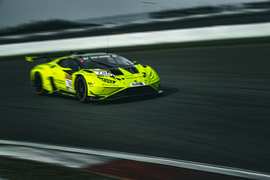 Engine: 4.0L V8 Hybrid
Horsepower: 1,035 hp
Top Speed: 250 mph (403 km/h)
Layout: 3-Seat (Central Driving Position)
The Speedtail stands as the spiritual successor to the F1, not in its track-focused pedigree, but in its audacious three-seat layout and its astonishing top speed. Positioned as a “Hyper-GT,” its primary mission is to devour continents at speeds of up to 250 mph.
Its form is a masterpiece of aerodynamic purity. The Speedtail stretches over five meters in length, its bodywork sculpted into the perfect, most efficient teardrop shape found in nature. To minimize drag, it eschews traditional side mirrors, employing advanced camera systems instead, and features fixed front wheel covers that reduce aerodynamic turbulence. Its most breathtaking innovation lies in its flexible carbon fiber ailerons. Rather than a conventional hinged rear wing, the carbon fiber rear bodywork subtly bends and flexes, dynamically altering the aerodynamic profile. This is material science magic in motion.
The driving experience is unlike any other. Like the F1, the driver is situated centrally, offering a unique and commanding perspective. In electric mode, the car glides in near silence, and at speed, it demonstrates an effortless and serene composure. It is, without question, the most elegant McLaren ever conceived, pushing the boundaries of McLaren aerodynamic design.
McLaren MP4-12C (2011-2014): The Genesis of the Modern Era
Engine: 3.8L Twin-Turbo V8 (M838T)
Horsepower: 592 hp
Significance: The inaugural production car of McLaren’s contemporary automotive venture.
While the F1 was a legendary precursor, the MP4-12C, later simply known as the 12C, was the crucial machine that firmly established McLaren Automotive as a formidable contender against established giants like Ferrari and Lamborghini.
Its technological innovation was groundbreaking. The introduction of the MonoCell, a carbon fiber chassis weighing a mere 75 kg, was revolutionary. At a time when carbon fiber chassis were largely confined to multi-million-dollar hypercars, McLaren democratized this technology, bringing it to a more accessible price point. Equally significant was its Proactive Chassis Control system. The 12C ingeniously did away with traditional anti-roll bars, instead employing hydraulically linked dampers. This allowed for a ride quality akin to a Rolls-Royce on the straight, with independent wheel movement for comfort, while transforming into an F1-stiff, corner-carving machine when pushed, as the hydraulic fluid dynamically stiffened the outside dampers.
Despite an unfortunate name that sounded more like office equipment and early teething issues with its electrical systems, the MP4-12C laid the fundamental technological groundwork for every subsequent McLaren model, cementing its place in McLaren heritage.
McLaren Solus GT (2023): The Wildest Creation from Special Operations
Engine: 5.2L Naturally Aspirated V10
Horsepower: 829 hp
Redline: 10,000+ RPM
Seating: 1 (Single Seater)
The Solus GT represents the most extreme road car McLaren has ever offered, a manifestation of pure automotive fantasy brought to life. Its origins lie in the digital realm, conceived as the “McLaren Ultimate Vision Gran Turismo” for the PlayStation gaming franchise. However, McLaren’s ambition didn’t stop there; they decided to produce just 25 units of this extraordinary machine in the real world.
Its uniqueness is profound. It breaks from McLaren’s established V8 or V6 turbocharger lineage, instead adopting a screaming Judd V10 racing engine that catapults past a 10,000 RPM redline. Entry into the cockpit is achieved by sliding the canopy forward, akin to a jet fighter, with no conventional doors. The driver is ensconced in a molded seat, legs elevated. The aerodynamic package is so aggressive that the Solus GT generates 1,200 kg of downforce, exceeding its own weight (1,000 kg), theoretically allowing it to drive upside down within a tunnel.
The Solus GT is the ultimate expression of McLaren’s Special Operations (MSO) division’s “No Limits” philosophy, blurring the lines between virtual gaming and physical automotive reality. It’s a potent symbol of future McLaren performance.
Technical Deep Dive: The Unifying Pillars of Woking’s Engineering Excellence
To truly appreciate the distinctiveness of these ten exceptional vehicles, it’s essential to understand the three fundamental engineering pillars that bind them together, forming the core of McLaren’s Woking-based philosophy:
The Carbon Heart (MonoCell / Monocage): Every modern McLaren, from the entry-level Artura to the hyper-exclusive P1, is constructed around a carbon fiber tub. This central safety cell is the driver’s sanctuary – incredibly lightweight yet astonishingly rigid. While competitors like Ferrari and Lamborghini persisted with aluminum chassis in their mid-range offerings for years, McLaren’s early and unwavering commitment to carbon fiber provided a structural rigidity advantage that translates directly into unparalleled handling precision and driver feedback. This is a core element of McLaren chassis technology.
Hydraulic Steering Purity: In the 2010s, a sweeping trend saw virtually every automotive manufacturer adopt Electric Power Assist Steering (EPAS) systems, primarily to enhance fuel efficiency and enable advanced driver-assistance features like self-parking. McLaren, however, steadfastly resisted this trend, maintaining its commitment to sophisticated electro-hydraulic steering. The rationale is profound: hydraulic fluid is a superior conduit for transmitting “road texture” directly to the driver’s fingertips. In a McLaren, you can feel the subtle changes in the asphalt’s grain, understand precisely when the front tires are approaching their limit of adhesion. This telepathic connection is a defining characteristic of the brand’s dynamic signature, a key differentiator for those seeking McLaren steering feel.
Brake Steer Mastery: McLaren’s pioneering “Brake Steer” system, so effective it was banned in Formula 1 in the late 1990s for providing an unfair advantage, was subsequently integrated into their road cars. This ingenious system subtly applies the brake to the inside rear wheel during corner entry. The effect is a subtle but potent pull that tucks the car’s nose towards the apex, effectively neutralizing understeer – the tendency for the front of the car to push wide. This technology doesn’t just enhance performance; it transforms the driving experience, making less experienced drivers feel heroic and elevating seasoned drivers to near-superhuman levels of control. It’s a prime example of McLaren active aerodynamics and dynamics.
Conclusion: The Clinical Architects of Speed
McLaren’s journey through the automotive landscape has been anything but linear. The company has navigated periods of financial turbulence, faced criticism for what some perceived as an overly rapid proliferation of models, and endured constant comparisons to the more overtly emotive Italian marques.
However, the pantheon of vehicles presented here serves as an irrefutable vindication of their distinct approach. From the paradigm-shifting F1 and the electrifying P1 to the track-devouring Senna and the viscerally engaging 765LT, these machines embody a relentless, almost surgical pursuit of ultimate performance. McLaren doesn’t craft cars as mere fashion statements; they engineer instruments designed to dissect a race track with unparalleled precision.
Engine: 4.0L V8 Hybrid
Horsepower: 1,035 hp
Top Speed: 250 mph (403 km/h)
Layout: 3-Seat (Central Driving Position)
The Speedtail stands as the spiritual successor to the F1, not in its track-focused pedigree, but in its audacious three-seat layout and its astonishing top speed. Positioned as a “Hyper-GT,” its primary mission is to devour continents at speeds of up to 250 mph.
Its form is a masterpiece of aerodynamic purity. The Speedtail stretches over five meters in length, its bodywork sculpted into the perfect, most efficient teardrop shape found in nature. To minimize drag, it eschews traditional side mirrors, employing advanced camera systems instead, and features fixed front wheel covers that reduce aerodynamic turbulence. Its most breathtaking innovation lies in its flexible carbon fiber ailerons. Rather than a conventional hinged rear wing, the carbon fiber rear bodywork subtly bends and flexes, dynamically altering the aerodynamic profile. This is material science magic in motion.
The driving experience is unlike any other. Like the F1, the driver is situated centrally, offering a unique and commanding perspective. In electric mode, the car glides in near silence, and at speed, it demonstrates an effortless and serene composure. It is, without question, the most elegant McLaren ever conceived, pushing the boundaries of McLaren aerodynamic design.
McLaren MP4-12C (2011-2014): The Genesis of the Modern Era
Engine: 3.8L Twin-Turbo V8 (M838T)
Horsepower: 592 hp
Significance: The inaugural production car of McLaren’s contemporary automotive venture.
While the F1 was a legendary precursor, the MP4-12C, later simply known as the 12C, was the crucial machine that firmly established McLaren Automotive as a formidable contender against established giants like Ferrari and Lamborghini.
Its technological innovation was groundbreaking. The introduction of the MonoCell, a carbon fiber chassis weighing a mere 75 kg, was revolutionary. At a time when carbon fiber chassis were largely confined to multi-million-dollar hypercars, McLaren democratized this technology, bringing it to a more accessible price point. Equally significant was its Proactive Chassis Control system. The 12C ingeniously did away with traditional anti-roll bars, instead employing hydraulically linked dampers. This allowed for a ride quality akin to a Rolls-Royce on the straight, with independent wheel movement for comfort, while transforming into an F1-stiff, corner-carving machine when pushed, as the hydraulic fluid dynamically stiffened the outside dampers.
Despite an unfortunate name that sounded more like office equipment and early teething issues with its electrical systems, the MP4-12C laid the fundamental technological groundwork for every subsequent McLaren model, cementing its place in McLaren heritage.
McLaren Solus GT (2023): The Wildest Creation from Special Operations
Engine: 5.2L Naturally Aspirated V10
Horsepower: 829 hp
Redline: 10,000+ RPM
Seating: 1 (Single Seater)
The Solus GT represents the most extreme road car McLaren has ever offered, a manifestation of pure automotive fantasy brought to life. Its origins lie in the digital realm, conceived as the “McLaren Ultimate Vision Gran Turismo” for the PlayStation gaming franchise. However, McLaren’s ambition didn’t stop there; they decided to produce just 25 units of this extraordinary machine in the real world.
Its uniqueness is profound. It breaks from McLaren’s established V8 or V6 turbocharger lineage, instead adopting a screaming Judd V10 racing engine that catapults past a 10,000 RPM redline. Entry into the cockpit is achieved by sliding the canopy forward, akin to a jet fighter, with no conventional doors. The driver is ensconced in a molded seat, legs elevated. The aerodynamic package is so aggressive that the Solus GT generates 1,200 kg of downforce, exceeding its own weight (1,000 kg), theoretically allowing it to drive upside down within a tunnel.
The Solus GT is the ultimate expression of McLaren’s Special Operations (MSO) division’s “No Limits” philosophy, blurring the lines between virtual gaming and physical automotive reality. It’s a potent symbol of future McLaren performance.
Technical Deep Dive: The Unifying Pillars of Woking’s Engineering Excellence
To truly appreciate the distinctiveness of these ten exceptional vehicles, it’s essential to understand the three fundamental engineering pillars that bind them together, forming the core of McLaren’s Woking-based philosophy:
The Carbon Heart (MonoCell / Monocage): Every modern McLaren, from the entry-level Artura to the hyper-exclusive P1, is constructed around a carbon fiber tub. This central safety cell is the driver’s sanctuary – incredibly lightweight yet astonishingly rigid. While competitors like Ferrari and Lamborghini persisted with aluminum chassis in their mid-range offerings for years, McLaren’s early and unwavering commitment to carbon fiber provided a structural rigidity advantage that translates directly into unparalleled handling precision and driver feedback. This is a core element of McLaren chassis technology.
Hydraulic Steering Purity: In the 2010s, a sweeping trend saw virtually every automotive manufacturer adopt Electric Power Assist Steering (EPAS) systems, primarily to enhance fuel efficiency and enable advanced driver-assistance features like self-parking. McLaren, however, steadfastly resisted this trend, maintaining its commitment to sophisticated electro-hydraulic steering. The rationale is profound: hydraulic fluid is a superior conduit for transmitting “road texture” directly to the driver’s fingertips. In a McLaren, you can feel the subtle changes in the asphalt’s grain, understand precisely when the front tires are approaching their limit of adhesion. This telepathic connection is a defining characteristic of the brand’s dynamic signature, a key differentiator for those seeking McLaren steering feel.
Brake Steer Mastery: McLaren’s pioneering “Brake Steer” system, so effective it was banned in Formula 1 in the late 1990s for providing an unfair advantage, was subsequently integrated into their road cars. This ingenious system subtly applies the brake to the inside rear wheel during corner entry. The effect is a subtle but potent pull that tucks the car’s nose towards the apex, effectively neutralizing understeer – the tendency for the front of the car to push wide. This technology doesn’t just enhance performance; it transforms the driving experience, making less experienced drivers feel heroic and elevating seasoned drivers to near-superhuman levels of control. It’s a prime example of McLaren active aerodynamics and dynamics.
Conclusion: The Clinical Architects of Speed
McLaren’s journey through the automotive landscape has been anything but linear. The company has navigated periods of financial turbulence, faced criticism for what some perceived as an overly rapid proliferation of models, and endured constant comparisons to the more overtly emotive Italian marques.
However, the pantheon of vehicles presented here serves as an irrefutable vindication of their distinct approach. From the paradigm-shifting F1 and the electrifying P1 to the track-devouring Senna and the viscerally engaging 765LT, these machines embody a relentless, almost surgical pursuit of ultimate performance. McLaren doesn’t craft cars as mere fashion statements; they engineer instruments designed to dissect a race track with unparalleled precision.
 If you are captivated by the relentless pursuit of perfection and the pinnacle of automotive engineering, explore the latest innovations and offerings from McLaren. Discover how this obsession with speed continues to shape the future of the supercar.