
The Analog Soul: 10 Iconic Supercars That Forged the Modern Automotive Landscape
In the vibrant year of 2025, the automotive world pulses with an almost effortless velocity. It’s a reality where a family SUV, seemingly mundane, can launch from standstill to sixty miles per hour in less time than it takes to brew a pot of coffee, all while cocooning its occupants in climate-controlled serenity. Speed, in this era, has transcended its former mystique; it is an accessible, digitized, and commoditized experience. Yet, rewind the clock, and we discover an epoch where velocity was a rare, exhilarating, and often perilous commodity. This was the era of the classic supercar, machines that were not merely vehicles but tangible artifacts, each carrying the echoes of an analog past.
These weren’t cars built with the assistance of advanced traction control, seamless paddle shifters, or the pervasive whisper of emissions regulations that have, in many ways, muted the visceral song of the internal combustion engine. Instead, they were demanding partners, requiring a firm hand on the wheel, a patient understanding of their intricate needs, and a dedicated commitment to mastering their unique temperaments. Their very essence was woven from the aroma of unburnt hydrocarbons, the rich scent of Connolly leather, and the metallic tang of hot oil. To pilot a contemporary hypercar is akin to navigating a sophisticated digital simulation. To grip the wheel of a classic supercar is to engage in a primal dance with a mechanical entity, one whose raw power demands respect, and whose very nature can be unforgiving if mishandled. These titans of automotive history, forged in the crucibles of Italian passion, German engineering, and British ingenuity, laid the very foundations for the high-performance machines we admire today.
Lamborghini Miura P400 (1966-1973): The Dawn of a New Supercar Era
Engine: 3.9L V12
Horsepower: 345 – 380 hp
Top Speed: 171 mph (275 km/h)
Origin: Italy
Before the breathtaking arrival of the Miura, the zenith of automotive performance was largely defined by front-engine Grand Tourers. Think of the classic Ferrari 275 GTB, where the driver occupied a commanding position behind a lengthy hood, their focus primarily on achieving high speeds in a straight line. The Lamborghini Miura, however, irrevocably altered this paradigm. It was the first production car to boldly transpose the V12 engine into a transverse, mid-mounted configuration behind the driver—a layout previously exclusive to the rarefied atmosphere of Formula 1 racing. By transplanting this potent heart into a road-going chassis, Lamborghini not only redefined performance but essentially authored the blueprint for the modern classic supercar.
The aesthetic genius behind the Miura belongs to a remarkably young Marcello Gandini, then just 22 years old, working at Bertone. The Miura is not merely a car; it is often lauded as one of the most beautiful automobiles ever conceived. Its silhouette evokes the languid grace of a reclining figure, a captivating visual poetry. Details like the distinctive “eyelashes” framing the headlights, the intricate louvers gracing the engine cover, and the dramatic clam-shell opening mechanisms all contribute to an unparalleled theatrical presence.
Driving a Miura is an experience that blurs the lines between terror and sheer, unadulterated beauty. The mighty V12 engine hums just inches from the occupants’ ears, separated by little more than a pane of glass and a thin layer of carpeting. At elevated speeds, a characteristic aerodynamic lift can render the front end disconcertingly light—a testament to an era before the nuanced understanding of downforce. Piloting a Miura is not a task for tentative fingertips; it demands courage, a visceral connection, and an unwavering spirit. It was, without question, the undisputed rockstar of the 1960s automotive scene, a legend in its own time.
Ferrari F40 (1987-1992): Enzo’s Ultimate Testament
Engine: 2.9L Twin-Turbo V8
Horsepower: 471 hp
Top Speed: 201 mph (324 km/h)
Origin: Italy
The Ferrari F40 stands as the final automotive vision personally sanctioned by the legendary Enzo Ferrari himself. His directive to his engineering team was unequivocal: “Build a car that is the best in the world.” The result was a machine that transcended the ordinary, essentially a race car homologated for street use. Its monumental achievement? It was the very first production vehicle to shatter the coveted 200 mph barrier, etching its name into the annals of automotive speed.
Luxury was an afterthought, a concession entirely absent from the F40’s design philosophy. To achieve its astonishing lightness, the bodywork was meticulously crafted from Kevlar and carbon fiber. The paint application was so feather-light that the intricate weave of the carbon fiber remains visible, a raw testament to its construction. Forget conventional amenities: door handles were replaced by simple pull cords, radios were omitted, carpets were eschewed, and air conditioning was deemed superfluous. Even the windows were fashioned from utilitarian plastic sliders. The F40 is the embodiment of raw, unadulterated focus—a brutal, purposeful machine.
The F40’s notoriety is perhaps most strongly associated with its ferocious turbo lag. Below 4,000 RPM, it behaves with the docility of a standard sedan. However, once the twin IHI turbochargers awaken from their slumber, an unleashed tempest of power erupts, a violent surge that strains against the very grip of the rear tires. There are no electronic safety nets here—no ABS, no traction control, no power steering. It is a stark, unmediated communion between driver, machine, and the road. Just three pedals, a precisely gated metal shifter, and the driver’s own skill are the instruments of engagement. To this day, the F40 remains an unparalleled benchmark for pure driver engagement in the performance car arena.
Mercedes-Benz 300 SL “Gullwing” (1954-1957): The Vanguard of Performance
Engine: 3.0L Inline-6
Horsepower: 215 hp
Top Speed: 160 mph (260 km/h)
Origin: Germany
While the Lamborghini Miura may have codified the supercar’s layout, the Mercedes-Benz 300 SL “Gullwing” fundamentally invented the very concept of the supercar. In the 1950s, a time when many automobiles struggled to exceed 70 mph, the Gullwing was capable of reaching an astonishing 160 mph. This mechanical marvel was, in essence, a direct descendant of the Le Mans-winning W194 race car, adapted for road use.
The iconic “Gullwing” doors were not an aesthetic whim but an elegant engineering solution. The car’s revolutionary tubular spaceframe chassis, while exceptionally rigid, necessitated high sills along the car’s sides. To circumvent the impossibility of cutting conventional doors into this robust frame, engineers ingeniously hinged the doors from the roof. Furthermore, the 300 SL pioneered the use of Direct Fuel Injection in a production vehicle, a technology that would take another half-century to become commonplace in the average automobile.
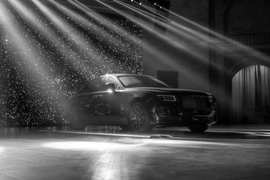 Driving the 300 SL is an experience that commands absolute attention. Its “swing axle” rear suspension, while innovative for its time, could lead to dramatic oversteer if the throttle was lifted abruptly mid-corner, potentially sending the rear end into an uncontrolled spin. However, on a straight road, its acceleration was relentless, pulling with the force of a locomotive. The interior is a meticulously crafted symphony of plaid fabric and utilitarian metal toggle switches, a stark yet sophisticated counterpoint to its prodigious performance. The 300 SL is rightly regarded as the venerable grandfather of every modern luxury sports car and high-performance vehicle.
McLaren F1 (1992-1998): The Pinnacle of Automotive Engineering
Engine: 6.1L BMW V12 (Naturally Aspirated)
Horsepower: 618 hp
Top Speed: 240 mph (386 km/h)
Origin: United Kingdom
The McLaren F1, unequivocally, earns its place among the classic supercars. Having surpassed the thirty-year mark, it is widely considered one of the most significant automotive achievements in history. Gordon Murray, the visionary designer, was consumed by the pursuit of lightness. This obsession manifested in a unique central driving position, flanked by two passenger seats, a engine bay meticulously lined with gold foil for heat reflection, and a revolutionary carbon fiber monocoque chassis. For over a decade, it held the production car speed record, and to this day, it remains the fastest naturally aspirated car ever produced, a testament to its aerodynamic purity and potent powertrain.
The F1 presents a surprisingly compact form by contemporary standards. Eschewing ostentatious wings and elaborate splitters, its immense speed is a direct consequence of sheer aerodynamic efficiency and a masterful reduction of drag. Its design is, quite simply, timeless.
The BMW V12 engine is the undisputed heart of the F1, delivering instantaneous throttle response and a symphony of mechanical music. The central driving position affords unparalleled visibility, further enhancing the driver’s connection to the machine. With no power steering or brake assist, the feedback transmitted to the driver is telepathic. Driving a McLaren F1 is often described as the “Holy Grail” of automotive experiences, a sublime fusion of man and machine that, due to modern safety regulations, may never be replicated. It stands as a monument to automotive innovation and a beacon for supercar enthusiasts.
Porsche 959 (1986-1993): A Glimpse into the Future
Engine: 2.8L Twin-Turbo Flat-Six
Horsepower: 444 hp
Top Speed: 197 mph (317 km/h)
Origin: Germany
While the Ferrari F40 was a visceral throwback to mechanical purity, the Porsche 959 was a bold stride into the automotive future. It was unequivocally the most technologically advanced car of the 1980s, introducing groundbreaking features that have since become ubiquitous. The 959 demonstrated the potential of adjustable suspension, tire pressure monitoring sensors, and, most significantly, a sophisticated computer-controlled All-Wheel Drive system.
Its appearance, often described as a “melted” 911, was born from the demands of Group B rallying. The wide body, integrated spoilers, and copious air vents were driven by aerodynamic necessity rather than conventional beauty. Yet, its form was inherently functional and incredibly efficient.
Paradoxically, the 959 offered an almost effortless supercar experience. Where the F40 challenged its driver, the 959 sought to assist and enhance. Its advanced AWD system could dynamically redistribute power to individual wheels, optimizing grip in virtually any condition. This was a car that could conquer snowy mountain passes, perform admirably on a race track, and then comfortably transport its occupants home with the air conditioning humming. The 959 served as a crucial developmental bridge, paving the way for later technological marvels like the Bugatti Veyron and the Porsche 918 Spyder, solidifying its place as a pioneering performance car.
Lamborghini Countach LP400 (1974-1990): The Poster Child of Automotive Aspiration
Engine: 3.9L – 5.2L V12
Horsepower: 370 – 455 hp
Top Speed: 179 mph (288 km/h)
Origin: Italy
The Lamborghini Countach LP400 is an enduring icon, the very embodiment of automotive fantasy adorning countless bedroom walls throughout the 1980s. It single-handedly defined the “wedge” automotive silhouette, a radical departure from the rounded forms that preceded it. The Countach was a dramatic declaration of sharp angles, flat planes, and the now-legendary scissor doors. The name itself, “Countach,” is a Piedmontese exclamation of sheer astonishment, a fitting descriptor for a car that evoked such profound awe.
Another triumph of Marcello Gandini’s design prowess, the early “Periscopio” models exuded a clean, unadulterated purity. Later iterations, such as the “5000 QV,” embraced a more aggressive aesthetic, adorned with prominent wings and flared arches—the quintessential “Wolf of Wall Street” look. Its practicality was negligible; its width was imposing, and visibility was severely compromised. Reversing often required drivers to open the door and perch on the sill to navigate tight spaces.
The Countach demanded a considerable physical commitment from its driver. The steering, clutch, and gearshift were all exceptionally heavy, requiring genuine strength. The cabin could become quite warm, adding to the demanding driving experience. However, the intoxicating roar of its carbureted V12 engine and the unparalleled public adoration it commanded were rewards in themselves. Even half a century later, a Countach commands attention like an alien spacecraft making an earthly landing, a true supercar legend.
Ferrari 250 GTO (1962-1964): The Apex of Automotive Rarity and Value
Engine: 3.0L V12
Horsepower: 300 hp
Top Speed: 174 mph (280 km/h)
Origin: Italy
The Ferrari 250 GTO is not merely a car; it is arguably the most valuable automobile on the planet, with auction prices routinely exceeding the fifty-million-dollar mark. Its extraordinary worth is derived from a confluence of breathtaking beauty, extreme rarity (with only 36 examples ever produced), and an illustrious racing pedigree. It represented the final chapter of front-engined Ferrari race cars before the revolutionary shift to mid-engine configurations.
Designed by Scaglietti, its form was dictated by the rigorous demands of aerodynamics, yet the result was pure artistic expression. The elongated hood, the purposeful Kamm-tail rear, and the distinctive three D-shaped vents on the nose have become indelible automotive icons.
Driving the 300 SL is an experience that commands absolute attention. Its “swing axle” rear suspension, while innovative for its time, could lead to dramatic oversteer if the throttle was lifted abruptly mid-corner, potentially sending the rear end into an uncontrolled spin. However, on a straight road, its acceleration was relentless, pulling with the force of a locomotive. The interior is a meticulously crafted symphony of plaid fabric and utilitarian metal toggle switches, a stark yet sophisticated counterpoint to its prodigious performance. The 300 SL is rightly regarded as the venerable grandfather of every modern luxury sports car and high-performance vehicle.
McLaren F1 (1992-1998): The Pinnacle of Automotive Engineering
Engine: 6.1L BMW V12 (Naturally Aspirated)
Horsepower: 618 hp
Top Speed: 240 mph (386 km/h)
Origin: United Kingdom
The McLaren F1, unequivocally, earns its place among the classic supercars. Having surpassed the thirty-year mark, it is widely considered one of the most significant automotive achievements in history. Gordon Murray, the visionary designer, was consumed by the pursuit of lightness. This obsession manifested in a unique central driving position, flanked by two passenger seats, a engine bay meticulously lined with gold foil for heat reflection, and a revolutionary carbon fiber monocoque chassis. For over a decade, it held the production car speed record, and to this day, it remains the fastest naturally aspirated car ever produced, a testament to its aerodynamic purity and potent powertrain.
The F1 presents a surprisingly compact form by contemporary standards. Eschewing ostentatious wings and elaborate splitters, its immense speed is a direct consequence of sheer aerodynamic efficiency and a masterful reduction of drag. Its design is, quite simply, timeless.
The BMW V12 engine is the undisputed heart of the F1, delivering instantaneous throttle response and a symphony of mechanical music. The central driving position affords unparalleled visibility, further enhancing the driver’s connection to the machine. With no power steering or brake assist, the feedback transmitted to the driver is telepathic. Driving a McLaren F1 is often described as the “Holy Grail” of automotive experiences, a sublime fusion of man and machine that, due to modern safety regulations, may never be replicated. It stands as a monument to automotive innovation and a beacon for supercar enthusiasts.
Porsche 959 (1986-1993): A Glimpse into the Future
Engine: 2.8L Twin-Turbo Flat-Six
Horsepower: 444 hp
Top Speed: 197 mph (317 km/h)
Origin: Germany
While the Ferrari F40 was a visceral throwback to mechanical purity, the Porsche 959 was a bold stride into the automotive future. It was unequivocally the most technologically advanced car of the 1980s, introducing groundbreaking features that have since become ubiquitous. The 959 demonstrated the potential of adjustable suspension, tire pressure monitoring sensors, and, most significantly, a sophisticated computer-controlled All-Wheel Drive system.
Its appearance, often described as a “melted” 911, was born from the demands of Group B rallying. The wide body, integrated spoilers, and copious air vents were driven by aerodynamic necessity rather than conventional beauty. Yet, its form was inherently functional and incredibly efficient.
Paradoxically, the 959 offered an almost effortless supercar experience. Where the F40 challenged its driver, the 959 sought to assist and enhance. Its advanced AWD system could dynamically redistribute power to individual wheels, optimizing grip in virtually any condition. This was a car that could conquer snowy mountain passes, perform admirably on a race track, and then comfortably transport its occupants home with the air conditioning humming. The 959 served as a crucial developmental bridge, paving the way for later technological marvels like the Bugatti Veyron and the Porsche 918 Spyder, solidifying its place as a pioneering performance car.
Lamborghini Countach LP400 (1974-1990): The Poster Child of Automotive Aspiration
Engine: 3.9L – 5.2L V12
Horsepower: 370 – 455 hp
Top Speed: 179 mph (288 km/h)
Origin: Italy
The Lamborghini Countach LP400 is an enduring icon, the very embodiment of automotive fantasy adorning countless bedroom walls throughout the 1980s. It single-handedly defined the “wedge” automotive silhouette, a radical departure from the rounded forms that preceded it. The Countach was a dramatic declaration of sharp angles, flat planes, and the now-legendary scissor doors. The name itself, “Countach,” is a Piedmontese exclamation of sheer astonishment, a fitting descriptor for a car that evoked such profound awe.
Another triumph of Marcello Gandini’s design prowess, the early “Periscopio” models exuded a clean, unadulterated purity. Later iterations, such as the “5000 QV,” embraced a more aggressive aesthetic, adorned with prominent wings and flared arches—the quintessential “Wolf of Wall Street” look. Its practicality was negligible; its width was imposing, and visibility was severely compromised. Reversing often required drivers to open the door and perch on the sill to navigate tight spaces.
The Countach demanded a considerable physical commitment from its driver. The steering, clutch, and gearshift were all exceptionally heavy, requiring genuine strength. The cabin could become quite warm, adding to the demanding driving experience. However, the intoxicating roar of its carbureted V12 engine and the unparalleled public adoration it commanded were rewards in themselves. Even half a century later, a Countach commands attention like an alien spacecraft making an earthly landing, a true supercar legend.
Ferrari 250 GTO (1962-1964): The Apex of Automotive Rarity and Value
Engine: 3.0L V12
Horsepower: 300 hp
Top Speed: 174 mph (280 km/h)
Origin: Italy
The Ferrari 250 GTO is not merely a car; it is arguably the most valuable automobile on the planet, with auction prices routinely exceeding the fifty-million-dollar mark. Its extraordinary worth is derived from a confluence of breathtaking beauty, extreme rarity (with only 36 examples ever produced), and an illustrious racing pedigree. It represented the final chapter of front-engined Ferrari race cars before the revolutionary shift to mid-engine configurations.
Designed by Scaglietti, its form was dictated by the rigorous demands of aerodynamics, yet the result was pure artistic expression. The elongated hood, the purposeful Kamm-tail rear, and the distinctive three D-shaped vents on the nose have become indelible automotive icons.
 Contrary to its museum-piece valuation, the 250 GTO is a phenomenal driver’s car. Weighing under 1,000 kg, it possesses a remarkable balance and an incredibly communicative chassis. The 3.0-liter Colombo V12 sings with exhilarating intensity as it reaches its 8,000 RPM redline. Built to endure the rigors of a 24-hour race at Le Mans, it is surprisingly robust. Owners frequently campaign these priceless machines in prestigious vintage events like the Goodwood Revival, willingly risking millions for the sheer exhilaration of the drive, a true testament to its collector car status.
Jaguar E-Type Series 1 (1961-1968): The Epitome of British Automotive Charm
Engine: 3.8L / 4.2L Inline-6
Horsepower: 265 hp
Top Speed: 150 mph (241 km/h)
Origin: United Kingdom
Upon its unveiling in Geneva in 1961, the Jaguar E-Type reportedly captivated Enzo Ferrari himself, who famously declared it “The most beautiful car ever made.” However, its allure extended far beyond its stunning aesthetics. The E-Type boasted advanced features for its era, including independent rear suspension and four-wheel disc brakes, all while achieving a top speed of 150 mph—performance rivaling that of Ferrari and Aston Martin at half the price. It was, unequivocally, the rock and roll star of the 1960s.
The E-Type’s design is characterized by an impossibly long bonnet, sensuously curved lines, and classic wire wheels and chrome bumpers that epitomize British elegance. The Series 1, with its distinctive covered headlights, is considered the purest and most desirable iteration.
As a Grand Tourer, the E-Type excels. Its inline-six engine delivers ample torque and operates with remarkable smoothness. The ride quality is surprisingly compliant, a testament to its sophisticated suspension system. While not as razor-sharp on track as its Italian contemporaries, the E-Type remains a car that allows for rapid cross-continental journeys, leaving its driver with an enduring smile. It’s a cornerstone of classic British sports cars.
Shelby Cobra 427 S/C (1965-1967): The Transatlantic Brute Force
Engine: 7.0L Ford V8
Horsepower: 425 – 485 hp
Top Speed: 165 mph (265 km/h)
Origin: UK / USA
The Shelby Cobra’s genesis was remarkably straightforward: an ingenious fusion of a lightweight British chassis (the AC Ace) and the most potent American V8 engine available. The result was the Shelby Cobra, and the 427 “S/C” (Semi-Competition) variant represents its ultimate, unadulterated expression. It was a car so potent it was barely street-legal, a machine that instilled a healthy dose of fear in all who dared to pilot it.
Its appearance is that of a muscle car that has undergone an extreme steroid regimen. The fenders are massively flared to accommodate its wide tires, and the side-exit exhausts pose a genuine burn hazard to unwary passengers. With no roof, no windows, just a rudimentary roll bar and a steering wheel, it offered a raw, elemental driving experience.
The Cobra 427 S/C is pure, unadulterated violence. With a colossal 7.0-liter engine shoehorned into a chassis weighing less than a compact economy car, its power-to-weight ratio is simply astounding. The short wheelbase contributes to a perpetually twitchy demeanor. Treat it with respect, and it offers an unparalleled thrill ride. Disregard its immense power, and it will swiftly spin you into the nearest hedge. It is the absolute definition of raw power.
Bugatti EB110 SS (1991-1995): The Unsung King of its Era
Engine: 3.5L Quad-Turbo V12
Horsepower: 603 hp
Top Speed: 218 mph (351 km/h)
Origin: Italy (during Bugatti’s Italian tenure)
Long before the Veyron and the Chiron graced public roads, there was the Bugatti EB110. Constructed during a brief period when Bugatti was under the ownership of Italian entrepreneur Romano Artioli, the EB110 was a technological marvel that leaped lightyears ahead of its contemporaries. It featured a carbon fiber chassis, engineered by an aerospace firm, a sophisticated All-Wheel Drive system, and a diminutive 3.5-liter V12 engine force-fed by no fewer than four turbochargers.
The design, a collaborative effort between Marcello Gandini (the genius behind the Miura and Countach) and Giampaolo Benedini, incorporated the signature Bugatti “horseshoe” grille, albeit in a more understated form than its successors. The striking scissor doors and the expansive glass engine cover contributed to a futuristic aesthetic that perfectly captured the early 1990s zeitgeist.
The EB110 SS (Super Sport) variant was lighter and more potent than its GT sibling. The unique sound produced by its quad-turbo V12 was a captivating blend of high-pitched turbo whistle and ferocious mechanical howl. Its handling was exceptional, thanks in large part to its advanced AWD. Sadly, the company’s financial collapse in 1995 rendered these exceptional machines incredibly rare. They stand as a crucial, albeit often overlooked, bridge between Bugatti’s illustrious heritage and its modern incarnation, representing a pivotal moment in exotic car history.
The Enduring Allure: Why These Legends Endure
The question lingers: what imbues these classic performance cars with such extraordinary value today? Why do collectors and enthusiasts worldwide vie for their ownership? The answer lies in their representation of a bygone era, a chapter of automotive history that is irrevocably closed.
The Analog Feedback Loop: In the sophisticated landscape of modern supercars, a computer often mediates the driver’s inputs. You press the brake pedal, and a computer dictates the precise hydraulic pressure. You turn the steering wheel, and an electric motor provides assistance. In contrast, these classic machines offer a direct, unadulterated connection. A physical cable links your foot to the engine’s throttle. A metal rod transmits your hand’s command to the gearbox. You feel the subtle vibrations, the mechanical resistance, and the radiating heat. You are not merely an operator; you are an integral part of the machine, a participant in its very being.
The Charm of Imperfection: Modern automobiles strive for perfection—they rarely overheat, seldom stall, and are designed for effortless operation. Classic supercars, however, possess a captivating imperfection. The demanding clutch of a Countach, the palpable turbo lag of an F40, the nerve-wracking lift-off throttle behavior of a Miura—these perceived “flaws” imbue these cars with an inimitable character. To master them is a genuine achievement, a skill honed through experience and respect. Driving a flawless car offers a sense of ease; conquering a flawed machine at its limits provides a profound sense of accomplishment.
Unfettered Design Freedom: The era preceding stringent pedestrian safety regulations allowed designers unparalleled creative latitude. Hoods could be impossibly low, as seen in the Ford GT40 or the Miura. Pop-up headlights were a common and stylish feature. Delicate chrome pillars and expansive glasshouses were readily incorporated. These shapes, so breathtakingly evocative, would be physically impossible to homologate legally in today’s automotive market.
These are not just cars; they are rolling sculptures, mechanical masterpieces, and tangible connections to a golden age of automotive passion and engineering. Their legacy continues to inspire and captivate, making them enduring icons of speed, style, and the pure joy of driving.
Contrary to its museum-piece valuation, the 250 GTO is a phenomenal driver’s car. Weighing under 1,000 kg, it possesses a remarkable balance and an incredibly communicative chassis. The 3.0-liter Colombo V12 sings with exhilarating intensity as it reaches its 8,000 RPM redline. Built to endure the rigors of a 24-hour race at Le Mans, it is surprisingly robust. Owners frequently campaign these priceless machines in prestigious vintage events like the Goodwood Revival, willingly risking millions for the sheer exhilaration of the drive, a true testament to its collector car status.
Jaguar E-Type Series 1 (1961-1968): The Epitome of British Automotive Charm
Engine: 3.8L / 4.2L Inline-6
Horsepower: 265 hp
Top Speed: 150 mph (241 km/h)
Origin: United Kingdom
Upon its unveiling in Geneva in 1961, the Jaguar E-Type reportedly captivated Enzo Ferrari himself, who famously declared it “The most beautiful car ever made.” However, its allure extended far beyond its stunning aesthetics. The E-Type boasted advanced features for its era, including independent rear suspension and four-wheel disc brakes, all while achieving a top speed of 150 mph—performance rivaling that of Ferrari and Aston Martin at half the price. It was, unequivocally, the rock and roll star of the 1960s.
The E-Type’s design is characterized by an impossibly long bonnet, sensuously curved lines, and classic wire wheels and chrome bumpers that epitomize British elegance. The Series 1, with its distinctive covered headlights, is considered the purest and most desirable iteration.
As a Grand Tourer, the E-Type excels. Its inline-six engine delivers ample torque and operates with remarkable smoothness. The ride quality is surprisingly compliant, a testament to its sophisticated suspension system. While not as razor-sharp on track as its Italian contemporaries, the E-Type remains a car that allows for rapid cross-continental journeys, leaving its driver with an enduring smile. It’s a cornerstone of classic British sports cars.
Shelby Cobra 427 S/C (1965-1967): The Transatlantic Brute Force
Engine: 7.0L Ford V8
Horsepower: 425 – 485 hp
Top Speed: 165 mph (265 km/h)
Origin: UK / USA
The Shelby Cobra’s genesis was remarkably straightforward: an ingenious fusion of a lightweight British chassis (the AC Ace) and the most potent American V8 engine available. The result was the Shelby Cobra, and the 427 “S/C” (Semi-Competition) variant represents its ultimate, unadulterated expression. It was a car so potent it was barely street-legal, a machine that instilled a healthy dose of fear in all who dared to pilot it.
Its appearance is that of a muscle car that has undergone an extreme steroid regimen. The fenders are massively flared to accommodate its wide tires, and the side-exit exhausts pose a genuine burn hazard to unwary passengers. With no roof, no windows, just a rudimentary roll bar and a steering wheel, it offered a raw, elemental driving experience.
The Cobra 427 S/C is pure, unadulterated violence. With a colossal 7.0-liter engine shoehorned into a chassis weighing less than a compact economy car, its power-to-weight ratio is simply astounding. The short wheelbase contributes to a perpetually twitchy demeanor. Treat it with respect, and it offers an unparalleled thrill ride. Disregard its immense power, and it will swiftly spin you into the nearest hedge. It is the absolute definition of raw power.
Bugatti EB110 SS (1991-1995): The Unsung King of its Era
Engine: 3.5L Quad-Turbo V12
Horsepower: 603 hp
Top Speed: 218 mph (351 km/h)
Origin: Italy (during Bugatti’s Italian tenure)
Long before the Veyron and the Chiron graced public roads, there was the Bugatti EB110. Constructed during a brief period when Bugatti was under the ownership of Italian entrepreneur Romano Artioli, the EB110 was a technological marvel that leaped lightyears ahead of its contemporaries. It featured a carbon fiber chassis, engineered by an aerospace firm, a sophisticated All-Wheel Drive system, and a diminutive 3.5-liter V12 engine force-fed by no fewer than four turbochargers.
The design, a collaborative effort between Marcello Gandini (the genius behind the Miura and Countach) and Giampaolo Benedini, incorporated the signature Bugatti “horseshoe” grille, albeit in a more understated form than its successors. The striking scissor doors and the expansive glass engine cover contributed to a futuristic aesthetic that perfectly captured the early 1990s zeitgeist.
The EB110 SS (Super Sport) variant was lighter and more potent than its GT sibling. The unique sound produced by its quad-turbo V12 was a captivating blend of high-pitched turbo whistle and ferocious mechanical howl. Its handling was exceptional, thanks in large part to its advanced AWD. Sadly, the company’s financial collapse in 1995 rendered these exceptional machines incredibly rare. They stand as a crucial, albeit often overlooked, bridge between Bugatti’s illustrious heritage and its modern incarnation, representing a pivotal moment in exotic car history.
The Enduring Allure: Why These Legends Endure
The question lingers: what imbues these classic performance cars with such extraordinary value today? Why do collectors and enthusiasts worldwide vie for their ownership? The answer lies in their representation of a bygone era, a chapter of automotive history that is irrevocably closed.
The Analog Feedback Loop: In the sophisticated landscape of modern supercars, a computer often mediates the driver’s inputs. You press the brake pedal, and a computer dictates the precise hydraulic pressure. You turn the steering wheel, and an electric motor provides assistance. In contrast, these classic machines offer a direct, unadulterated connection. A physical cable links your foot to the engine’s throttle. A metal rod transmits your hand’s command to the gearbox. You feel the subtle vibrations, the mechanical resistance, and the radiating heat. You are not merely an operator; you are an integral part of the machine, a participant in its very being.
The Charm of Imperfection: Modern automobiles strive for perfection—they rarely overheat, seldom stall, and are designed for effortless operation. Classic supercars, however, possess a captivating imperfection. The demanding clutch of a Countach, the palpable turbo lag of an F40, the nerve-wracking lift-off throttle behavior of a Miura—these perceived “flaws” imbue these cars with an inimitable character. To master them is a genuine achievement, a skill honed through experience and respect. Driving a flawless car offers a sense of ease; conquering a flawed machine at its limits provides a profound sense of accomplishment.
Unfettered Design Freedom: The era preceding stringent pedestrian safety regulations allowed designers unparalleled creative latitude. Hoods could be impossibly low, as seen in the Ford GT40 or the Miura. Pop-up headlights were a common and stylish feature. Delicate chrome pillars and expansive glasshouses were readily incorporated. These shapes, so breathtakingly evocative, would be physically impossible to homologate legally in today’s automotive market.
These are not just cars; they are rolling sculptures, mechanical masterpieces, and tangible connections to a golden age of automotive passion and engineering. Their legacy continues to inspire and captivate, making them enduring icons of speed, style, and the pure joy of driving.
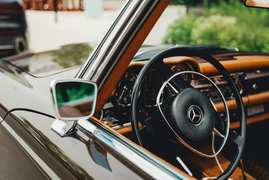 If you’ve been captivated by the raw emotion and mechanical artistry of these legendary machines, the next step is clear. Explore the world of classic car investment, connect with vintage car dealers, or perhaps consider experiencing one of these automotive titans firsthand through a curated driving event. The journey into the heart of automotive history awaits.