
The Analog Soul: Ten Classic Supercars That Forged the Modern Era
In 2025, the pursuit of speed is an exercise in digital precision. Families traverse highways in SUVs boasting 600 horsepower, reaching sixty miles per hour in under four seconds while immersed in a climate-controlled cocoon of silence. Velocity has transitioned from an artisanal craft to an accessible commodity, streamlined and digitized.
Yet, there exists an era when speed was an untamed, exhilarating, and fundamentally visceral currency. These are not merely vintage automobiles; they are resonant echoes from a time before the ubiquitous embrace of traction control, before the convenience of paddle shifters, and before emissions mandates began to mute the symphonic roar of the internal combustion engine. These are machines that demanded a physical dialogue with their drivers, a patient understanding to awaken their temperaments, and a cultivated skill to truly command. They exude the rich aroma of unburnt hydrocarbons, the supple scent of Connolly leather, and the pungent perfume of hot oil. To pilot a contemporary hypercar is akin to navigating a sophisticated video simulation. To engage with a classic supercar, however, is to enter into a perilous dance with a mechanical entity that possesses the power to exact a formidable penalty for missteps.
From the undulating contours of Italy’s verdant hills to the seemingly endless expanses of Germany’s autobahns, we embark on a curated exploration of the ten quintessential classic supercars that laid the foundational stones for the automotive marvels of today. These vehicles represent not just milestones in performance, but potent exemplars of design daring and engineering audacity, offering a deep dive into the very genesis of the legendary sports car.
Lamborghini Miura P400 (1966-1973): The Unrivaled Genesis
Engine: 3.9L V12
Horsepower: 345 – 380 hp
Top Speed: 171 mph (275 km/h)
Origin: Italy
The Lamborghini Miura wasn’t just an evolution; it was a revolution. Prior to its arrival, the apex of automotive performance was embodied by front-engined grand tourers like the Ferrari 275 GTB. These machines offered exhilarating straight-line speed, but the driver was positioned in a traditional configuration, looking out over a lengthy hood. The Miura shattered this paradigm. Its transversely mounted, mid-engine V12 configuration, previously the domain of Formula 1 race cars, was brought to the street for the first time in a production vehicle. This bold move effectively authored the very blueprint for the modern Italian supercar.
Penned by a remarkably young Marcello Gandini at Bertone, the Miura is widely acclaimed as one of the most aesthetically arresting automobiles ever conceived. Its form evokes a creature of exquisite beauty, poised and alluring. The distinctive “eyelashes” framing the headlights, the elegant louvers gracing the rear engine cover, and the theatrical clam-shell opening mechanisms collectively contribute to an unparalleled visual drama.
The driving experience of a Miura is an exercise in terrifying beauty. The V12 engine, a mere sliver of glass and carpet away from the cabin, sings its powerful song inches from the occupants’ ears. At elevated velocities, aerodynamic lift—a phenomenon not fully understood by engineers of the era—can render the front end disconcertingly light. Piloting a Miura necessitates not just deft handwork, but an abundance of courage. It is, without question, the definitive rock star of the 1960s automotive scene, a true iconic supercar.
Ferrari F40 (1987-1992): The Final Testament
Engine: 2.9L Twin-Turbo V8
Horsepower: 471 hp
Top Speed: 201 mph (324 km/h)
Origin: Italy
The Ferrari F40 stands as the last automotive masterpiece personally sanctioned by Enzo Ferrari before his passing, a direct response to his directive to “Build a car that is the best in the world.” The engineers at Maranello delivered not just a car, but a road-legal race car. It achieved the extraordinary feat of breaching the 200 mph barrier, a production car first that cemented its place in the annals of performance cars.
Luxury was a non-existent concept in the F40’s design philosophy. To achieve its astonishing performance, the body was constructed from ultralight Kevlar and carbon fiber, with paint so thinly applied that the weave of the composite material is visible. Amenities were conspicuously absent: no radio, no carpets, no air conditioning, and even door handles were replaced by a simple pull cord. The windows were rudimentary plastic sliders. The F40 is the embodiment of raw, unadulterated focus.
The notorious turbo lag is the F40’s signature trait. Below 4,000 RPM, it behaves with the civility of a conventional sedan. However, the awakening of its twin IHI turbochargers unleashes a ferocity that challenges the very integrity of the rear tires. Without any driver aids—no ABS, no traction control, no power steering—it is a pure, uncompromised dialogue between driver and machine. The F40 remains an enduring benchmark for driver engagement and a prime example of classic Italian sports cars.
Mercedes-Benz 300 SL “Gullwing” (1954-1957): The Trailblazing Pioneer
Engine: 3.0L Inline-6
Horsepower: 215 hp
Top Speed: 160 mph (260 km/h)
Origin: Germany
While the Miura defined the supercar layout, the Mercedes-Benz 300 SL “Gullwing” established the very concept of the supercar. In the 1950s, when average vehicles struggled to reach 70 mph, the Gullwing commanded a top speed of 160 mph. It was, in essence, a road-legal iteration of the Le Mans-winning W194 race car, a remarkable feat of engineering that brought motorsport prowess to the public highway. This makes it a truly significant vintage performance car.
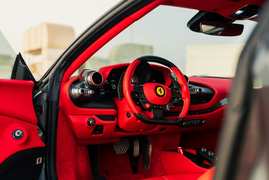 The iconic “Gullwing” doors were not a stylistic flourish but an engineering necessity. The car’s robust tubular spaceframe chassis, while providing exceptional rigidity, necessitated unusually high side sills. Conventional doors were structurally unfeasible, prompting engineers to hinge them from the roof. Furthermore, the 300 SL pioneered the use of Direct Fuel Injection in a production car, a technology that would take another half-century to become commonplace in mass-market vehicles, highlighting its status as a groundbreaking supercar.
The driving experience of the 300 SL is an engaging affair. Its swing-axle rear suspension can be capricious, with a sudden lift-off mid-corner potentially inducing a dramatic rear-end rotation. However, on a clear stretch of road, its straight-line acceleration is formidable. The interior is a testament to mid-century automotive craftsmanship, featuring distinctive plaid fabrics and robust metal toggle switches. The 300 SL stands as the venerable grandfather of every modern supercar, a true legendary European sports car.
McLaren F1 (1992-1998): The Pinnacle of Automotive Engineering
Engine: 6.1L BMW V12 (Naturally Aspirated)
Horsepower: 618 hp
Top Speed: 240 mph (386 km/h)
Origin: United Kingdom
The McLaren F1, a vehicle now over thirty years old, undeniably qualifies as a classic. Its reputation as arguably the greatest car ever constructed is well-earned. Designer Gordon Murray’s obsessive pursuit of lightness led to innovative solutions, including a unique central driving position (accommodating three occupants), a gold-foil lined engine bay for superior heat dissipation, and a revolutionary carbon fiber monocoque chassis. For over a decade, it held the production car speed record, and it remains the fastest naturally aspirated car ever produced, a testament to its status as a hypercar benchmark.
The F1 appears remarkably compact by contemporary standards, eschewing aggressive wings and splitters. Its prodigious speed is a direct result of pure aerodynamic efficiency and an almost complete absence of drag, contributing to its timeless aesthetic.
The BMW V12 engine is the heart of the F1’s extraordinary performance, delivering instantaneous throttle response. The central driving position offers unparalleled forward visibility. Devoid of power steering or brake assistance, the feedback from the road is telepathic, creating a profound fusion of man and machine. Driving a McLaren F1 is widely considered the “Holy Grail” of automotive experiences, a connection unlikely to be replicated due to modern safety regulations. It is the epitome of modern classic sports cars.
Porsche 959 (1986-1993): The Visionary Time Traveler
Engine: 2.8L Twin-Turbo Flat-Six
Horsepower: 444 hp
Top Speed: 197 mph (317 km/h)
Origin: Germany
While the Ferrari F40 looked to a stripped-down, elemental past, the Porsche 959 was resolutely focused on the future. It represented the zenith of technological advancement in the 1980s, introducing innovations now taken for granted: adjustable suspension, tire pressure monitoring systems, and, most notably, a sophisticated computer-controlled all-wheel-drive system. This car was a living laboratory for innovative automotive technology.
Its design, often described as a “melted 911,” was shaped by its intended Group B rally homologation, featuring a wide body, integrated spoilers, and numerous air intakes. While not conventionally beautiful, its aerodynamic prowess was undeniable.
The 959 was a supercar designed to be accessible. Unlike the F40, which challenged its driver, the 959 actively assisted. Its advanced AWD system could dynamically distribute power to individual wheels, maximizing grip in all conditions. This was a car capable of traversing snow-covered roads, dominating a track day, and then providing comfortable transport home with the air conditioning engaged. The 959 served as a critical precursor to later technological marvels like the Bugatti Veyron and Porsche 918 Spyder, solidifying its place as a technologically advanced supercar.
Lamborghini Countach LP400 (1974-1990): The Poster Child of Automotive Aspiration
Engine: 3.9L – 5.2L V12
Horsepower: 370 – 455 hp
Top Speed: 179 mph (288 km/h)
Origin: Italy
The Lamborghini Countach is indelibly etched in the collective consciousness of a generation, adorning bedroom walls worldwide throughout the 1980s. It was the car that defined the “wedge” automotive silhouette, a stark departure from the curvaceous forms that preceded it. The Countach was all sharp angles, flat planes, and dramatic scissor doors, embodying a visual revolution. The very name, “Countach,” is a Piedmontese exclamation of sheer astonishment, roughly translating to “Wow!” or “Damn!”
Another masterpiece by Marcello Gandini, the early “Periscopio” models exuded a clean purity. Later iterations, such as the “5000 QV,” featured aggressive wings and flared arches, adopting the “Wolf of Wall Street” aesthetic. The Countach was notoriously impractical, its immense width and compromised visibility making even basic maneuvers a challenge; reversing often required opening the door and perching on the sill.
Piloting a Countach demands considerable physical effort. The steering, clutch, and gearshift are heavy, and the interior can become quite warm. However, the intoxicating roar of the carbureted V12 and the unbridled public adoration it commanded were unparalleled. Even after half a century, a Countach continues to draw crowds with the impact of a UFO landing, a true exotic classic car.
Ferrari 250 GTO (1962-1964): The Coveted Holy Grail of Automotive Collecting
Engine: 3.0L V12
Horsepower: 300 hp
Top Speed: 174 mph (280 km/h)
Origin: Italy
The Ferrari 250 GTO is widely recognized as the most valuable car in the world, with auction prices frequently surpassing the $50 million mark. This extraordinary valuation is a confluence of breathtaking beauty, extreme rarity (with only 36 produced), and an unmatched racing pedigree. It represented the final front-engined Ferrari race car before the mid-engine revolution took hold, making it a pivotal piece of automotive history.
Designed by Scaglietti, its aerodynamic form was sculpted for performance, yet it emerged as a work of pure art. The elongated hood, the distinctive Kamm-tail rear, and the three iconic “D-shaped” vents on the nose are instantly recognizable signatures of its design genius.
The iconic “Gullwing” doors were not a stylistic flourish but an engineering necessity. The car’s robust tubular spaceframe chassis, while providing exceptional rigidity, necessitated unusually high side sills. Conventional doors were structurally unfeasible, prompting engineers to hinge them from the roof. Furthermore, the 300 SL pioneered the use of Direct Fuel Injection in a production car, a technology that would take another half-century to become commonplace in mass-market vehicles, highlighting its status as a groundbreaking supercar.
The driving experience of the 300 SL is an engaging affair. Its swing-axle rear suspension can be capricious, with a sudden lift-off mid-corner potentially inducing a dramatic rear-end rotation. However, on a clear stretch of road, its straight-line acceleration is formidable. The interior is a testament to mid-century automotive craftsmanship, featuring distinctive plaid fabrics and robust metal toggle switches. The 300 SL stands as the venerable grandfather of every modern supercar, a true legendary European sports car.
McLaren F1 (1992-1998): The Pinnacle of Automotive Engineering
Engine: 6.1L BMW V12 (Naturally Aspirated)
Horsepower: 618 hp
Top Speed: 240 mph (386 km/h)
Origin: United Kingdom
The McLaren F1, a vehicle now over thirty years old, undeniably qualifies as a classic. Its reputation as arguably the greatest car ever constructed is well-earned. Designer Gordon Murray’s obsessive pursuit of lightness led to innovative solutions, including a unique central driving position (accommodating three occupants), a gold-foil lined engine bay for superior heat dissipation, and a revolutionary carbon fiber monocoque chassis. For over a decade, it held the production car speed record, and it remains the fastest naturally aspirated car ever produced, a testament to its status as a hypercar benchmark.
The F1 appears remarkably compact by contemporary standards, eschewing aggressive wings and splitters. Its prodigious speed is a direct result of pure aerodynamic efficiency and an almost complete absence of drag, contributing to its timeless aesthetic.
The BMW V12 engine is the heart of the F1’s extraordinary performance, delivering instantaneous throttle response. The central driving position offers unparalleled forward visibility. Devoid of power steering or brake assistance, the feedback from the road is telepathic, creating a profound fusion of man and machine. Driving a McLaren F1 is widely considered the “Holy Grail” of automotive experiences, a connection unlikely to be replicated due to modern safety regulations. It is the epitome of modern classic sports cars.
Porsche 959 (1986-1993): The Visionary Time Traveler
Engine: 2.8L Twin-Turbo Flat-Six
Horsepower: 444 hp
Top Speed: 197 mph (317 km/h)
Origin: Germany
While the Ferrari F40 looked to a stripped-down, elemental past, the Porsche 959 was resolutely focused on the future. It represented the zenith of technological advancement in the 1980s, introducing innovations now taken for granted: adjustable suspension, tire pressure monitoring systems, and, most notably, a sophisticated computer-controlled all-wheel-drive system. This car was a living laboratory for innovative automotive technology.
Its design, often described as a “melted 911,” was shaped by its intended Group B rally homologation, featuring a wide body, integrated spoilers, and numerous air intakes. While not conventionally beautiful, its aerodynamic prowess was undeniable.
The 959 was a supercar designed to be accessible. Unlike the F40, which challenged its driver, the 959 actively assisted. Its advanced AWD system could dynamically distribute power to individual wheels, maximizing grip in all conditions. This was a car capable of traversing snow-covered roads, dominating a track day, and then providing comfortable transport home with the air conditioning engaged. The 959 served as a critical precursor to later technological marvels like the Bugatti Veyron and Porsche 918 Spyder, solidifying its place as a technologically advanced supercar.
Lamborghini Countach LP400 (1974-1990): The Poster Child of Automotive Aspiration
Engine: 3.9L – 5.2L V12
Horsepower: 370 – 455 hp
Top Speed: 179 mph (288 km/h)
Origin: Italy
The Lamborghini Countach is indelibly etched in the collective consciousness of a generation, adorning bedroom walls worldwide throughout the 1980s. It was the car that defined the “wedge” automotive silhouette, a stark departure from the curvaceous forms that preceded it. The Countach was all sharp angles, flat planes, and dramatic scissor doors, embodying a visual revolution. The very name, “Countach,” is a Piedmontese exclamation of sheer astonishment, roughly translating to “Wow!” or “Damn!”
Another masterpiece by Marcello Gandini, the early “Periscopio” models exuded a clean purity. Later iterations, such as the “5000 QV,” featured aggressive wings and flared arches, adopting the “Wolf of Wall Street” aesthetic. The Countach was notoriously impractical, its immense width and compromised visibility making even basic maneuvers a challenge; reversing often required opening the door and perching on the sill.
Piloting a Countach demands considerable physical effort. The steering, clutch, and gearshift are heavy, and the interior can become quite warm. However, the intoxicating roar of the carbureted V12 and the unbridled public adoration it commanded were unparalleled. Even after half a century, a Countach continues to draw crowds with the impact of a UFO landing, a true exotic classic car.
Ferrari 250 GTO (1962-1964): The Coveted Holy Grail of Automotive Collecting
Engine: 3.0L V12
Horsepower: 300 hp
Top Speed: 174 mph (280 km/h)
Origin: Italy
The Ferrari 250 GTO is widely recognized as the most valuable car in the world, with auction prices frequently surpassing the $50 million mark. This extraordinary valuation is a confluence of breathtaking beauty, extreme rarity (with only 36 produced), and an unmatched racing pedigree. It represented the final front-engined Ferrari race car before the mid-engine revolution took hold, making it a pivotal piece of automotive history.
Designed by Scaglietti, its aerodynamic form was sculpted for performance, yet it emerged as a work of pure art. The elongated hood, the distinctive Kamm-tail rear, and the three iconic “D-shaped” vents on the nose are instantly recognizable signatures of its design genius.
 Contrary to its museum-piece status, the 250 GTO is a phenomenal driver’s car. Weighing under 1,000 kg, it offers exquisite balance and immediate feedback. The 3.0-liter Colombo V12 engine shrieks with enthusiasm to an 8,000 RPM redline. Built for endurance, having competed in grueling 24-hour races at Le Mans, it possesses remarkable robustness. Owners often campaign them in prestigious vintage events like the Goodwood Revival, risking millions for the sheer exhilaration of the drive. This is the ultimate collectible supercar.
Jaguar E-Type Series 1 (1961-1968): The Quintessential British Icon
Engine: 3.8L / 4.2L Inline-6
Horsepower: 265 hp
Top Speed: 150 mph (241 km/h)
Origin: United Kingdom
Upon its unveiling at the 1961 Geneva Motor Show, Enzo Ferrari reportedly declared the Jaguar E-Type “The most beautiful car ever made.” But its allure extended far beyond its stunning aesthetics. It featured advanced independent rear suspension, disc brakes on all four wheels, and a top speed of 150 mph, offering performance rivaling that of Ferrari and Aston Martin at half the price. It was the undisputed rock and roll star of the 1960s, a true iconic British sports car.
The E-Type’s bonnet is famously long, its curves sensuous and flowing. The combination of wire wheels and chrome bumpers perfectly embodies the classic British automotive aesthetic. The Series 1, with its covered headlights, is considered the purest and most desirable iteration.
As a grand tourer, the E-Type excels. Its inline-6 engine delivers smooth, ample torque, and the ride is remarkably comfortable, thanks to its sophisticated suspension. While not as razor-sharp as a track-focused Ferrari, it is a car that facilitates rapid cross-continental journeys with an enduring smile, a defining example of classic automotive design.
Shelby Cobra 427 S/C (1965-1967): The Transatlantic Brute Force
Engine: 7.0L Ford V8
Horsepower: 425 – 485 hp
Top Speed: 165 mph (265 km/h)
Origin: UK / USA
The Shelby Cobra’s formula was disarmingly simple: take a feather-light British roadster (the AC Ace) and transplant the largest possible American V8 engine into it. The result was the Shelby Cobra, and the 427 “S/C” (Semi-Competition) variant represents the pinnacle of this raw, untamed concept. It was essentially a race car barely street-legal, a vehicle that instilled a primal sense of fear in all who dared to drive it. This is a machine that embodies American muscle car heritage fused with European agility.
The Cobra’s aggressive stance evokes a muscle car on steroids. Its fenders are massively flared to accommodate the colossal tires, and the side-exit exhaust pipes pose a constant burn risk. With no roof, no windows, and only a rudimentary roll bar, it offered an unvarnished connection to the road.
The driving experience is pure violence. A colossal 7.0-liter engine in a car weighing less than a Ford Fiesta creates an absurdly high power-to-weight ratio. Its short wheelbase contributes to a notoriously “twitchy” demeanor. If respected, it provides an unparalleled thrill ride; if underestimated, it will readily spin the driver backward into the nearest obstacle. The Cobra is the very definition of raw automotive power.
Bugatti EB110 SS (1991-1995): The Overlooked King of the 90s Supercar Scene
Engine: 3.5L Quad-Turbo V12
Horsepower: 603 hp
Top Speed: 218 mph (351 km/h)
Origin: Italy (during Bugatti’s Italian era)
Long before the Veyron and the Chiron, there was the Bugatti EB110. Produced during Bugatti’s brief period of ownership by Italian entrepreneur Romano Artioli, the EB110 was a technological marvel that far surpassed its contemporaries. It featured a carbon fiber chassis constructed by an aerospace company, all-wheel drive, and a compact 3.5-liter V12 engine equipped with four turbochargers. This car represents a crucial bridge in Bugatti’s storied history, a truly forgotten supercar.
Designed by Marcello Gandini, with refinements by Giampaolo Benedini, the EB110 sports a distinctive, smaller horseshoe grille compared to modern Bugattis. Its scissor doors and glass engine cover lent it a futuristic aesthetic for the early 1990s.
The EB110 SS (Super Sport) variant was lighter and faster than its GT counterpart. The sound produced by its quad-turbo V12 is unique, a captivating blend of high-pitched turbo whistles and mechanical fury. Its all-wheel-drive system ensured exceptional handling. Tragically, the company’s bankruptcy in 1995 rendered these exceptional machines incredibly rare and historically significant, serving as the final chapter of old Bugatti and the prologue to its modern iteration, a truly rare supercar.
The Enduring Legacy: Why Classics Endure
The enduring allure of these machines, reflected in their multi-million dollar valuations and the fierce competition among collectors, stems from their representation of a closed chapter in automotive history.
The Analog Feedback Loop: In the sophisticated modern supercar, a computer acts as an intermediary for every driver input. Your foot presses the brake pedal; a computer modulates the hydraulic pressure. You turn the steering wheel; an electric motor provides assistance. With these classic supercars, the connection is profoundly mechanical. A direct cable links your foot to the engine’s throttle. A metal rod transmits your hand’s intention to the gearbox. You feel the engine’s vibrations, the resistance of the controls, and the radiant heat from the mechanical components. You are an intrinsic part of the machine, not merely its operator. This direct connection is what defines the driving purity sought by enthusiasts.
The Charm of Imperfection: Modern vehicles are paragons of engineered perfection. They rarely overheat, seldom stall, and are effortlessly manageable. Classic supercars, conversely, possess a distinct character derived from their inherent “flaws.” The substantial clutch pedal of a Countach, the dramatic turbo lag of an F40, the unnerving lift-throttle behavior of a Miura—these are not shortcomings but defining traits that imbue the cars with personality. Mastering these challenges is not a chore but an accomplishment, transforming the act of driving into a rewarding pursuit of skill, a key aspect of automotive nostalgia. Driving a flawless machine can be mundane; coaxing a flawed one to its limits is a profound achievement.
The Unfettered Design Freedom: Before the stringent dictates of pedestrian safety regulations mandated higher hoods and bulkier bumpers, automotive designers possessed a remarkable degree of creative liberty. This freedom allowed for impossibly low-slung profiles, as seen on the Ford GT40 or the Miura. It permitted the use of retractable headlights and delicate chrome pillars. These forms, so breathtakingly elegant, are often physically impossible to replicate within today’s regulatory frameworks, making these timeless automotive designs all the more precious.
These ten historic supercars represent more than just powerful engines and sleek bodies. They are tangible links to an era when driving was an art form, a test of skill, and a thrilling engagement with raw mechanical power. They are the legends that inspired generations of engineers and designers, and their legacy continues to shape the automotive landscape today.
Contrary to its museum-piece status, the 250 GTO is a phenomenal driver’s car. Weighing under 1,000 kg, it offers exquisite balance and immediate feedback. The 3.0-liter Colombo V12 engine shrieks with enthusiasm to an 8,000 RPM redline. Built for endurance, having competed in grueling 24-hour races at Le Mans, it possesses remarkable robustness. Owners often campaign them in prestigious vintage events like the Goodwood Revival, risking millions for the sheer exhilaration of the drive. This is the ultimate collectible supercar.
Jaguar E-Type Series 1 (1961-1968): The Quintessential British Icon
Engine: 3.8L / 4.2L Inline-6
Horsepower: 265 hp
Top Speed: 150 mph (241 km/h)
Origin: United Kingdom
Upon its unveiling at the 1961 Geneva Motor Show, Enzo Ferrari reportedly declared the Jaguar E-Type “The most beautiful car ever made.” But its allure extended far beyond its stunning aesthetics. It featured advanced independent rear suspension, disc brakes on all four wheels, and a top speed of 150 mph, offering performance rivaling that of Ferrari and Aston Martin at half the price. It was the undisputed rock and roll star of the 1960s, a true iconic British sports car.
The E-Type’s bonnet is famously long, its curves sensuous and flowing. The combination of wire wheels and chrome bumpers perfectly embodies the classic British automotive aesthetic. The Series 1, with its covered headlights, is considered the purest and most desirable iteration.
As a grand tourer, the E-Type excels. Its inline-6 engine delivers smooth, ample torque, and the ride is remarkably comfortable, thanks to its sophisticated suspension. While not as razor-sharp as a track-focused Ferrari, it is a car that facilitates rapid cross-continental journeys with an enduring smile, a defining example of classic automotive design.
Shelby Cobra 427 S/C (1965-1967): The Transatlantic Brute Force
Engine: 7.0L Ford V8
Horsepower: 425 – 485 hp
Top Speed: 165 mph (265 km/h)
Origin: UK / USA
The Shelby Cobra’s formula was disarmingly simple: take a feather-light British roadster (the AC Ace) and transplant the largest possible American V8 engine into it. The result was the Shelby Cobra, and the 427 “S/C” (Semi-Competition) variant represents the pinnacle of this raw, untamed concept. It was essentially a race car barely street-legal, a vehicle that instilled a primal sense of fear in all who dared to drive it. This is a machine that embodies American muscle car heritage fused with European agility.
The Cobra’s aggressive stance evokes a muscle car on steroids. Its fenders are massively flared to accommodate the colossal tires, and the side-exit exhaust pipes pose a constant burn risk. With no roof, no windows, and only a rudimentary roll bar, it offered an unvarnished connection to the road.
The driving experience is pure violence. A colossal 7.0-liter engine in a car weighing less than a Ford Fiesta creates an absurdly high power-to-weight ratio. Its short wheelbase contributes to a notoriously “twitchy” demeanor. If respected, it provides an unparalleled thrill ride; if underestimated, it will readily spin the driver backward into the nearest obstacle. The Cobra is the very definition of raw automotive power.
Bugatti EB110 SS (1991-1995): The Overlooked King of the 90s Supercar Scene
Engine: 3.5L Quad-Turbo V12
Horsepower: 603 hp
Top Speed: 218 mph (351 km/h)
Origin: Italy (during Bugatti’s Italian era)
Long before the Veyron and the Chiron, there was the Bugatti EB110. Produced during Bugatti’s brief period of ownership by Italian entrepreneur Romano Artioli, the EB110 was a technological marvel that far surpassed its contemporaries. It featured a carbon fiber chassis constructed by an aerospace company, all-wheel drive, and a compact 3.5-liter V12 engine equipped with four turbochargers. This car represents a crucial bridge in Bugatti’s storied history, a truly forgotten supercar.
Designed by Marcello Gandini, with refinements by Giampaolo Benedini, the EB110 sports a distinctive, smaller horseshoe grille compared to modern Bugattis. Its scissor doors and glass engine cover lent it a futuristic aesthetic for the early 1990s.
The EB110 SS (Super Sport) variant was lighter and faster than its GT counterpart. The sound produced by its quad-turbo V12 is unique, a captivating blend of high-pitched turbo whistles and mechanical fury. Its all-wheel-drive system ensured exceptional handling. Tragically, the company’s bankruptcy in 1995 rendered these exceptional machines incredibly rare and historically significant, serving as the final chapter of old Bugatti and the prologue to its modern iteration, a truly rare supercar.
The Enduring Legacy: Why Classics Endure
The enduring allure of these machines, reflected in their multi-million dollar valuations and the fierce competition among collectors, stems from their representation of a closed chapter in automotive history.
The Analog Feedback Loop: In the sophisticated modern supercar, a computer acts as an intermediary for every driver input. Your foot presses the brake pedal; a computer modulates the hydraulic pressure. You turn the steering wheel; an electric motor provides assistance. With these classic supercars, the connection is profoundly mechanical. A direct cable links your foot to the engine’s throttle. A metal rod transmits your hand’s intention to the gearbox. You feel the engine’s vibrations, the resistance of the controls, and the radiant heat from the mechanical components. You are an intrinsic part of the machine, not merely its operator. This direct connection is what defines the driving purity sought by enthusiasts.
The Charm of Imperfection: Modern vehicles are paragons of engineered perfection. They rarely overheat, seldom stall, and are effortlessly manageable. Classic supercars, conversely, possess a distinct character derived from their inherent “flaws.” The substantial clutch pedal of a Countach, the dramatic turbo lag of an F40, the unnerving lift-throttle behavior of a Miura—these are not shortcomings but defining traits that imbue the cars with personality. Mastering these challenges is not a chore but an accomplishment, transforming the act of driving into a rewarding pursuit of skill, a key aspect of automotive nostalgia. Driving a flawless machine can be mundane; coaxing a flawed one to its limits is a profound achievement.
The Unfettered Design Freedom: Before the stringent dictates of pedestrian safety regulations mandated higher hoods and bulkier bumpers, automotive designers possessed a remarkable degree of creative liberty. This freedom allowed for impossibly low-slung profiles, as seen on the Ford GT40 or the Miura. It permitted the use of retractable headlights and delicate chrome pillars. These forms, so breathtakingly elegant, are often physically impossible to replicate within today’s regulatory frameworks, making these timeless automotive designs all the more precious.
These ten historic supercars represent more than just powerful engines and sleek bodies. They are tangible links to an era when driving was an art form, a test of skill, and a thrilling engagement with raw mechanical power. They are the legends that inspired generations of engineers and designers, and their legacy continues to shape the automotive landscape today.
 If the spirit of these legendary machines has ignited a passion within you, and you seek to understand more about the evolution of performance vehicles or explore the possibility of experiencing these automotive icons firsthand, we invite you to connect with our team of seasoned automotive historians and specialists. Let us guide you on a journey to uncover the stories behind these automotive legends and perhaps, help you find your own connection to this extraordinary automotive heritage.